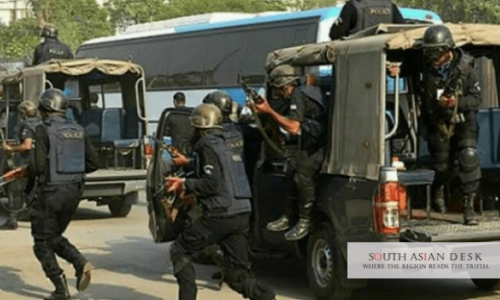
KP police counterterrorism technology is being expanded through the integration of anti-drone systems and surveillance drones into the Safe City Peshawar network, allowing police officials to monitor operations across Khyber Pakhtunkhwa from a central command and control centre.
The initiative aims to strengthen the provincial police’s ability to detect and neutralise hostile drones, improve coordination during counterterrorism operations and provide senior officers with real-time information about developments on the ground.
The integration was announced by Deputy Inspector General Ijaz Ahmad, director of the KP Safe Cities Project, during a news conference in Peshawar on October 31. He said the system would enable live monitoring of police operations, including those conducted by the Counter Terrorism Department (CTD), across the province.
The move comes as security forces face evolving threats from militant groups increasingly using unmanned aerial vehicles for surveillance and attacks. The initiative also reflects a broader effort to modernise policing through technology and improve the coordination of security operations.
KP Police Counterterrorism Technology and the Safe City Network
The new system brings together Safe City cameras, anti-drone equipment and surveillance drones operating across Khyber Pakhtunkhwa. Under the arrangement, video feeds from police drones deployed during operations can be transmitted to the Command and Control Centre in Peshawar.
DIG Ijaz Ahmad said the integration would allow senior police officers to remain informed about ground conditions and provide timely support to personnel conducting operations.
The centralised monitoring system is intended to improve the flow of information between field units and senior officers, particularly during operations against militant groups. By providing a common monitoring platform, it could help police officials assess developments more quickly and coordinate responses across different locations.
The initiative also expands the role of the Safe City Peshawar project beyond urban surveillance. The system is now being used to support operations across the province, including in areas where police and CTD personnel are conducting counterterrorism offensives.
The provincial police have also linked anti-drone systems installed in Peshawar and other cities to the central network. According to the project director, the equipment can detect hostile quadcopters and drones and help neutralise potential threats.
The system is intended to address the growing use of drones by militant groups and improve the police’s ability to respond to emerging security challenges. Its effectiveness will depend on reliable communications, coordination between units and the ability to maintain surveillance during field operations.
Anti-Drone Systems Deployed Across Khyber Pakhtunkhwa
Modern anti-drone systems have already been deployed in Peshawar, Dera Ismail Khan, Lakki Marwat, Tank and Bannu, according to the KP Safe Cities Project director.
The equipment is intended to detect and neutralise hostile drones that could pose a threat to police personnel, sensitive installations and civilians. Anti-drone guns have also been provided to police officers operating in remote and sensitive areas.
The deployment reflects concerns about the changing nature of militant tactics. Drones can be used to observe police movements, gather intelligence and potentially carry explosives or other ammunition.
The increasing availability of unmanned aerial vehicles has created additional challenges for security forces, particularly in areas where conventional surveillance and communications infrastructure may be limited.
The integration of anti-drone equipment into the Safe City network is intended to improve the speed with which threats can be identified and addressed. However, the police have acknowledged that the system faces practical limitations, particularly in areas without reliable internet connectivity.
DIG Ahmad said the lack of internet access in some parts of the province remained a challenge. The authorities were working with the Space and Upper Atmosphere Research Commission (Suparco) to address the problem.
Improving connectivity will be important for ensuring that surveillance feeds can be transmitted reliably from remote areas to the central command centre.
Specialised UAV Division Established for Counterterrorism Operations
Alongside the technological upgrades, the KP police have established a specialised human resource division trained in unmanned aerial vehicle (UAV) combat.
The division was created in response to the growing use of drones by militant groups, whose tactics have evolved from conventional ground-based attacks to include aerial surveillance, ammunition drops and swarm attacks.
According to officials, the personnel have received training in drone operation, aerial surveillance, intelligence gathering, counterterrorism and the protection of sensitive installations.
The division is also trained to use UAV technology during high-risk operations and conduct electronic warfare against hostile drones.
The police said the initiative was the first of its kind established by a police department in Pakistan. Its creation reflects the recognition that acquiring equipment alone would not be sufficient to respond to the changing nature of security threats.
Specialised personnel will be required to operate surveillance drones, interpret information gathered during operations and respond to hostile UAV activity. The division is intended to provide that expertise and strengthen the police’s capacity to conduct technology-assisted counterterrorism operations.
The development also highlights the growing importance of technical training within law enforcement agencies, particularly as militant groups adopt new methods of surveillance and attack.
Technology and the Future of Counterterrorism in KP
The integration of surveillance drones, anti-drone systems and centralised monitoring represents a significant development in the use of technology by the Khyber Pakhtunkhwa police.
The system is intended to improve coordination, strengthen situational awareness and help officers respond more effectively to threats during counterterrorism operations.
However, the initiative also highlights the challenges of relying on technology in a province where security operations frequently take place in remote and difficult terrain. Limited internet connectivity could affect the transmission of live footage, while the effective use of surveillance equipment will depend on trained personnel and reliable operational procedures.
The establishment of the specialised UAV division is therefore an important part of the broader initiative. It combines technological upgrades with the development of personnel capable of using the equipment in high-risk situations.
The police have said that the new arrangements will strengthen their operational capabilities and improve their response to militant threats. The extent to which these measures improve security will depend on their implementation, the reliability of the monitoring network and the ability of police units to use the information gathered during operations.
The initiative marks a further step towards technology-assisted policing in Khyber Pakhtunkhwa, as authorities seek to adapt to evolving threats and improve the coordination of counterterrorism operations across the province.
Follow SouthAsianDesk on X, Instagram and Facebook for insights on business and current affairs from across South Asia.