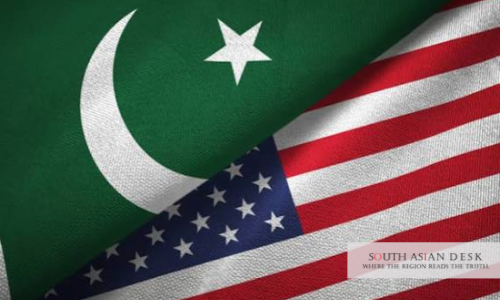
An LNG project in Pakistan worth up to $4.4 billion has been proposed by a private US consortium that is reportedly backed by the Trump administration. The plan covers liquefied natural gas imports, storage, re-gasification, gas transmission and sales to large consumers on a merchant basis, according to documents seen by Dawn.
The proposal emerges only days after a rival effort collapsed. Energas, a consortium of the Lucky Group and QatarEnergy, abandoned its own plan for a Port Qasim LNG terminal, citing fundamental changes in Pakistan’s energy policy and requirements, along with long-unresolved policy and fiscal issues.
Who is behind the LNG project in Pakistan
The US consortium comprises Global Vision Energy Partners (GVEP) and Khanjee Holdings, which are related firms, together with strategic co-investors from other countries and General Mediterranean Holding, a Luxembourg-based US financial conglomerate. The sponsors have reportedly secured consent from the Port Qasim Authority for the proposed site and have applied to the Oil and Gas Regulatory Authority (Ogra) for a provisional licence. A special purpose vehicle has been incorporated to hold the assets, and the Ministry of Maritime Affairs and the Petroleum Division have conveyed their facilitation.
The scheme has also been approved for consideration under the US Trade and Development Agency’s project preparation programme. It may receive partial financing from the US Development Finance Corporation, supported by export credit guarantees from the US Export-Import Bank for technology, equipment and services.
Two phases and a 1,100km pipeline
The sponsors intend to build in two stages. The first phase would deliver a terminal and LNG storage facility with four tanks of 140,000 cubic metres each, giving total static capacity of 560,000 cubic metres. Estimated at $1.7 billion, it is expected to handle roughly 35 billion cubic feet of LNG annually, based on three inventory turnover cycles a year.
The second phase would add a pipeline of 42 to 48 inches in diameter running about 1,100 kilometres to carry gas upcountry, with capacity of around 1.2 billion cubic feet per day. Together, the two phases bring the total cost to $4.4 billion, although the final figure will be set only after engineering, procurement and construction contracts are executed.
Why LNG storage matters for Pakistan
Dawn reports that Pakistan currently has no LNG storage facilities, which leaves its re-gasified supplies wholly dependent on import supply chains and international prices. The proposal is therefore pitched as a merchant infrastructure platform that would serve the domestic market while creating a regional storage and trading hub for US and Middle Eastern suppliers. Notably, it would not rely on a single government-backed offtake arrangement.
The sponsors regard Port Qasim as strategically important because of its existing port infrastructure and marine access for LNG carriers. Its location outside the Strait of Hormuz, one of the world’s most significant energy shipping chokepoints, is a further consideration. Dawn has separately reported that this year’s closure of the strait and the suspension of Qatar’s LNG production disrupted supply, which lends weight to the argument for domestic storage.
Tariffs, financing and ownership
The proposed tolling tariff for the terminal and storage facility is $4.93 per million British thermal units, while transmission is estimated at $1.91 per mmBtu for the first ten years. Both are projected to fall to $2.20 and $0.92 respectively thereafter. Regasification tariffs for the domestic market would be submitted to Ogra for approval, while storage, tolling and transshipment would be priced on market terms.
The financing structure envisages a 70:30 debt-to-equity ratio. GVEP would hold 26 per cent, General Mediterranean Holding 24 per cent, and Khanjee Holdings and strategic co-investors 20 per cent each. Local investors would be offered the remaining 10 per cent, with indicative investments starting at $50 million. The sponsors hope to attract global funds and institutions, including Blackstone, KKR, Saudi Arabia’s Public Investment Fund and the Kuwait Investment Authority. However, Dawn notes that their participation remains subject to due diligence and approvals, and no binding equity commitments have been confirmed.
Questions the proposal must answer
The timing is delicate. Pakistan already operates two LNG import terminals at Port Qasim, the first of which began receiving cargoes in 2015. Under long-term take-or-pay contracts with Qatar, the country is committed to lifting about 108 cargoes a year, and the Economic Coordination Committee was told last year that a surplus of 177 cargoes was projected through 2031. Energas also pointed to the government’s Integrated Energy Study of March 2025, which found that no new LNG terminals were required over the next five years.
These factors suggest that the new Port Qasim LNG terminal plan will need to demonstrate commercial viability without state guarantees, while overcoming the pipeline capacity, tax and regulatory hurdles that stalled its predecessor. For now, the proposal remains at an early stage, and its fate will depend on licensing by Ogra, investor commitments and the government’s own assessment of the country’s long-term gas requirements.
Follow SouthAsianDesk on X, Instagram and Facebook for insights on business and current affairs from across South Asia.
Read More: