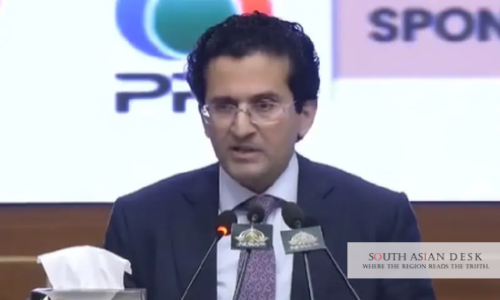
Pakistan strategic minerals: Strategic minerals are becoming an increasingly important priority for the country’s mineral exploration strategy, as the government seeks to attract international investors and strengthen its position in global mineral supply chains. Petroleum Minister Ali Pervaiz Malik announced the shift in focus while addressing the Pakistan Minerals Investment Forum 2026 (PMIF26) in Islamabad on Friday, November 13, emphasising the importance of minerals with growing strategic value for international markets.
The minister said Pakistan’s exploration efforts were increasingly directed towards resources of particular importance to global investors. He highlighted the government’s investment in modern geological surveys, exploratory drilling and advanced research facilities, arguing that improved scientific capabilities would help identify mineral deposits and make exploration projects more attractive to international companies.
His remarks came on the second day of the two-day Pakistan Minerals Investment Forum, which brought together government representatives, mining companies, international investors and industry experts to discuss opportunities in Pakistan’s mineral sector.
The government is seeking to position mineral development as an important contributor to economic diversification, export growth and industrial expansion. By strengthening exploration capabilities and introducing more predictable investment conditions, Pakistan hopes to move beyond the traditional extraction of raw materials and develop a more competitive mining industry.
Pakistan Strategic Minerals Exploration Gains Momentum Through Modern Technology
Addressing investors, Ali Pervaiz Malik explained that Pakistan was strengthening its mineral exploration infrastructure through modern geochemical and geophysical surveys, exploratory drilling and improvements to geological research laboratories.
These technologies are essential for identifying mineral deposits, assessing their composition and determining whether they can be developed commercially. Geochemical surveys examine the distribution and concentration of different chemical elements in soil, rocks and other geological materials. Geophysical surveys, meanwhile, use measurements of physical properties such as magnetic fields, electrical conductivity and gravitational variations to investigate geological structures beneath the surface.
The minister also highlighted improvements in digital mapping, airborne surveys and mineral assessment. These technologies can help researchers identify promising exploration areas while reducing the time and uncertainty associated with conventional exploration methods.
The government is also upgrading the scientific capabilities of the Geological Survey of Pakistan (GSP), which plays a central role in geological mapping, mineral assessment and exploration research.
Strengthening the institution’s analytical capabilities is particularly important for attracting international mining companies, which require reliable geological information before committing substantial capital to exploration projects.
Exploration is often one of the most financially uncertain stages of mining development. Companies must invest considerable resources in geological investigations and drilling before establishing whether a deposit contains sufficient quantities of commercially recoverable minerals. More comprehensive geological data can therefore help reduce investment risks and improve the prospects of successful mining projects.
Government Promises Uniform Fiscal Terms for Mining Investors
Alongside improvements in exploration technology, the petroleum minister emphasised the importance of creating a predictable and transparent investment environment.
Malik said the government’s objective was to provide uniform fiscal terms to mining companies without requiring investors to negotiate special arrangements on a case-by-case basis. He maintained that the proposed framework should offer conditions that were attractive and fair to investors, provincial governments and the federal government.
Predictable taxation and royalty arrangements are important considerations for international mining companies because large-scale mineral projects generally require substantial upfront investment and extended development periods.
Uncertainty surrounding taxation, licensing procedures and regulatory requirements can increase project costs and discourage long-term investment. A consistent fiscal framework could therefore help Pakistan compete with other mineral-producing countries seeking international capital.
The issue is particularly relevant because mineral resources fall under a constitutional and administrative framework involving both federal and provincial authorities. Effective coordination between the two levels of government is essential for establishing consistent policies and ensuring that investment arrangements remain workable across different provinces.
The government has repeatedly highlighted institutional coordination, regulatory reforms and investor facilitation as important components of its strategy to develop the mining sector.
Pakistan Strengthens Security Arrangements for Mining Projects
Security was another major issue addressed by Ali Pervaiz Malik during the investment forum. The minister said the government was committed to ensuring the safety of mining sites, transportation and logistics infrastructure, as well as the trained workforce required to operate mineral projects.
He stated that special arrangements had been introduced to strengthen the security framework and facilitate uninterrupted mining operations in a suitable environment.
Security considerations are particularly important for large-scale mining investments because projects frequently operate in remote areas where transportation networks, infrastructure and access to skilled labour can present additional challenges.
Balochistan, for example, contains several of Pakistan’s most significant mineral deposits, including the copper and gold resources associated with the Reko Diq project. However, security concerns in parts of the province have remained an important consideration for companies planning long-term investments.
The government’s emphasis on security reflects its recognition that attracting international mining companies requires more than geological potential. Investors also need confidence in the stability of project operations, the reliability of transportation routes and the protection of personnel and equipment.
Malik maintained that the government was working to provide the necessary institutional support to ensure that mining companies could operate without unnecessary disruptions.
New Exploration Licences Issued in Chagai and Khuzdar
The petroleum minister also referred to recently issued mineral exploration licences in the Balochistan districts of Chagai and Khuzdar, highlighting the government’s efforts to expand exploration activities in areas with considerable geological potential.
Chagai is particularly significant because of its copper and gold resources, most notably the Reko Diq mineral deposit. The region forms part of the Tethyan Metallogenic Belt, a geological zone extending across several countries and known for its substantial copper and gold deposits.
Khuzdar also holds potential for further mineral exploration, making it an important area for expanding geological investigations in Balochistan.
The issuance of exploration licences represents an important step towards identifying additional mineral resources. However, exploration licences do not automatically establish the existence of commercially viable deposits. Further geological surveys, drilling and resource assessments are necessary before the economic feasibility of individual projects can be determined.
The government’s intention is to encourage more exploration activity while creating opportunities for domestic and international companies to participate in the development of Pakistan’s mineral resources.
Pakistan Minerals Investment Forum 2026 Attracts International Attention
The minister’s remarks formed part of the broader investment campaign presented at the Pakistan Minerals Investment Forum 2026, held in Islamabad on November 12 and 13.
The two-day event brought together delegations from more than 60 countries, alongside representatives of international mining companies, financial institutions, government departments and geological organisations.
Pakistan showcased a wide range of mineral resources, including copper, gold, iron ore, chromite, lead, zinc, coal, rock salt, marble and gemstones. The forum also provided an opportunity for investors to explore potential partnerships, examine exploration projects and discuss the regulatory and technical requirements for developing mining operations.
Deputy Prime Minister and Foreign Minister Ishaq Dar had earlier called for greater international investment, technology transfer and cooperation in mineral processing. He emphasised that Pakistan needed to move beyond exporting unprocessed resources and develop domestic refining and manufacturing capabilities.
Finance Minister Muhammad Aurangzeb also described the mining industry as a potential contributor to export growth, foreign investment and long-term economic development.
The forum’s discussions reflected the government’s wider objective of integrating Pakistan into international mineral supply chains while encouraging investment in exploration, extraction and processing.
Reko Diq and the Future of Pakistan’s Mining Industry
The Reko Diq project remains one of the most prominent examples of Pakistan’s potential to attract international investment in large-scale mining. Located in Balochistan’s Chagai district, the project is being developed through a partnership between Barrick Mining Corporation and Pakistani federal and provincial stakeholders.
The project is expected to play an important role in expanding Pakistan’s copper and gold production, creating employment opportunities and generating export revenues once commercial production begins.
Speaking at the investment forum, Barrick Mining Corporation Chairman John Thornton described Reko Diq as a partnership involving Pakistan, Barrick, local communities and international investors. He also expressed the company’s intention to remain a long-term partner in developing the country’s mineral resources.
The project illustrates the importance of combining international technical expertise, financial investment and local participation in developing complex mining operations.
However, the development of Pakistan’s wider mineral industry will require similar attention to geological research, infrastructure, regulatory consistency and environmental standards. Identifying mineral deposits is only the first stage of a process that can take years before reaching commercial production.
Pakistan’s increasing focus on strategic minerals reflects an effort to respond to growing international demand while making greater use of its domestic natural resources. The government’s latest initiatives suggest that geological technology, predictable investment policies and improved security arrangements will form the foundation of its exploration strategy.
Whether these measures translate into sustained foreign investment and commercially successful mining projects will depend on their implementation. For now, the Pakistan Minerals Investment Forum 2026 has provided the government with an opportunity to present its mineral potential to international investors and outline its plans for developing the sector.
Follow SouthAsianDesk on X, Instagram and Facebook for insights on business and current affairs from across South Asia.
Read More: