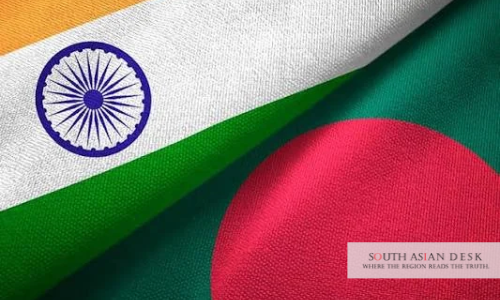
Dhaka-Delhi relations have shown fresh signs of strain after the fifth round of the Bangladesh-India consular dialogue, which was due to be held in Dhaka on 17 and 18 November, failed to go ahead. Officials in both capitals have confirmed that the meeting has been postponed, adding to the impression that several bilateral mechanisms between the two neighbours have made little tangible progress in recent months.
Consular Dialogue Fails to Materialise
The two countries had been discussing the fifth consular dialogue for some time. According to officials in Dhaka and New Delhi, Bangladesh initially proposed holding it in late October, while India preferred November because of the Durga Puja festival. India then suggested 17 and 18 November, a proposal Dhaka accepted. A foreign ministry official said Dhaka had made preparations accordingly, including an inter-ministerial meeting at the Ministry of Foreign Affairs on 3 November to settle the issues it intended to raise.
On Monday, 9 November, a diplomatic source told UNB that the meeting would not take place. Saidur Rahman, Minister (Press) at the Bangladesh High Commission in New Delhi, later said the dialogue had been postponed a week before a request concerning former prime minister Sheikh Hasina’s passport and national identity card was submitted, suggesting the two matters were unrelated in timing.
Why the Consular Dialogue Matters
The mechanism was instituted in 2017 to give both countries a regular channel for consular matters, visa procedures and mutual legal assistance, with the aim of strengthening people-to-people contacts. Four rounds have been held so far, the most recent in New Delhi on 29 May 2024. At that meeting, both sides agreed to hold the next round in Dhaka on a mutually convenient date.
The agenda for the coming round was expected to cover cross-border issues, border management, the streamlining of visa processes, the repatriation of citizens detained in either country, and the release and repatriation of fishermen. These are practical concerns that affect ordinary citizens directly, which is why the postponement carries weight beyond the diplomatic calendar. An official told UNB that Bangladesh and India maintain more than forty bilateral mechanisms covering areas such as water, trade, border management and consular affairs, and the delay has prompted questions about how actively these forums are functioning.
The Hasina Passport Request
The postponement has coincided with a separate point of friction. On 9 November, lawyers for Sheikh Hasina, who has been in India since leaving Dhaka in August 2024 and who has been sentenced to death in absentia for crimes against humanity, wrote to the acting high commissioner at the Bangladesh High Commission in New Delhi. They asked for a new passport and national identity card, citing the reported cancellation of her earlier documents. Her aides have said she intends to return to Bangladesh in December and to surrender before a court.
The Bangladesh government rejected the idea. State Minister for Foreign Affairs Humaiun Kobir said no passport or identity card would be issued and that Dhaka would continue to seek her return from India under the extradition treaty. Bangladesh submitted a formal extradition request in December 2024, and in July 2026 India’s Ministry of External Affairs described it as under examination, taking into account legal and judicial processes. Saidur Rahman said on 10 November that the lawyers’ letter was a request for documents and not a formal application by Hasina herself, and criticised the way some Bangladeshi media had reported it.
Prospects for Dhaka-Delhi Relations
Both governments have indicated that they wish to keep the broader relationship on track. The consular dialogue was part of a series of engagements intended to prepare the ground for a possible visit to India by Prime Minister Tarique Rahman later this year, and a trade-related meeting was held last month. Indian officials have said the invitation for the visit stands and that both sides are discussing possible dates.
Much now depends on whether a new date for the consular dialogue can be agreed without delay. Other matters also await attention, including the future of water-sharing arrangements on shared rivers, with Indian officials noting that a structured mechanism exists for such discussions but offering no further update. For the time being, the postponement leaves a gap in one of the few regular channels through which both countries address the day-to-day concerns of their citizens, and it underlines how closely the pace of Dhaka-Delhi relations remains tied to wider political developments.
Follow SouthAsianDesk on X, Instagram and Facebook for insights on business and current affairs from across South Asia.
Read More: