The Dhaka-Tangail highway was brought to a halt on Saturday morning when garment workers from several factories in Gazipur’s Kaliakair upazila took to the road in a fresh protest, causing severe congestion and disrupting commuters. The blockade, centred on the Palli Bidyut area, is the latest in a series of demonstrations that have repeatedly interrupted traffic on one of the country’s busiest north-south corridors in recent weeks.
Protest Begins at Palli Bidyut
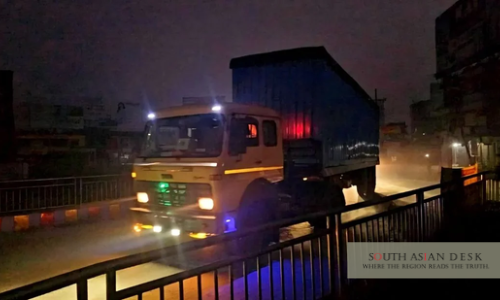
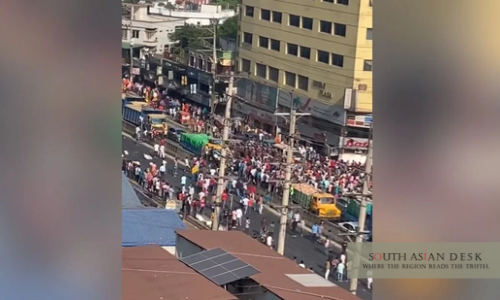
According to Dhaka Tribune, workers from several factories in and around Palli Bidyut did not join their shifts on Saturday. Witnesses said they first demonstrated inside their respective factories and then moved onto the Dhaka-Tangail highway, blocking it at around 9:30am. The blockade stopped traffic on the busy road and triggered long tailbacks.
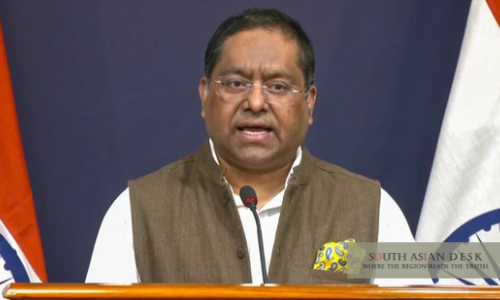
Mohammad Amjad Hossain, superintendent of Gazipur Industrial Police, said workers from six to seven garment factories in the area had taken to the highway that morning. He confirmed that traffic was halted at the time and said members of the Industrial Police and the district police were at the scene, while law enforcement agencies remained on alert.
Differing Accounts of What Triggered Saturday’s Blockade
Dhaka Tribune reported that the workers were demanding a wage increase. Other outlets that covered the same blockade gave a somewhat different account of the immediate trigger. Prothom Alo and The Business Standard reported that the protest began around 8:30am in the Chandra and Palli Bidyut areas after reports and rumours spread that a worker injured during Thursday’s clash with police had died. According to The Business Standard, police and other law enforcement personnel later dispersed the protesters and restored the movement of vehicles. The reports do not suggest the two explanations are mutually exclusive, but they show how quickly unrest in the area can escalate once workers gather on the road.
Weeks of Wage Protests in Kaliakair and Beyond
Saturday’s action follows a pattern that has repeated itself since late October. Garment workers in Gazipur have been staging protests demanding that the minimum monthly wage be raised to Tk30,000. On Sunday, November 1, workers blocked the highway and set fire to a police box and vehicles, and five platoons of Border Guard Bangladesh were deployed to support the Industrial Police. The Gazipur deputy commissioner later said that 10 BGB platoons had been deployed from the following Monday to control the movement of workers.
Disruption returned on Thursday, November 12, when workers from several factories in the Mouchak area of Kaliakair gathered on the Dhaka-Tangail highway after the management of some factories declared a holiday. Dhaka Tribune reported that police and BGB personnel used sound grenades to disperse the protesters, and that eight to nine factories declared a holiday that day. Kaliakair Police Station’s officer-in-charge, Shahidul Islam, said traffic had resumed after the workers were removed, although congestion continued to slow vehicles.
Commuters Bear the Brunt of the Blockades
For travellers, each blockade has meant long delays. The Dhaka-Tangail highway carries heavy volumes of passenger buses, goods vehicles and daily commuters, and earlier reports on the protests described long-distance bus passengers and other travellers stranded when thousands of workers occupied the road. When one stretch is blocked at Kaliakair, traffic quickly backs up in both directions, which compounds the hardship for people who have no alternative route.
Police have also found it difficult to keep the road clear. After a blockade on Thursday morning, the Kaliakair officer-in-charge said law enforcement personnel were clearing the road, but workers kept returning to the highway. That pattern suggests the underlying dispute remains unresolved even when traffic is temporarily restored.
The Minimum Wage Question Remains Unsettled
At the heart of the unrest is the question of pay. Workers have repeatedly called for the minimum wage to be raised to Tk30,000 a month, and factory owners have responded by declaring holidays at plants affected by the protests. Manufacturers have also expressed concern over the recurring disruption to production in the country’s main industrial belts, according to reports on the situation.
For now, authorities are relying on a strong security presence along the corridor to prevent further escalation. Unless the wage dispute is addressed through negotiation, however, residents and commuters in Gazipur may continue to face repeated closures of the Dhaka-Tangail highway, and the pressure on both factory owners and law enforcement is likely to continue.
Follow SouthAsianDesk on X, Instagram and Facebook for insights on business and current affairs from across South Asia.