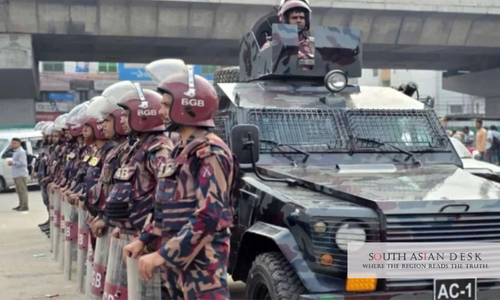
BGB deployment in Bangladesh has been intensified as 33 platoons of Border Guard Bangladesh (BGB) personnel have been stationed across major industrial areas in Dhaka, Gazipur and Narayanganj amid ongoing workers’ unrest. The deployment is intended to maintain law and order, strengthen security around industrial establishments and prevent further incidents that could disrupt factory operations.
According to a statement issued by the BGB on Sunday morning, November 8, the personnel have been deployed across several locations in the three districts. The move comes amid tensions in Bangladesh’s industrial sector, particularly in areas with a significant concentration of garment factories and other manufacturing facilities.
The BGB said that its personnel would remain on high alert and work alongside local administrations and police to ensure security. The force has also activated technology-based monitoring arrangements to oversee operations and maintain surveillance across the affected areas.
The deployment highlights the authorities’ efforts to prevent further disturbances and protect industrial infrastructure at a time when labour-related tensions have raised concerns about the stability of Bangladesh’s manufacturing sector.
BGB Deployment in Bangladesh Covers Three Major Industrial Districts
The 33 platoons have been distributed across industrial locations in Dhaka, Gazipur and Narayanganj, covering several areas that serve as important manufacturing and commercial centres.
In Dhaka, BGB personnel have been deployed in Savar, Ashulia and Mirpur. These areas contain substantial industrial activity, particularly in the ready-made garment sector, making their security important for the continuity of factory operations.
In Narayanganj, deployment covers Shibu Market, Jalkuri, the BSCIC Industrial Estate, Chashara, Kanchpur and Shimrail. The district is an important industrial centre, with businesses operating across textiles, manufacturing and other sectors.
Meanwhile, in Gazipur, personnel have been stationed in Chandra, Palli Bidyut, Mouchak, Ambag, Kashimpur, Naojor, Bhogra Bypass, Gacha and Salna.
The geographical distribution of the deployment indicates an effort to maintain a security presence across multiple industrial clusters rather than concentrating personnel in a single location.
According to the BGB statement, the deployment is intended to prevent further incidents, protect lives and property and ensure that industrial establishments can continue operating in a safe and stable environment.
Technology-Based Surveillance Strengthens Industrial Security
Alongside the deployment of personnel, Border Guard Bangladesh has introduced additional monitoring measures to oversee security operations in the affected areas.
According to the force’s statement, the monitoring cell at BGB headquarters is supervising field-level operations and live footage through technology-based systems. This arrangement is intended to provide headquarters with continuous information about developments on the ground and facilitate coordination between deployed personnel.
The monitoring system also allows the force to maintain oversight of security activities across several locations simultaneously. This is particularly relevant given the geographical spread of the industrial zones covered by the deployment.
BGB personnel are also coordinating with local administrations and police while remaining on high alert. Such cooperation is intended to ensure that security measures are implemented consistently and that any potential disturbances can be addressed through coordinated action.
The force has stated that deployment and surveillance operations will continue as necessary to maintain public security and protect industrial establishments.
The increased reliance on monitoring technology reflects the authorities’ efforts to strengthen their response to security challenges in Bangladesh’s industrial areas. However, the immediate priority remains preventing further unrest and ensuring that workers and businesses can operate without disruption.
Garment Workers’ Unrest Raises Security Concerns
The deployment comes against the backdrop of ongoing labour-related tensions in Bangladesh, particularly within the ready-made garment industry.
The garment sector is one of the country’s most important economic industries, contributing significantly to exports, employment and industrial activity. Consequently, prolonged unrest in manufacturing areas can have implications extending beyond individual factories, potentially affecting supply chains, production schedules and the wider economy.
Recent worker demonstrations have been linked to demands for improved wages and working conditions. Reports have also highlighted tensions surrounding calls for a minimum monthly wage of Tk30,000, with some protests resulting in clashes and disruptions to factory operations.
The unrest prompted increased security arrangements across industrial areas, with authorities seeking to prevent further violence and maintain the continuity of manufacturing activities.
There have also been indications that the situation has begun to stabilise in some locations. A separate report by Dhaka Tribune on November 8 stated that most garment workers had returned to work in Savar and Ashulia, although production remained suspended at a few factories in Ashulia.
This suggests that while conditions have improved in certain industrial areas, security concerns have not entirely disappeared. The continued deployment of BGB personnel therefore reflects the authorities’ intention to maintain vigilance as factories gradually resume normal operations.
Bangladesh Seeks to Protect Industrial Operations Amid Labour Tensions
The security situation in Dhaka, Gazipur and Narayanganj is particularly significant because of the importance of these districts to Bangladesh’s manufacturing industry.
The ready-made garment sector plays a central role in the country’s export economy and provides employment to millions of workers. Industrial disruptions can affect factory output, delivery schedules and relationships with international buyers, making stability in manufacturing areas an important economic consideration.
For this reason, maintaining security around industrial establishments is a priority for both government authorities and businesses. The deployment of Border Guard Bangladesh personnel is intended to discourage further disturbances while providing additional support to local law enforcement agencies.
Nevertheless, the long-term stability of the industrial sector depends on more than security arrangements. Addressing workers’ grievances, ensuring fair working conditions and maintaining constructive communication between factory owners and employees are equally important.
The relationship between labour rights and industrial stability is particularly significant in an industry that depends heavily on a large workforce. While security measures may help prevent immediate disturbances, lasting improvements require solutions to the underlying issues contributing to worker dissatisfaction.
The authorities will therefore face the challenge of balancing public order with the need to address legitimate labour concerns.
BGB Maintains High Alert as Surveillance Operations Continue
Border Guard Bangladesh has confirmed that its personnel will continue operating in coordination with local administrations and police to maintain security across the affected industrial zones.
The monitoring cell at BGB headquarters will also continue overseeing field operations and live footage through technology-based systems. The force has reiterated that its deployment and surveillance activities are intended to protect public life and property while ensuring a safe and stable working environment.
The deployment of 33 platoons across Dhaka, Gazipur and Narayanganj represents a substantial security response to the ongoing industrial unrest. Although the return of most garment workers in parts of the region indicates some improvement, the continued presence of security personnel suggests that authorities remain cautious about the possibility of further disturbances.
Ultimately, restoring stability across Bangladesh’s industrial areas will require both effective security arrangements and meaningful engagement with workers. Ensuring that factories can operate safely while addressing labour-related grievances will be essential to protecting the country’s manufacturing sector and maintaining confidence in its industrial economy.
Follow SouthAsianDesk on X, Instagram and Facebook for insights on business and current affairs from across South Asia.