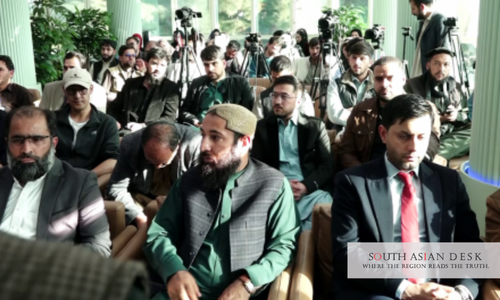
Afghan media challenges are intensifying as news organisations across the country struggle with financial difficulties, shortages of experienced journalists and inadequate technical resources. These pressures are affecting the ability of media outlets to maintain regular operations, produce professional content and continue informing the public. At a ceremony marking the 16th anniversary of Khaama Press News Agency, media officials called for transparent financial support and greater cooperation from national and international organisations to help sustain journalism in Afghanistan.
The event brought together representatives of several Afghan media organisations, who highlighted the difficulties confronting the country’s media sector. Their concerns reflect a wider crisis in which declining resources and a shrinking professional workforce have made it increasingly difficult for independent news outlets to operate.
Mansoor Nikmal, Editor-in-Chief of Khaama Press, stressed that organisations providing assistance to the media should distribute their support according to clear and transparent criteria. He argued that assistance must reach the outlets and professionals that genuinely need it, rather than being allocated without adequate accountability.
His remarks underline an important concern for Afghan media organisations: financial assistance alone may not be sufficient unless it is distributed fairly and used to address the sector’s most pressing needs.
Afghan Media Challenges Threaten the Future of Professional Journalism
Financial difficulties are among the most significant obstacles facing Afghan media outlets. Running a news organisation requires resources for staff salaries, reporting equipment, broadcasting infrastructure and the production of reliable content. When funding becomes uncertain, organisations may be forced to reduce their operations, dismiss employees or limit the scope of their reporting.
The shortage of professional journalists presents another serious challenge. Experienced reporters, editors, camera operators and other media workers are essential to producing accurate and balanced journalism. However, the departure of skilled professionals and the limited resources available to retain and train staff have weakened the capacity of many organisations.
Technical limitations further complicate the situation. News outlets need functioning equipment, reliable broadcasting facilities and digital infrastructure to gather and distribute information. Without adequate resources, even organisations with experienced journalists may struggle to maintain consistent coverage and meet professional standards.
Faridullah Mohammadi, Head of TOLOnews, said the media’s responsibility extends beyond acting as a link between the government and the public. He emphasised that news organisations must also keep citizens informed about major national developments. His remarks highlight the public importance of maintaining a functioning media sector, particularly in a country where access to reliable information is essential to public awareness.
Abdul Kabir Monsef, Head of Pajhwok Afghan News, similarly stressed the importance of media organisations in shaping public opinion. He said Afghanistan needs media outlets and recognised the influence they have over how people understand and respond to national issues.
Media Freedom in Afghanistan Faces Wider Pressures
The financial and professional difficulties raised at the Khaama Press anniversary event form part of a broader deterioration in the country’s media environment. Independent reporting organisations have documented not only declining financial resources but also restrictions on journalists, censorship and limitations on access to information.
A report published by the Afghanistan Journalists Center in March 2026 documented at least 207 incidents involving violations of the rights of journalists and media organisations during the reporting period from March 2025 to March 2026. These included threats, arrests and other forms of pressure. The report also highlighted declining advertising revenue, cuts in international assistance and restrictions on sponsorship as factors undermining the financial viability of media organisations.
The economic consequences have been significant. According to the report, some major outlets have reduced programming and dismissed staff, while smaller provincial organisations have struggled to operate consistently. Some have reportedly been able to maintain operations only when they secure commercial advertising.
The Afghanistan Journalists Center also reported that restrictions on broadcasting and publishing images of living beings had contributed to the closure of local television stations and other media organisations. These developments demonstrate that the challenges facing Afghan journalism cannot be understood solely as a funding problem. Financial pressures are unfolding alongside regulatory restrictions and an increasingly difficult environment for independent reporting.
A separate 2025 annual report by the organisation likewise identified declining international assistance, reduced advertising and restrictions on media activity as factors contributing to the closure or downsizing of outlets. It also documented the departure of journalists from Afghanistan and the difficulties facing women working in the media sector.
Together, these findings illustrate the extent to which economic instability and restrictions on professional activity are affecting the ability of Afghan media organisations to function.
Government Promises Efforts to Address Media Difficulties
The Ministry of Information and Culture has acknowledged that challenges remain within the country’s media sector and says government institutions are working to address them.
Khubaib Ghufran, spokesperson for the ministry, said efforts were underway to manage the difficulties facing media organisations. He also acknowledged that shortcomings could arise because of limited experience or professional expertise.
The ministry’s statement indicates that the authorities recognise at least some of the operational problems facing media outlets. However, media officials and journalists continue to call for practical measures, transparent support and closer cooperation between government institutions and organisations working to assist the sector.
For media organisations, the distribution of assistance is particularly important. Support programmes need clear criteria and accountability to ensure that resources reach outlets facing genuine operational difficulties. Investment in professional training and technical capacity could also help address the shortage of skilled journalists and improve the quality of reporting.
At the same time, financial assistance cannot by itself resolve problems arising from restrictions on reporting and access to information. A sustainable media environment also requires conditions in which journalists can work professionally, report on matters of public interest and communicate information without undue interference.
Calls for Sustainable Support for Afghan Media Outlets
The concerns raised at the Khaama Press anniversary event reflect the uncertainty surrounding the future of journalism in Afghanistan. Media organisations continue to play an important role in informing citizens, communicating public concerns and reporting on developments across the country. Yet their ability to perform these functions depends on having the financial, technical and professional resources necessary to operate.
For smaller outlets in particular, limited funding can make it difficult to retain experienced employees or invest in the equipment required for reliable reporting. Without sustained support, these organisations risk reducing their coverage or suspending operations altogether.
Media officials are therefore urging national and international organisations to adopt transparent assistance mechanisms and work more closely with Afghan news outlets. They argue that strengthening the sector requires more than temporary financial relief. It also requires investment in journalists, technical resources and a professional environment that allows media organisations to continue serving the public.
As Afghanistan’s media landscape faces mounting pressures, the ability of news outlets to remain operational has implications beyond the organisations themselves. A weakened media sector can restrict the flow of information available to the public and reduce opportunities for diverse perspectives to be heard. Addressing the challenges confronting Afghan journalism will therefore be essential to preserving the role of media in public awareness and national debate.
Follow SouthAsianDesk on X, Instagram and Facebook for insights on business and current affairs from across South Asia.
Read More: