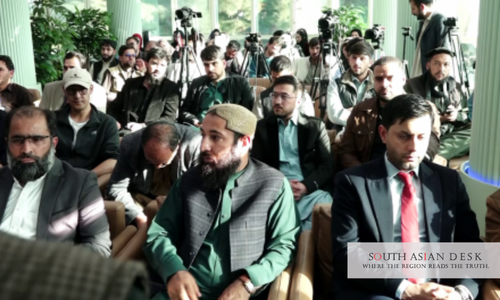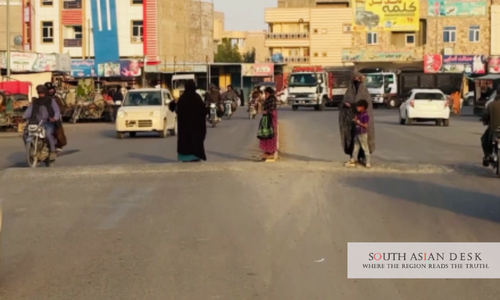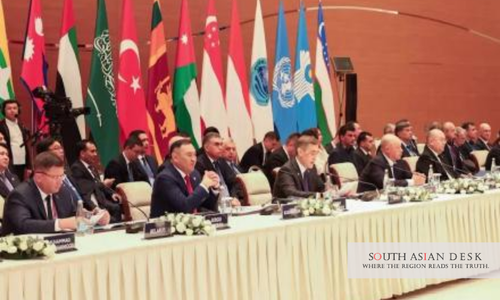
SCO Afghanistan security discussions took centre stage at the first Shanghai Cooperation Organization (SCO) Plus Expert Dialogue on Security Issues in Samarkand, Uzbekistan, where regional officials and international representatives examined terrorism, technological threats and the future of stability in Afghanistan. The meeting highlighted concerns over the activities of ISIS-Khorasan, including its use of digital platforms and artificial intelligence to spread propaganda, while the SCO reaffirmed its willingness to support international efforts to promote peace and development in Afghanistan.
The dialogue, held on November 6, 2026, brought together representatives of SCO member states, observer states, dialogue partners and international organisations. According to Uzbekistan’s official reporting, the gathering involved 33 delegations from 24 countries and representatives of five international organisations. Its central theme was security in the era of digital transformation, with particular attention to countering terrorism and extremism through international cooperation.
Nurlan Yermekbayev, Secretary-General of the Shanghai Cooperation Organization, reiterated the organisation’s commitment to Afghanistan becoming an independent, neutral and peaceful country, free from war, terrorism and narcotics. He said the SCO stood ready to support international efforts aimed at ensuring peace, stability and development in the country.
His remarks reflected the importance of Afghanistan to the wider regional security environment. As a country connecting Central and South Asia, Afghanistan occupies a strategically significant position, making its stability relevant to neighbouring states and broader regional economic cooperation.
SCO Afghanistan Security Concerns Centre on ISIS-Khorasan
One of the major concerns discussed at the meeting was the continued threat posed by ISIS-Khorasan, commonly known as ISIS-K. The group has been identified by international security officials as a serious threat to Central and South Asia, with its activities extending beyond conventional attacks to include online propaganda, recruitment and fundraising.
Alexander Zuev, Acting Under-Secretary-General for Counter-Terrorism and Head of the United Nations Office of Counter-Terrorism, described ISIS-K as one of the most serious security threats facing the region. He warned that the group was increasingly using artificial intelligence to translate and distribute propaganda materials in languages widely spoken across Central Asia.
The use of artificial intelligence presents additional challenges for counterterrorism agencies. Technology can allow extremist groups to produce and circulate material across language barriers more quickly, potentially reaching audiences that were previously less exposed to their messaging. It also complicates efforts by governments and digital platforms to identify and respond to extremist content.
The United Nations has previously warned about the growing sophistication of terrorist propaganda. In a September 2026 report, the UN Security Council’s Counter-Terrorism Committee Executive Directorate highlighted how terrorist groups increasingly use digital platforms and artificial intelligence to support recruitment, radicalisation, fundraising and the dissemination of propaganda. The report stressed that effective responses require cooperation between governments, technology companies and international organisations.
Islamic Emirate Calls for Greater Cooperation With Social Media Companies
The meeting also addressed the role of social media platforms in facilitating extremist activities. Abdul Haq Wasiq, Director General of Intelligence of the Islamic Emirate, said ISIS uses platforms including Telegram and TikTok for communication, fundraising and the dissemination of ideological propaganda.
Wasiq criticised major technology companies for what he described as insufficient cooperation with the Islamic Emirate in countering the group’s online activities. He argued that the lack of cooperation allowed ISIS to expand its activities and expose more people to extremist messaging.
His remarks highlight a broader challenge facing governments and technology companies. Digital platforms operate across national borders, while law enforcement and intelligence agencies generally function within national jurisdictions. Addressing terrorist activity online therefore requires mechanisms for sharing information, identifying suspicious networks and responding to extremist content while taking account of applicable legal and human rights standards.
The issue has become particularly significant as extremist organisations increasingly use digital tools to communicate with supporters and reach audiences in different countries. The Samarkand dialogue placed these developments within the wider discussion on how emerging technologies are changing the nature of regional and international security threats.
Afghanistan’s Regional Security and Pakistan Allegations
The meeting also brought renewed attention to the relationship between Afghanistan’s security and the stability of neighbouring countries. Military affairs expert Khalil Ahmad Nadem said Afghanistan’s geographical position gives it the potential to serve as a connecting point between Central and South Asia, as well as East and West Asia.
He argued that economic development in Afghanistan and the establishment of peace and stability within the country were directly linked to the wider region’s economic growth. His comments reflect the importance of regional connectivity, trade and infrastructure development, all of which depend on a sufficiently stable security environment.
However, disagreements over the origins and location of security threats remain a significant obstacle to regional cooperation. Zabihullah Mujahid, spokesperson for the Islamic Emirate, alleged that ISIS members were operating from Pakistani territory and claimed that some individuals were being sheltered, trained and supported there.
These allegations were presented by Mujahid as part of the Islamic Emirate’s broader concerns about cross-border security. They should be understood as claims made by the Afghan authorities rather than independently verified findings established at the meeting. Afghanistan and Pakistan have repeatedly exchanged accusations concerning militant activity and the use of territory by armed groups, reflecting persistent tensions over border security and counterterrorism responsibilities.
The dispute underscores the need for credible information-sharing and cooperation between neighbouring countries. Without effective coordination, allegations concerning militant networks can deepen political tensions and make it more difficult to develop a shared regional response.
Islamic Emirate Claims Progress Against ISIS
The Islamic Emirate has maintained that its security forces have taken decisive action against ISIS and eliminated the group’s presence from Afghan territory. Mujahid reiterated this position, saying that Afghan forces had cleared the country of the organisation’s presence.
However, the Islamic Emirate’s claims must be considered alongside assessments from international organisations. A United Nations report published in December 2025 noted that counterterrorism operations had weakened ISIS-K’s capabilities, including its ability to recruit and carry out high-profile attacks. At the same time, the report cautioned that the group remained resilient and that its presence and activities had not been completely eliminated.
This distinction is important because a reduction in attacks does not necessarily mean that an organisation has ceased to operate. ISIS-K’s ability to maintain networks, produce propaganda and potentially organise attacks beyond Afghanistan means that its activities remain a concern for regional security agencies.
Regional Cooperation Remains Essential for Afghanistan’s Stability
The discussions in Samarkand demonstrated that Afghanistan’s security situation remains closely connected to the wider concerns of Central and South Asian countries. The threat posed by ISIS-K, the use of artificial intelligence for extremist propaganda and disagreements over cross-border militant activity all highlight the limitations of addressing terrorism through isolated national measures.
The SCO’s stated willingness to support peace and development in Afghanistan provides a framework for continued regional engagement. However, translating diplomatic commitments into practical outcomes will require cooperation among governments, intelligence agencies and international organisations.
For Afghanistan, lasting stability will also depend on economic development and stronger regional connections. As Nadem noted, the country’s geographical position could make it an important link between neighbouring regions, but realising that potential requires a secure environment.
The Samarkand meeting therefore placed Afghanistan at the centre of a broader discussion about regional security, technological change and counterterrorism. Whether these discussions lead to more effective cooperation will be important not only for Afghanistan but also for the stability of the wider region.
Follow SouthAsianDesk on X, Instagram and Facebook for insights on business and current affairs from across South Asia.