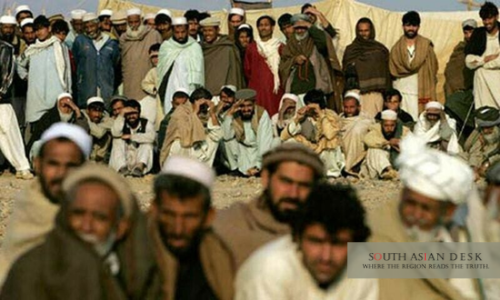
Police in Rawalpindi have rounded up 13 people, including eight women, whom they describe as illegal Afghan nationals, during a search operation carried out on Friday. The detainees were later moved to the repatriation camp in the H-9 sector of Islamabad for further legal proceedings, as the district police continue a wider crackdown that is being driven by directives from the Punjab government.
Search Operation in Ratta Amral Leads to Arrests
According to police sources, the arrests took place during a search operation launched in the Ratta Amral area of Rawalpindi. Officers said the Afghan nationals taken into custody were unable to produce valid visas to justify their stay in Pakistan. After the operation, they were shifted to the holding centre in H-9, Islamabad, which police sources also referred to as the repatriation camp.
Police said all of the detained individuals were from Kabul, Afghanistan. The Rawalpindi district police and the Special Branch are continuing their crackdown against illegal Afghan nationals residing in the district, which suggests that further search operations may follow in the coming days.
Punjab Home Department Presses Districts to Act
The latest arrests follow a series of instructions issued by the provincial authorities. Earlier in October, the Punjab government sought a report from the district police chiefs of six districts, including Rawalpindi, on the implementation of the illegal foreigners’ repatriation plan, which is being pursued in line with the federal government’s policy.
According to sources, the Punjab home department asked the police chiefs of Rawalpindi, Attock, Chakwal, Sargodha and Muzaffargarh, along with the Capital City Police Officer of Lahore, to take appropriate action against illegal Afghan residents as laid down in the policy of the Ministry of Interior and Narcotics Control. The department made clear that the action should follow the ministry’s guidelines rather than any local arrangement.
Federal Complaints Behind the Provincial Directive
The provincial directive also drew on information compiled at the federal level. Referring to the Ministry of Interior and Narcotics Control, as well as a list of 24 complaints prepared by the federal control room of the National Crisis Information Management Cell in Islamabad against illegal Afghan families, the provincial government instructed district police chiefs to act against illegal Afghan nationals and to submit a compliance report to the home department at the earliest.
A list of 24 individuals was also sent to each district police chief. Dawn reports that the list contained the names of complainants and callers, their contact numbers, the city and police station concerned, and the names of the illegal Afghan residents living in different parts of the province. In practical terms, the document gives local police specific leads to follow rather than leaving them to rely on general intelligence alone.
Rawalpindi Police Ordered to Report Within Three Days
Following the provincial government’s instructions, the City Police Officer of Rawalpindi issued his own directive to the superintendents of police of the Rawal, Potohar and Saddar divisions. They were told to submit a compliance report within three days on the action taken under the repatriation plan, so that it could be forwarded to the department concerned.
The short deadline indicates that the Rawalpindi police leadership is treating the matter as a priority. It also means that the district’s divisional officers are now accountable for showing results, which may explain why search operations such as the one in Ratta Amral are being carried out in quick succession.
What Happens to Those Detained
For the 13 people arrested on Friday, the next stage is the legal process that police said would follow their transfer to the facility in H-9. Officials have not said how long the proceedings might take or when the detainees might be sent back to Afghanistan, and Dawn’s report does not provide those details. The report does make clear, however, that the lack of valid visas was the reason police gave for the arrests.
The episode shows how federal policy, provincial oversight and district policing now work together on the question of unlawful residence. The Ministry of Interior and Narcotics Control sets the framework, the Punjab home department demands compliance, and the district police carry out the operations on the ground. With reports due from divisional officers and further complaints already on file, police in Rawalpindi are expected to continue the drive against illegal Afghan nationals in the district.
Follow SouthAsianDesk on X, Instagram and Facebook for insights on business and current affairs from across South Asia.
Read More: