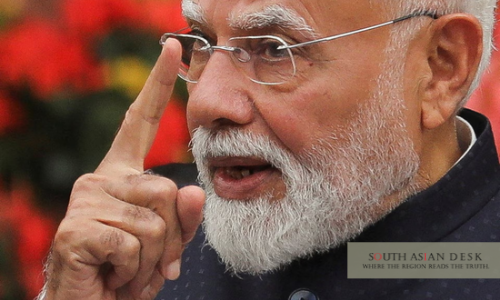
Meta battles political storm in India as the opposition Congress party takes its complaints about content removal from the streets to the courts. The party’s youth wing has sued the technology company and the federal government, alleging that an automated takedown system is wiping out lawful political posts, including those that carry the name or photograph of party leader Rahul Gandhi, ahead of state elections.
Protests Outside Meta Offices Escalate Into a Legal Fight
The dispute became public when workers from the Indian Youth Congress staged protests outside Meta offices in several cities, including Hyderabad, Gurugram and Mumbai. According to reports, the demonstrations began after Instagram blocked the accounts of senior youth wing officials, among them its chief, Uday Bhanu Chhib. Those accounts have since been restored. The group clashed with police outside the company’s offices and warned that it would continue its campaign unless its leaders’ accounts were reinstated.
The party has accused Meta of acting in the interests of Prime Minister Narendra Modi’s Bharatiya Janata Party. The BJP has not commented on the lawsuit, but it has described the protests as vandalism. Meta has said that it restricts content in India to comply with local law.
The youth wing then filed its case in the Delhi High Court on 25 November, naming Meta and the Indian government as respondents. The petition, according to Reuters, argues that the system has made certain posts unavailable in India and is catching far more than the identical copies it is meant to remove.
Why Meta Battles Political Storm in India Over Rahul Gandhi Posts
At the centre of the petition is a series of ordinary posts that, the party says, share only one feature. They include a birthday greeting between party workers, a wedding invitation handed to Rahul Gandhi and a tribute to his father. According to the filing, the only common element among them is Gandhi’s name or photograph. The party says posts blocked between 29 September and 23 November fall into this category, and that each notice described the restriction as the result of an automated system implemented under legal requirements without citing a court order or government direction.
The social media head of the youth wing, Manu Jain, wrote in the filing that the rules have become an instrument for suppressing lawful political expression. The party argues that the restrictions threaten to cut it off from voters just as state elections approach in early 2027, when Facebook and Instagram are expected to play a central role in campaigning.
How the Automated Takedown Rules Changed Content Restrictions
The lawsuit targets an amendment to India’s information technology rules that came into force on 20 February. Under the revised law, platforms must remove content deemed unlawful by an authority within three hours rather than 36. Large platforms must also use automated tools to find and remove content that is exactly identical to material already flagged. The rules call for appropriate human oversight and periodic review of those tools for accuracy and bias, and platforms that fail to comply risk losing safe harbour, the legal protection that shields them from liability for user posts.
The effect on Meta’s figures has been dramatic. The company restricted 5.44 million items in India in the first half of 2026, compared with 41,357 in the previous six months and nearly 70,000 across the whole of 2025. Meta attributes the jump to the automated detection of identical copies required under Indian law, rather than to a rise in the number of legal requests. India is among a small number of countries where Meta says local law obliges it to restrict content automatically and at scale. The digital rights group Internet Freedom Foundation has argued that censorship by automation is still censorship.
What the Congress Party Wants From the Court
The Congress party is asking the court to strike down the automated takedown mandate, to order Meta to restore the blocked posts and to require the company to disclose the criteria it uses for blocking. Hearings are expected to begin in the coming days.
Meta has sought to distance itself from the political charge. In a closed-door meeting with Congress leaders in New Delhi, the company said it is neutral towards all political parties and is only abiding by Indian law. The talks ended without any commitments, according to The Next Web.
A Test in Meta’s Largest Market
The case arrives at a sensitive moment for a company that counts more than 500 million users in India, its biggest market by number of users. The company has faced allegations of political bias in the country since 2020, and the current dispute has become one of its most serious challenges there. How the Delhi High Court rules, and whether the government revisits the rule, will determine whether Meta battles political storm in India for months to come, and how far automated enforcement can go before it begins to restrict legitimate political speech.
Follow SouthAsianDesk on X, Instagram and Facebook for insights on business and current affairs from across South Asia.