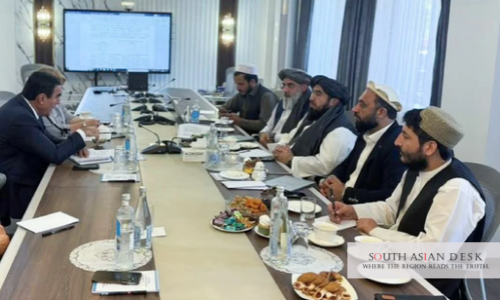
Afghanistan Tajikistan electricity cooperation took a significant step forward on October 2, 2026, when Abdul Haq Hamkar, CEO of Da Afghanistan Breshna Sherkat (DABS), met with Daler Juma, Tajikistan’s Minister of Energy and Water Resources, to discuss enhancing electricity imports between the two nations. The meeting underscores growing regional efforts to address Afghanistan’s energy needs through cross-border cooperation.
Afghanistan Tajikistan electricity cooperation: Details of the Meeting
The discussions centered on increasing electricity imports from Tajikistan to Afghanistan, with both sides exploring infrastructure upgrades to expand power transmission capacity. According to Breshna, Tajikistan has agreed to increase electricity exports to Afghanistan, a move that could significantly bolster Afghanistan’s energy security. Plans also included improving power quality and expanding transmission lines to ensure reliable supply.
Implications for Regional Energy Security
Enhanced electricity cooperation between Afghanistan and Tajikistan could have far-reaching implications for regional stability. Afghanistan’s energy infrastructure has long struggled with shortages, and increased imports from Tajikistan—rich in hydropower resources—could alleviate pressure on local grids. Improved access to electricity may also benefit Afghan communities by supporting economic activity and public services. This development aligns with broader regional goals of strengthening energy security across South Asia, where cross-border energy projects are increasingly seen as vital for economic development and geopolitical stability.
Context of Energy Cooperation in South Asia
This meeting aligns with broader regional trends toward energy cooperation in South Asia. Energy security remains a critical factor for economic development, with cross-border projects like the Turkmenistan-Afghanistan-Pakistan-India (TAPI) pipeline highlighting the region’s interconnected challenges. Afghanistan and Tajikistan’s electricity cooperation could serve as a model for other South Asian nations seeking to address energy gaps through shared infrastructure. The DABS CEO meeting with Tajikistan’s energy minister reflects a growing recognition that regional collaboration is essential to overcoming energy scarcity and fostering sustainable growth.
Historical Context and Future Prospects
The current agreement builds on a history of energy collaboration between Afghanistan and Tajikistan. Over the past decade, both countries have explored various energy projects, including the construction of transmission lines and the development of hydropower facilities. However, political instability and infrastructure limitations have hindered progress. The recent discussions signal a renewed commitment to addressing these challenges through coordinated efforts. Abdul Haq Hamkar, CEO of DABS, emphasized the importance of this partnership in a statement following the meeting, noting that energy imports from Tajikistan could provide a reliable and sustainable solution to Afghanistan’s power shortages.
Impact on Local Communities and Economic Development
The expansion of electricity cooperation is expected to have a direct impact on local communities in both countries. In Afghanistan, increased access to electricity could improve living standards, support small businesses, and enhance access to education and healthcare. For Tajikistan, the agreement represents an opportunity to diversify its energy exports and strengthen economic ties with its neighbors. Daler Juma, Tajikistan’s Minister of Energy, highlighted the potential for this partnership to create jobs and stimulate regional trade, further reinforcing the importance of regional energy security.
Challenges and Opportunities Ahead
While the agreement marks a positive step, several challenges remain. Infrastructure upgrades will require significant investment, and both countries must navigate complex regulatory and logistical hurdles. Additionally, ensuring the reliability of power transmission across borders will require ongoing technical collaboration. However, the potential benefits—ranging from improved energy security to enhanced regional cooperation—make this initiative a promising development for both nations.
Social Media
Connect with us on Twitter, Instagram, and Facebook for real-time updates and analysis on regional energy cooperation and other key developments in South Asia.
Additional Resources
For more information on Afghanistan’s energy sector and regional energy initiatives, visit DABS official website and Tajikistan’s Ministry of Energy.
Follow SouthAsianDesk on X, Instagram and Facebook for insights on business and current affairs from across South Asia.
This report focuses on Afghanistan Tajikistan electricity cooperation and the verified developments surrounding it.