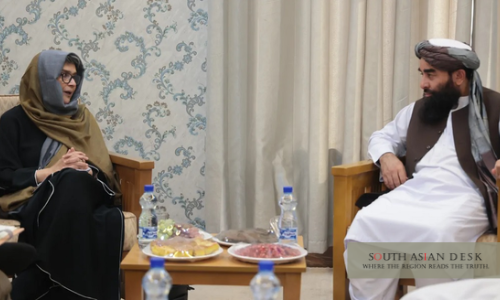
Progress in Afghanistan’s political process would make it easier to tackle several pressing problems facing the country, according to the head of the United Nations Assistance Mission in Afghanistan (UNAMA). Rabab Fatima, the Special Representative of the UN Secretary-General for Afghanistan, made the call after completing her first visits to the provinces of Nangarhar, Bamyan and Kandahar, where she met a broad cross-section of Afghan society.
Fatima’s Message on Afghanistan’s Political Process
Reporting by Ariana News said Ms Fatima expressed the United Nations’ hope and expectation that the political process would move forward, since that would allow the organisation and its partners to make headway on many of the matters before them. She did not set out specific benchmarks in the remarks reported, and the statement did not detail what form such progress might take.
The comments are significant because UNAMA, which was established in 2002 after the Bonn Agreement, remains the United Nations’ principal political presence in Afghanistan. Its role covers political engagement, the coordination of humanitarian work and the monitoring of human rights. The mission has undergone considerable change since the Taliban returned to power in August 2021, and the Security Council extended its mandate until June 17, 2027, while asking for a strategic review of whether its structure and priorities remain suited to current conditions in the country.
Who Rabab Fatima Met During Her Provincial Visits
During her initial visits to Nangarhar, Bamyan and Kandahar, Ms Fatima met government officials, women, community leaders and young people. She also held discussions with business representatives, returnees and UN personnel working in the field. The itinerary, which covered the east, centre and south of the country, gave the new envoy an opportunity to hear directly from communities affected by displacement and economic strain.
Ms Fatima is a Bangladeshi diplomat who previously served as her country’s ambassador and permanent representative to the United Nations in New York from 2019 to 2022. In 2022 she became the first woman elected chair of the UN Peacebuilding Commission. Secretary-General António Guterres appointed her in July 2026 to succeed Roza Otunbayeva of Kyrgyzstan, and she arrived in Kabul on October 18 to assume her duties, with deputy special representative Georgette Gagnon having overseen the mission during the transition.
Humanitarian Needs and Long-Term Priorities
Alongside her remarks on the political track, Ms Fatima reaffirmed the commitment of the United Nations to working with the authorities, local communities and international partners to address humanitarian needs. She said the organisation also wishes to pursue long-term solutions in areas including livelihoods, healthcare, education, climate resilience and private sector development.
The envoy used her visits to highlight the difficulties confronting ordinary Afghans. Those included the large-scale return of Afghans from abroad, economic hardship, unemployment, climate-related pressures and limited access to essential services. The pairing of humanitarian assistance with longer-term development goals reflects a wider approach by the United Nations, which has argued that emergency aid alone cannot resolve problems rooted in livelihoods and weak basic services.
Why Returnees and Economic Pressure Matter
The mention of returnees points to one of the most visible challenges inside the country. As large numbers of Afghans come back from neighbouring states, communities in border provinces such as Nangarhar and Kandahar face added demand for housing, work, health care and schooling. Where jobs are scarce, the arrival of new residents can intensify existing hardship, which is why UN agencies have tied reintegration to wider efforts on livelihoods and local services.
Ms Fatima’s emphasis on climate resilience also reflects the exposure of rural Afghan households to drought and unreliable water supplies, which can compound poverty and drive further movement of people.
What Lies Ahead for UNAMA
For UNAMA, the coming months will test how far its engagement with the authorities, communities and international partners can translate into practical results. The mission’s mandate review, the scale of humanitarian requirements and the pace of any movement in Afghanistan’s political process will all shape how effectively it can operate. Ms Fatima’s early field visits suggest that she intends to combine direct contact with Afghans in the provinces with continued diplomacy at the national and international levels, as she seeks to build momentum on the issues the United Nations considers most urgent.
Follow SouthAsianDesk on X, Instagram and Facebook for insights on business and current affairs from across South Asia.