Bangladesh-China Trade Gap Tops Agenda in Beijing Talks
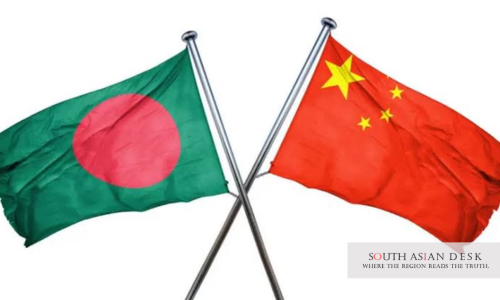
Bangladesh-China trade gap concerns took centre stage as Prime Minister Tarique Rahman urged Chinese President Xi Jinping to help Dhaka diversify exports and reduce the imbalance in one of Bangladesh’s most important economic relationships.
Rahman met Xi at the Great Hall of the People in Beijing during his first visit to China since taking office in February. The trip formed part of his maiden overseas tour, which also included Malaysia, and reflected Dhaka’s effort to attract investment, expand labour and trade opportunities, and recalibrate foreign relations after a major political transition at home.
During the meeting, Rahman asked China to import more Bangladeshi products, including fresh mangoes, jackfruit, guava, aquatic products, raw leather, jute products and pharmaceuticals. His message was straightforward: Bangladesh wants its economic relationship with China to move beyond imports, loans and infrastructure financing towards broader market access for Bangladeshi goods.
China is one of Bangladesh’s largest trading partners and development financiers, but the relationship remains heavily tilted in Beijing’s favour. Bangladesh imports large volumes of machinery, industrial inputs, electronics, textiles and other manufactured goods from China, while its exports to the Chinese market remain much narrower.
That imbalance has become harder for Dhaka to ignore as it seeks to stabilise its economy, revive investment and prepare for the next stage of export-led growth.
Dhaka Seeks Export Diversification
Bangladesh’s appeal to China is partly about numbers, but it is also about economic structure. The country’s export base remains dominated by ready-made garments, while its shipments to China have not grown at the scale needed to balance imports.
Rahman’s request for China to consider importing fruits, aquatic products, leather, jute goods and pharmaceuticals reflects a wider push to diversify beyond garments. These sectors have potential, but they often face barriers linked to quality standards, certification, cold-chain logistics, market access and buyer networks.
Fresh mangoes, jackfruit and guava would require sanitary and phytosanitary approvals, reliable packaging and efficient transport. Aquatic products need strict quality assurance and food-safety compliance. Leather and pharmaceuticals require regulatory acceptance and stronger business-to-business links.
If China opens more space for these goods, it could help Bangladesh move up the export ladder and reduce dependence on a small number of markets and products. But market access alone will not be enough. Bangladesh will also need to improve product standards, logistics and export promotion to compete seriously in China’s vast but demanding consumer market.
Infrastructure Delivery Also in Focus
Rahman also asked China for support in implementing Bangladesh’s major “signature projects” and modernising existing industrial units. This reflects another core part of the relationship: Chinese financing and construction have played a major role in Bangladesh’s infrastructure development.
Bangladesh joined China’s Belt and Road Initiative in 2016, and Chinese companies have since become active in energy, roads, bridges, ports and industrial projects. According to Reuters, Bangladesh owes China about $6.2 billion, while Chinese firms have invested heavily in the country, including in the energy sector.
But Dhaka is not simply asking for more financing. It is also asking for faster delivery. Infrastructure delays can raise costs, weaken investor confidence and slow the benefits promised by large projects. For a government trying to show economic momentum, completion timelines matter as much as announcements.
China has become more cautious about large-scale overseas financing, particularly where logistics, debt concerns or political complications create risk. That makes Bangladesh’s request for faster delivery significant. Dhaka wants Beijing to remain engaged, but it also needs projects to translate into jobs, exports and industrial capacity.
China-Myanmar-Bangladesh Corridor Revived
China also proposed deeper cooperation around the China-Myanmar-Bangladesh Economic Corridor, a connectivity concept aimed at linking Bangladesh more closely with Myanmar and China.
For Beijing, such corridors support trade, logistics and strategic connectivity under the wider Belt and Road framework. For Bangladesh, they could offer access to regional supply chains and new routes for trade. But the corridor is politically and practically complex, especially because of instability in Myanmar and sensitivities around regional geopolitics.
Any serious progress would require security guarantees, financing clarity, environmental safeguards and coordination with Bangladesh’s own development priorities. Dhaka will need to ensure that connectivity projects serve its economic interests rather than simply adding debt or geopolitical exposure.
The corridor proposal also comes as Bangladesh tries to balance relations with China and India. Rahman’s predecessor, Sheikh Hasina, was widely seen as close to New Delhi. Rahman’s government has sought to maintain working ties with India while also deepening engagement with Beijing, especially on investment and infrastructure.
That balancing act will shape how far Dhaka can go with Chinese-backed connectivity proposals.
Teesta and Water Cooperation Remain Important
The visit also built on recent discussions over water cooperation, including river management and the Teesta River project. Water infrastructure is a sensitive issue for Bangladesh because rivers are central to agriculture, flood control, livelihoods and climate resilience.
China has offered stronger cooperation on water planning, river management and flood control. For Bangladesh, Chinese technical and financial support could be useful, especially for river dredging, erosion control and water-resource management.
However, water cooperation carries regional implications. The Teesta is a politically sensitive river in Bangladesh-India relations, and any Chinese role in a major Teesta project is likely to be watched closely by New Delhi.
This means Bangladesh must navigate both practical development needs and diplomatic sensitivities. It wants investment and technical support, but it also needs to avoid turning water management into another regional flashpoint.
China Looks to Strengthen Ties With Dhaka
For China, Rahman’s visit offered an opportunity to consolidate influence with Bangladesh’s new government. Beijing has long viewed Dhaka as an important partner in South Asia because of its location, labour force, market size and access to the Bay of Bengal.
China’s willingness to discuss trade, infrastructure, AI, green technology, healthcare and education suggests Beijing wants a broader relationship, not only one built around roads and power plants.
For Bangladesh, that broader cooperation is useful if it supports industrial upgrading and job creation. The country needs technology partnerships, energy transition support, vocational training and investment in higher-value manufacturing. Chinese cooperation in green technology and digital infrastructure could help if structured transparently and aligned with Bangladesh’s long-term economic strategy.
But Dhaka will also need to avoid overdependence. A healthy relationship with China should bring market access, investment and technology without narrowing Bangladesh’s diplomatic options or worsening debt vulnerabilities.
A Trade Relationship That Needs Rebalancing
The central issue remains the trade gap. Bangladesh has benefited from Chinese financing and low-cost imports, but a durable economic partnership requires more balanced trade.
If China imports more Bangladeshi goods, supports industrial modernisation and speeds up infrastructure delivery, the relationship could become more productive for Dhaka. If the pattern remains mostly one-way, with Bangladesh importing heavily while exporting little, trade concerns will continue to grow.
Rahman’s Beijing message therefore marks an important shift in tone. Bangladesh is not rejecting Chinese investment or cooperation. It is asking for a fairer economic exchange.
The test will be whether Beijing follows through with concrete market access, import approvals, investment in export-oriented industries and faster implementation of agreed projects.
For Bangladesh, the opportunity is clear: use China’s market and capital to diversify exports and strengthen industry. For China, responding positively would help show that its relationship with Dhaka is not only about loans and infrastructure, but also about shared economic gains.
If both sides act on the commitments, the Bangladesh-China trade gap could begin to narrow. If not, the imbalance will remain one of the biggest weaknesses in an otherwise expanding partnership.
Published in SouthAsianDesk, June 27, 2026
Follow SouthAsianDesk on X, Instagram and Facebook for insights on business and current affairs from across South Asia.