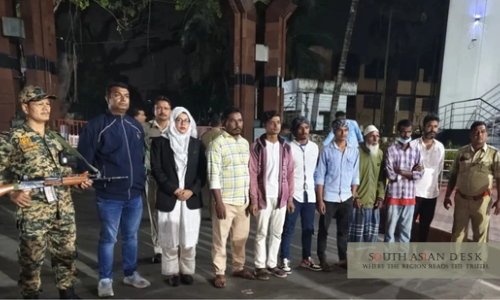
Eight Bangladeshis returning from Indian jails were handed over to Bangladeshi authorities at the Benapole checkpost on Thursday night, after completing two-year prison sentences for entering India illegally. According to a report by Md Selim Reza, Indian immigration police at the Petrapole border transferred the group to their counterparts at Benapole at around 8pm. The men had crossed into India in search of employment, and a court there sentenced each of them to two years in prison.
Bangladeshis Returning From Indian Jails: How the Handover at Benapole Took Place
Indian authorities facilitated the return by issuing special travel permits, which allow people who have completed their sentences to cross the border without valid passports. Once the formalities were complete at the Benapole checkpost, the returnees were handed over to Benapole Port Police, who subsequently transferred them to the care of Justice and Care, a non-governmental organisation that works with people affected by trafficking and unsafe migration.
Saifur Rahman, officer-in-charge of Benapole Immigration Police, confirmed that the eight returnees had been received after serving their prison terms in India. The group comes from seven districts of Bangladesh. They are from Faridpur, Chattogram, Narail, Jashore, Barguna, Panchagarh and Satkhira, a spread that reflects how widely the pull of overseas work is felt across the country.
Shelter and Reunion With Relatives
Shafiqul Islam, a field worker for Justice and Care in Jashore, said the returnees would spend the night at the organisation’s shelter home after being brought from the port police station. They are expected to be reunited with their families subsequently. Such temporary shelter is a standard part of the process, as it gives the returnees time to rest and allows the organisation to arrange safe transport to their home districts.
For the men themselves, the return closes a two-year chapter that began with an attempt to find work and ended in a prison cell. The report does not detail the circumstances in which each of them crossed the border, but the pattern is familiar to officials at Benapole, one of the busiest land crossings between the two countries.
A Familiar Pattern at the Border
Repatriations of this kind have occurred regularly at Benapole. In September, 47 Bangladeshis, including four women, returned through the same checkpost after serving two-year prison sentences in India. According to the officer-in-charge at the time, they had entered Tamil Nadu about two and a half years earlier through human traffickers in the hope of finding better employment, and they were arrested by local police while working in private households. After their sentences ended, they were kept in shelter homes in Attur in Salem and in a camp at Tiruchirappalli before travelling home on special permits issued following diplomatic communication between the foreign ministries of the two countries.
An earlier case, reported in November 2024, involved 24 Bangladeshis, including 11 women, who returned through Benapole after two years in Indian jail. They too had travelled without valid documents with the help of local brokers. Taken together, the cases suggest that irregular migration facilitated by brokers continues to draw people into legal trouble abroad, even though the sentences they face are well known in the communities they come from.
Why Safe Migration Matters
The latest group of Bangladeshis returning from Indian jails highlights the human cost of unregulated cross-border movement. Those who enter India without valid papers risk arrest, a court sentence and a prolonged wait for repatriation, since the return process depends on the completion of a prison term and on coordination between the diplomatic missions and immigration authorities of the two countries. Organisations such as Justice and Care often play a central role after the handover, offering shelter and helping returnees reconnect with their relatives.
Rights groups and officials have repeatedly urged prospective migrants to rely on legal channels and to avoid brokers who promise easy employment across the border. Whether through awareness campaigns or stricter action against trafficking networks, the aim is the same: to ensure that fewer people have to return home only after years behind bars. For the eight men who arrived at Benapole on Thursday night, the immediate priority is a reunion with their families, while the wider lesson for others considering the same journey remains clear.
Follow SouthAsianDesk on X, Instagram, and Facebook for insights on business and current affairs from across South Asia.
Read More: