Bhutanese refugee scam convictions in Nepal have marked a major moment in one of the country’s most politically sensitive corruption cases, after a Kathmandu court found former ministers, senior officials and middlemen guilty of helping pass Nepali citizens off as Bhutanese refugees for promised resettlement in the United States.
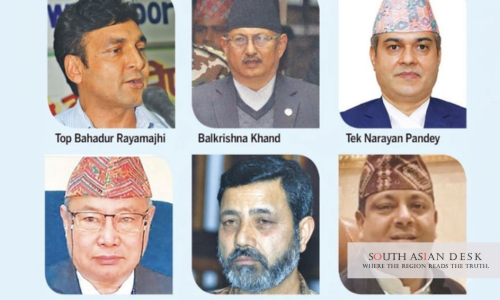
The Kathmandu District Court convicted former deputy prime minister Top Bahadur Rayamajhi, former home minister Bal Krishna Khand, former home secretary Tek Narayan Pandey and several others in the case. The court found that the accused were involved in a scheme that used forged government records, fake identity documents and false resettlement assurances to extract money from victims.
The verdict comes three years after prosecutors filed the case and follows a scandal that shook Nepal’s political establishment. Sentencing has not yet been announced. The court has scheduled a separate hearing to determine penalties.
Bhutanese refugee scam exposes organised fraud
Bhutanese refugee scam proceedings centred on allegations that a network of political figures, government officials and middlemen manipulated documents linked to the resettlement of Bhutanese refugees.
Nepal had hosted thousands of Bhutanese refugees for decades, many of them Nepali-speaking Lhotshampas who fled or were expelled from Bhutan in the late 1980s and early 1990s. A large international resettlement programme moved most of them to third countries, including the United States, between 2007 and 2016.
The fraud began after that process had largely ended. Prosecutors said the network falsely promised Nepali citizens that they could be sent abroad by listing them as Bhutanese refugees who had supposedly been left out of earlier resettlement efforts.
Victims were allegedly told that the process was official and that they would be resettled in the United States. In reality, they were Nepali citizens with no legitimate claim to be included in the Bhutanese refugee resettlement process.
The court found that forged reports and counterfeit identity cards were used to support the scheme. It concluded that the wrongdoing went beyond ordinary fraud because it involved coordinated misuse of state-linked processes and damaged Nepal’s international reputation.
Former ministers among those convicted
The conviction of Rayamajhi and Khand has made the case especially significant. Rayamajhi is a former deputy prime minister, while Khand previously served as home minister. Their involvement placed the scandal at the centre of Nepal’s political debate.
The court convicted Rayamajhi of offences including fraud, organised crime and offences against the state. Khand was convicted as an accomplice in organised fraud and related offences. The court found that although there was no proof that Khand personally received money, he had helped facilitate the fraud under the influence of the network.
Former home secretary Tek Narayan Pandey was also convicted, along with figures described as members of the network and intermediaries. Those convicted included Keshav Dulal, Sanu Bhandari, Sagar Rai, Sandesh Sharma, Indrajit Rai, Govinda Chaudhary, Angtawa Sherpa, Shamsher Miya, Narendra KC, Hari Bhakta Maharjan and Niranjan Kumar Kharel.
The court also convicted Bhutanese refugee leader Tek Nath Rizal on forgery and accomplice-related findings. Bechan Jha, described as a middleman, was convicted of fraud.
The verdict drew legal distinctions between those treated as principal offenders and those convicted as accomplices. That distinction is expected to affect sentencing.
Seven defendants acquitted
Of the 31 people originally charged, the court convicted 16 and acquitted seven. The court held that the prosecution failed to prove charges against those acquitted.
The acquitted defendants included Sandeep Rayamajhi, son of Top Bahadur Rayamajhi, Ram Sharan KC, Tanka Kumar Gurung, Pratik Thapa, Laxmi Maharjan, Keshav Tuladhar and Ashish Budhathoki.
Cases against eight absconding defendants have been kept in abeyance and will proceed when they are arrested. Those defendants include Ashok Pokharel, Dhiren Rai, Deepa Humagain, Niraj Rai, Rajesh Aryal, Mohan Raj Rai, Binita Sawden Limbu and Sunil Budhathoki.
The separation of convicted, acquitted and absconding defendants shows the scale and complexity of the case. It also reflects the difficulty of proving individual criminal responsibility within a wide alleged network involving political figures, bureaucrats and intermediaries.
Court says forged records damaged Nepal’s image
The court found that the scheme involved the alteration of government records and the issuance of fake documents identifying people as Bhutanese refugees.
The ruling treated the conduct as an offence against the state because it undermined the dignity of Nepali citizens and damaged Nepal’s international image. The court said the use of forged documents, official-looking processes and coordinated participation by multiple actors made the case more serious than a private fraud operation.
The judgment also accepted the prosecution’s argument that the fraud was organised. The court found that political figures, administrators, government employees and middlemen worked together to defraud victims by promising resettlement abroad.
This finding is important because it places the case within Nepal’s wider debate over corruption and state capture. The scam did not rely only on individual deception. It allegedly used the credibility of state institutions to make false promises appear official.
Victims paid for false US resettlement hopes
The victims were ordinary Nepali citizens who believed they were paying for a lawful migration pathway. Investigators said many paid large sums after being told they could be included in refugee lists and resettled overseas.
Court filings cited in Nepali reporting put the formally identified fraud amount at roughly Rs288 million from at least 115 victims. Investigators have indicated that the true scale may be larger, as not all victims came forward or were included in the original prosecution.
The case therefore combines migration fraud, corruption and abuse of public trust. It exploited both economic desperation and the appeal of migration to the United States.
Many victims reportedly believed they were dealing with people who had official access or government connections. That perception helped sustain the fraud and made it harder for victims to detect that the process was false.
Case became a test of accountability
The Bhutanese refugee scam became a test of whether Nepal’s justice system could act against politically powerful figures.
The case first drew public attention after media investigations exposed the alleged scheme in 2022. Police and prosecutors later pursued charges against politicians, officials and intermediaries. Several high-profile arrests followed in 2023.
The convictions will likely be viewed by many in Nepal as an important anti-corruption milestone. However, the case may not end with the District Court verdict. Appeals are likely, and sentencing remains pending.
The court’s decision also leaves wider questions about political accountability. Some names raised during public debate were not prosecuted in the final case, while the court declined requests to summon certain prominent figures who were not formally charged.
The legal process has therefore delivered convictions against several major defendants, but public scrutiny of the broader political environment surrounding the scam is likely to continue.
Sentencing will determine legal consequences
The next major step will be sentencing. The court has scheduled a hearing to determine prison terms and financial penalties for those convicted.
The sentences may vary depending on whether each defendant was found to be a principal offender or an accomplice, and on which offences were established against them. Convictions for organised crime and offences against the state could carry more serious punishment than narrower fraud findings.
The sentencing stage will also shape public perception of the verdict. In a case involving senior politicians and officials, the severity of punishment will be closely watched by victims, anti-corruption campaigners and political parties.
For the victims, sentencing is only one part of justice. Recovery of money, recognition of harm and accountability for the full network behind the fraud will also matter.
Nepal corruption debate likely to intensify
The verdict is likely to intensify debate over corruption in Nepal’s political and administrative systems. The case involved allegations that government-linked processes were manipulated to support a private fraud scheme.
Such cases damage public trust because they suggest that official documents, task force reports and administrative channels can be misused for personal gain. They also harm Nepal’s international credibility in migration and refugee-related matters.
The case is particularly sensitive because it involved the legacy of real Bhutanese refugees, many of whom lived in Nepal for years before being resettled abroad. The fraudulent scheme exploited that humanitarian history for financial gain.
The verdict sends a strong message, but lasting impact will depend on whether Nepal strengthens safeguards around government documents, migration processes and anti-corruption enforcement.
Verdict closes one phase of a major scandal
The Kathmandu District Court’s verdict closes a major phase of the Bhutanese refugee scam, but the case is not fully over. Sentencing, appeals and proceedings against absconding defendants remain ahead.
The convictions of former ministers, a former home secretary and several intermediaries mark a rare moment of accountability in a case involving senior political and administrative figures.
The scandal exposed how migration aspirations, weak oversight and political access could be combined into an organised fraud. It also showed how victims can be drawn into elaborate schemes when official credibility is misused.
For Nepal, the verdict is a major legal development. The larger challenge is to ensure that the case leads to stronger institutional safeguards, compensation efforts for victims and a firmer response to corruption involving public office.
Published in SouthAsianDesk, July 10, 2026
Follow SouthAsianDesk on X, Instagram and Facebook for insights on business and current affairs from across South Asia.