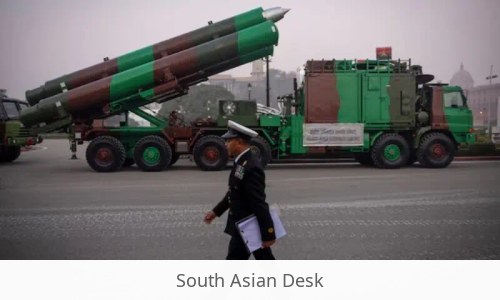
The BrahMos missile deal marks a significant milestone in India-Indonesia defense collaboration, as confirmed by Indian Prime Minister Narendra Modi during his two-day visit to Jakarta on July 7, 2026. India will supply BrahMos supersonic cruise missiles and Astra air-to-air missiles to Indonesia under a $630 million agreement, expected to be formalized during the visit. This deal positions Indonesia as the third country to acquire BrahMos missiles, manufactured by BrahMos Aerospace Private Limited, and underscores growing Indo-Pacific security ties between New Delhi and Jakarta, reflecting shared regional defense priorities and economic interests.
BrahMos missile deal: Regional Security Implications
The BrahMos missiles, renowned for their supersonic speed (approximately Mach 2.8–3) and precision-guided capabilities, will significantly enhance Indonesia’s naval and coastal defense systems. These missiles, capable of striking targets up to 300 kilometers away, are designed for use on warships, submarines, aircraft, and land-based platforms. Their deployment aligns with India’s broader geopolitical strategy to counterbalance China’s growing influence in Southeast Asia, particularly as Beijing expands its maritime presence through initiatives like the Belt and Road Initiative (BRI). Indonesia, a key player in the Indo-Pacific security framework, has increasingly sought partnerships with India to diversify its defense suppliers and strengthen regional stability. The agreement also reflects India’s commitment to deepening ties with ASEAN nations amid evolving geopolitical dynamics, including the Quad (Australia, India, Japan, and the United States) and other multilateral security dialogues.
Indonesia’s strategic location in the Malacca Strait and its role as a maritime hub make it a critical node in Indo-Pacific security architecture. By acquiring BrahMos missiles, Jakarta aims to bolster its deterrence capabilities against potential regional threats, including those emanating from the South China Sea. This move also signals a shift in Indonesia’s defense procurement strategy, which has historically relied heavily on Western suppliers. The deal underscores New Delhi’s growing influence as a reliable defense partner for Southeast Asian nations, complementing existing partnerships with countries like Vietnam, the Philippines, and Thailand.
Economic Impact of the Deal
Beyond security, the BrahMos missile deal is expected to boost bilateral trade and investment between India and Indonesia, which already enjoy a $13 billion trade relationship. Defense contracts of this scale often catalyze ancillary industries, including logistics, technology, and training, creating economic synergies. The BrahMos program, a joint venture between India’s Defence Research and Development Organisation (DRDO) and Russia’s NPO Mashinostroeyenia, has already seen successful exports to countries like the United Arab Emirates and the Philippines, and this deal is likely to expand India’s footprint in the global arms market.
For Indonesia, the acquisition of BrahMos missiles represents a strategic move to modernize its armed forces while reducing reliance on Western suppliers. The deal may also pave the way for technology transfer and co-production agreements, which could help Indonesia develop its own defense industry over time. Additionally, the contract is expected to create employment opportunities in both countries, particularly in sectors related to missile maintenance, training, and infrastructure development. The economic benefits extend to India’s private sector, which has been increasingly involved in defense manufacturing through public-private partnerships.
Broader Strategic Context
The BrahMos missile deal is part of a larger trend of India’s expanding defense ties with Southeast Asian nations. In recent years, New Delhi has signed several high-profile defense agreements with countries in the region, including the sale of advanced radar systems to the Philippines and the provision of naval training to Vietnam. These partnerships are driven by shared concerns over regional security, particularly in the context of China’s assertive maritime policies. Indonesia’s alignment with India also aligns with its broader foreign policy goals of maintaining a multipolar world order and avoiding over-reliance on any single power.
The agreement also reflects the growing importance of the Indo-Pacific as a focal point of global geopolitics. With the United States, Japan, and Australia deepening their security cooperation in the region, India’s partnerships with countries like Indonesia reinforce a collective effort to ensure freedom of navigation and counter authoritarian expansionism. The BrahMos deal, therefore, is not merely a bilateral transaction but a strategic move that contributes to the broader Indo-Pacific security architecture.
Follow SouthAsianDesk on X, Instagram and Facebook for insights on business and current affairs from across South Asia.
Sources
- Indonesia to buy BrahMos missiles, Indian govt official says as Modi kicks off 2-day Jakarta visit – dawn.com
- BrahMos, EVMs And Sabang Masterstroke As India And Indonesia Team Up – ndtv.com
Image: i.dawn.com