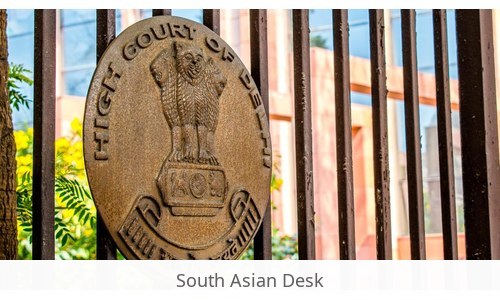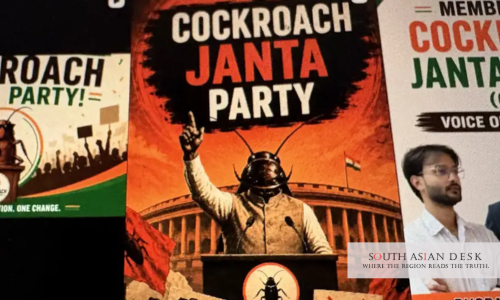
Cockroach Janta Party X account has been ordered to be unblocked by the Delhi High Court, marking a significant legal win for the youth-led political group after its account was withheld in India for more than a month.
The account had gone offline after quickly gaining around 200,000 followers within days of being created. The government defended the restriction in court by arguing that posts from the account could create confusion or unrest during a national medical college entrance examination that had to be reconducted after a question paper leak.
The court’s order came after the federal government said it had no objection to the account being restored. The group’s founder, Abhijeet Dipke, described the decision as a major victory for the party, its movement and digital free speech.
Cockroach Janta Party X Account and the Court Order
The Delhi High Court’s intervention came after the Cockroach Janta Party challenged the blocking of its X handle. The account had remained withheld in India “in response to a legal demand”, according to the message visible on the account page.
The government’s position was linked to concerns around the national medical entrance examination, widely referred to as NEET. The exam had become a flashpoint after leaked question papers forced a reconduct, triggering anger among students and youth groups.
According to reports, the Centre told the court that the account had been blocked to prevent confusion among students and parents during the examination process. Once the examination-related concern had passed, the court found that the account could be restored.
The ruling does not end the broader debate over online restrictions in India, but it gives the Cockroach Janta Party a strong legal and symbolic victory at a time when the group has become one of the most visible youth protest movements in the country.
Why the Account Was Blocked
The Cockroach Janta Party had been using social media to organise and amplify protests over alleged irregularities in national examinations. The movement has demanded the resignation of Union Education Minister Dharmendra Pradhan over the handling of the paper leak controversy.
The government argued that the group’s X posts could contribute to disorder during a sensitive examination period. Critics, however, saw the blocking of the account as an excessive restriction on political speech, especially because the group’s campaign focused on student concerns and accountability in public examinations.
The CJP continued communicating with supporters through an alternative X account while its original handle remained unavailable in India. It also continued its sit-in protests at Jantar Mantar in New Delhi, where demonstrators called for action over exam leaks and demanded ministerial accountability.
A Youth Movement Built Online
The Cockroach Janta Party has grown rapidly by mixing satire, political anger and youth mobilisation. It describes itself as representing “the lazy, the unemployed, and the chronically correct”, a slogan that has helped it connect with young Indians frustrated by unemployment, exam scandals and the perceived lack of accountability in public institutions.
The group’s online reach is striking. While its X account had gathered about 200,000 followers within days, its Instagram page reportedly has nearly 22 million followers. That figure has drawn attention because it is larger than the Instagram following of the ruling Bharatiya Janata Party, which has a little over nine million followers.
The BJP has dismissed the group as part of an “anti-India gang”, a label often used in India’s polarised political environment against critics of the government. The CJP, meanwhile, presents itself as a youth movement focused on peaceful protest, exam transparency and digital rights.
Free Speech and Digital Rights Debate
The court order has revived the debate over India digital rights and the government’s power to restrict social media accounts. India’s legal framework allows authorities to order online content blocking in certain circumstances, including national security, public order and other specified grounds.
However, such orders often attract criticism because they can be confidential, difficult to challenge quickly and broad in effect. Digital rights advocates have repeatedly argued that blocking entire accounts, rather than specific posts, can disproportionately restrict speech.
The Cockroach Janta Party case is especially sensitive because the blocked account belonged to a political protest movement rather than an anonymous misinformation network. The account was being used to organise around a public issue: alleged failures in examination governance.
The court’s order suggests that once the government’s stated concern had passed, continued blocking became harder to justify. That distinction could matter in future cases where online restrictions are imposed during temporary public order concerns but remain in force afterwards.
NEET Paper Leak Protest Remains Central
The account dispute is closely tied to the wider anger over the medical entrance examination leak. For many students, NEET is not just another test. It determines access to medical education and shapes future careers. Any leak or irregularity can be seen as a direct attack on fairness.
The CJP has used the issue to raise broader questions about India’s education system, youth unemployment and the pressure placed on students preparing for competitive exams. Its protests have drawn young supporters who see exam paper leaks as part of a larger pattern of institutional failure.
By demanding the education minister’s resignation, the group has turned a student grievance into a national political issue. That is one reason the blocking of its X account became controversial. Supporters argued that the account restriction weakened the group’s ability to organise and communicate during an ongoing protest.
Political Significance
The case comes at a time when social media has become central to Indian politics. Parties, protest groups, activists and student movements use platforms such as X and Instagram to bypass traditional media and reach supporters directly.
For a new movement like the Cockroach Janta Party, online visibility is its main political asset. Losing an X account, even temporarily, can reduce reach, disrupt organising and weaken momentum.
The High Court order therefore matters beyond one account. It signals that courts may scrutinise digital restrictions where the government’s justification becomes outdated or insufficient. It also shows how youth movements are increasingly using legal routes to challenge platform restrictions and state-backed takedown demands.
What Happens Next
The immediate question is whether the original account is fully restored and accessible in India. Reports said that even after the court order, the account still appeared withheld in India on Tuesday evening. That means implementation may take time, depending on communication between the government and X.
The larger issue is whether the CJP can convert its online popularity into sustained political influence. Social media momentum can be powerful but difficult to maintain. The movement’s future will depend on whether it can continue organising beyond satire and protest slogans, especially around education, employment and institutional accountability.
For now, the unblocking order gives the Cockroach Janta Party a clear public win. It also gives India’s digital rights debate another test case: how far the government can go in restricting online political speech, and how quickly courts should intervene when those restrictions affect public protest.
The Cockroach Janta Party X account dispute began as a platform-blocking case. It has now become part of a wider argument over youth politics, exam accountability and the limits of state power in India’s online public square.
Published in SouthAsianDesk, July 8, 2026
Follow SouthAsianDesk on X, Instagram and Facebook for insights on business and current affairs from across South Asia.