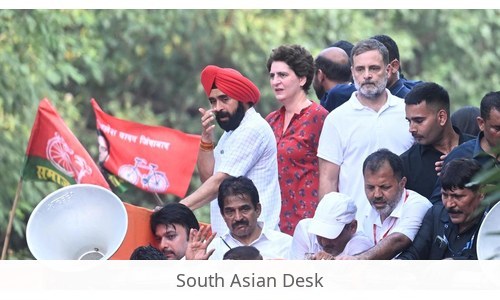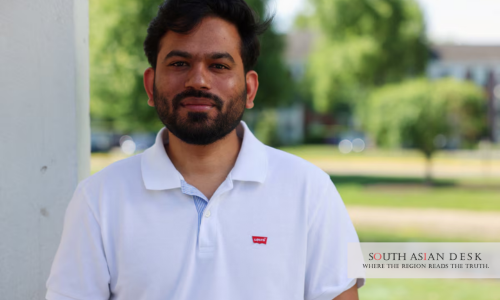
The Cockroach Janta Party’s protest campaign in India reached a violent flashpoint on Monday when founder Abhijeet Dipke was slapped repeatedly on the shoulders and face by two unidentified men while being carried on the shoulders of supporters during a rally in the northern city of Jaipur, in an attack Dipke said was designed to intimidate the movement and distract it from its core demand for accountability in India’s political and education systems.
Television footage and social media recordings of the incident showed the two men striking Dipke before disappearing into the crowd. Neither was identified or detained. In a video posted on the Cockroach Janta Party’s social media accounts shortly after the attack, Dipke addressed his supporters directly. “These are all tactics to scare us, threaten us and distract us from the main issue at hand. But we will continue to speak out,” he said.
The incident occurred one day after the party had held a sit-in protest in Bengaluru demanding the resignation of Union Education Minister Dharmendra Pradhan, a demonstration that drew significant crowds and media attention as the movement extended its reach beyond Delhi into India’s major southern cities.
How the Cockroach Janta Party Came to Exist
The origins of the Cockroach Janta Party’s protest movement in India trace to a single moment in a Supreme Court hearing on 15 May 2026, when Chief Justice Surya Kant, during proceedings related to a contempt petition concerning senior advocate designations, compared unemployed young people to “cockroaches” and “parasites of society.” The remarks were immediately filmed, clipped, and shared across social media, drawing an outpouring of anger from young Indians facing a difficult job market.
Abhijeet Dipke, a 30-year-old political communications strategist who had previously worked with the Aam Aadmi Party before relocating to the United States, was between job applications and rounds of PlayStation in Boston when he encountered the viral footage. He registered the Cockroach Janta Party on 16 May, the following day, naming it as a deliberate parody of the ruling Bharatiya Janata Party and adopting the slogan “Voice of the Lazy and Unemployed.”
The movement’s growth was immediate. Within days, the party had accumulated over 350,000 sign-ups and more than 20 million followers on Instagram. Dipke appointed three official spokespeople: Sourav Das, an investigative journalist; Vijeta Dahiya, a filmmaker; and Ashutosh Ranka, a former McKinsey consultant. Volunteers began attending protests in cockroach costumes. A student wing, the Cockroach Students’ Union of India, was established separately.
Dipke flew from Boston to New Delhi to lead protests in person, telling followers before his departure that his friends and family feared he might be arrested at the airport. “How long can I fear jail? This country belongs not just to one party, but to all of us. This is a question of our future. Our future is getting ruined,” he said on Instagram. He was met by police at the airport but granted permission to proceed to a protest at Jantar Mantar.
What the Movement Is Demanding
The Cockroach Janta Party’s protests in India are directed primarily at youth unemployment, educational system failures, and what the movement describes as a systemic absence of accountability in government. The demand for the resignation of Education Minister Dharmendra Pradhan reflects specific grievances over examination irregularities, recruitment scandals, and the perceived failure of India’s higher education system to equip graduates for a competitive job market.
Spokesperson Sourav Das articulated the broader political framing at a press conference in New Delhi. “We are a youth political movement and our demand is this: there has to be accountability in the system. The system has collected so much rot. The people have been very vocal,” he said. Dipke himself said that five years earlier nobody was ready to openly criticise the government, but that public sentiment among younger Indians had shifted.
The movement is not registered with the Election Commission of India and does not contest elections. Its power derives entirely from social media mobilisation and its ability to put large numbers of young people into the streets across multiple cities simultaneously, a dynamic that has drawn comparisons, including in Indian political commentary, to the Gen Z-led uprisings that toppled governments in Nepal and Sri Lanka in 2025.
The Broader Context: Indian Youth Unemployment and Political Anxiety
The speed with which the Cockroach Janta Party’s protest movement gained traction in India reflects an underlying reality in the Indian job market that neither government data nor official commentary has fully addressed. Periodic Labour Force Survey data for 2023-24 recorded high youth unemployment rates in several major states, with pronounced gender disparities in states across the political spectrum. Young graduates, many of them from families that invested heavily in education, increasingly find that their qualifications do not translate into employment commensurate with their expectations or costs.
The Chief Justice’s remarks, which triggered the movement, were widely read by young Indians as confirmation that even the country’s most senior judicial figure held them in contempt rather than regarding their economic frustration as a systemic failure requiring remedy.
The political establishment has responded with caution. Delhi’s police chief reportedly drew up contingency plans for potential youth-led demonstrations following the Nepalese Gen Z uprising. Congress leader Rahul Gandhi commented publicly that India’s Gen Z youth would prevent voter fraud and save the Constitution, an attempt to position the opposition in alignment with the movement’s sentiment without directly endorsing it.
The Jaipur attack on Dipke will be watched closely for how the state responds. The failure to identify or detain the two men who struck him in a crowd captured on camera raises questions about the seriousness of the investigation, and the movement’s supporters are likely to frame any further inaction as corroboration of Dipke’s assertion that the attack was organised intimidation rather than a spontaneous incident.
Published in SouthAsianDesk, June 16, 2026
Follow SouthAsianDesk on X, Instagram and Facebook for insights on business and current affairs from across South Asia.