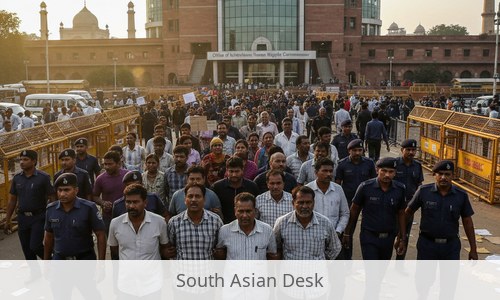
Delhi protests erupted on October 11, 2026, as the Cockroach Janta Party (CJP) led demonstrations demanding electoral reforms and the resignation of Chief Election Commissioner Gyanesh Kumar. The protests, marked by significant police action, resulted in mass detentions in Delhi and the shutdown of Delhi Metro services at 45 stations, including major hubs like Rajiv Chowk and New Delhi. The Indian government’s response to these events has drawn international attention, with the Office of the United Nations Human Rights Commissioner expressing concern over reports of mass detentions in Delhi.
Delhi protests: Implications for India’s Electoral Integrity
The CJP’s demands center on alleged irregularities in voter-list revisions, with protesters alleging systemic flaws in electoral processes. These demonstrations have intensified scrutiny of India’s electoral governance framework, particularly in light of the Gyanesh Kumar resignation calls. The Office of the United Nations Human Rights Commissioner has expressed concern over reports of mass detentions in Delhi during the demonstrations, highlighting the intersection of governance and civil rights in the region. These events underscore growing discontent among youth-led movements in India, who view the protests as a catalyst for broader electoral reform. The CJP’s focus on CJP electoral reforms reflects a broader push for transparency in India’s electoral system, which has long been a point of contention among political observers and civil society groups.
Youth-Led Movements and Political Discourse
Youth engagement in the Delhi protests highlights a broader trend of political activism among South Asia’s younger generation. The CJP’s mobilization reflects dissatisfaction with perceived electoral inequities and calls for transparency in governance. Similar youth-led movements in India have increasingly influenced policy debates on electoral reform and civil rights. The protests have also drawn attention to the role of youth in shaping political discourse, with many participants emphasizing the need for CJP electoral reforms to ensure fair representation. This surge in youth participation is not isolated; it mirrors similar movements across the region, where young activists are leveraging social media and grassroots organizing to amplify their demands for systemic change.
Government and Law Enforcement Response
Tens of thousands of police and security personnel were deployed across New Delhi ahead of the protests. Delhi Metro’s shutdown at major hubs like Rajiv Chowk and New Delhi disrupted daily commutes, illustrating the scale of the security measures. The Indian government’s response to the Delhi protests has been cautious, with no official statement yet on the CJP’s demands. However, the Supreme Court is set to hear a contempt plea related to transit system closures, signaling the legal complexities surrounding the demonstrations. The government’s approach has been criticized by some as overly aggressive, with reports of mass detentions in Delhi raising concerns about the balance between public order and civil liberties. Meanwhile, the CJP continues to push for its agenda, framing the protests as a necessary step toward electoral integrity and accountability.
Broader Context and International Reactions
The Delhi protests have sparked a wider conversation about the state of democratic institutions in India. The CJP’s demands for CJP electoral reforms are part of a larger narrative about the need for institutional transparency and public trust in electoral processes. International bodies, including the United Nations, have called for restraint and dialogue, emphasizing the importance of protecting fundamental rights during protests. The Gyanesh Kumar resignation calls have also drawn attention to the role of electoral officials in maintaining the integrity of the system, with some analysts suggesting that the controversy could have long-term implications for India’s democratic framework.
Follow SouthAsianDesk on X, Instagram and Facebook for insights on business and current affairs from across South Asia.
Sources
- Anti-CEC protest LIVE updates: CJP calls for ‘Chalo Jantar Mantar’ protest today; Supreme Court to hear contempt plea against Delhi transit shutdown – thehindu.com
- Delhi CJP Protest News Live Updates: CJP Calls For Fresh Protest At Jantar Mantar Today – ndtv.com
- ’Cockroach’ group leaders among hundreds detained in Delhi protest – dailymirror.lk
- India Detains Hundreds, Locks Down Delhi Ahead of Protest Against Election Chief – khaama.com