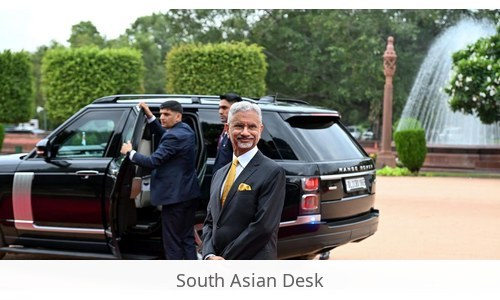
EAM Jaishankar six-nation tour: On July 5, 2026, External Affairs Minister S. Jaishankar is set to embark on a six-nation tour focusing on Gulf nations and the United States, against the backdrop of evolving political dynamics in the region. This visit comes amid a U.S.-Iran peace agreement, which is shaping the strategic context for India’s diplomatic engagements.
EAM Jaishankar six-nation tour: Implications for India’s Foreign Policy
The Gulf region holds strategic significance for India, with energy security, trade routes, and regional stability forming key pillars of bilateral relations. India’s energy imports from the Gulf account for over 80% of its crude oil needs, making the region a critical component of its economic and strategic calculus. The U.S.-Iran peace agreement introduces new variables in the geopolitical landscape, potentially influencing India’s approach to Gulf diplomacy. Jaishankar’s tour is expected to explore opportunities for enhanced cooperation on security, counterterrorism, and economic partnerships. Discussions with Gulf leaders may also address India’s interests in regional stability, including maritime security and energy cooperation.
The visit to the United States, scheduled for July 13, is particularly significant as it follows a period of heightened U.S.-India strategic alignment. The two nations have deepened defense ties, including joint exercises and technology transfers, while also coordinating on counterterrorism and maritime security in the Indo-Pacific. The U.S.-Iran peace agreement may create a more stable environment in the Gulf, allowing India to focus on expanding its economic footprint in the region through initiatives such as the India-Gulf Cooperation Council (GCC) Free Trade Agreement negotiations. Jaishankar’s meetings with Gulf counterparts are anticipated to reinforce India’s role as a key energy partner while navigating the complexities of shifting alliances.
Regional Security and Cooperation
Key security concerns in the Gulf region include maritime security, counterterrorism, and the management of tensions between regional actors. Jaishankar’s meetings with Gulf counterparts are anticipated to focus on strengthening defense ties, intelligence sharing, and joint efforts to combat transnational threats. The U.S.-Iran peace agreement may also prompt discussions on how India can navigate shifting alliances while maintaining its non-aligned stance. Jaishankar’s visit to Belgium, part of the EAM Jaishankar six-nation tour, could include talks on multilateral forums and European perspectives on regional security.
Maritime security in the Gulf remains a critical priority for India, given the region’s role as a global trade artery. Piracy, smuggling, and geopolitical tensions in the Strait of Hormuz pose risks to India’s commercial interests. Jaishankar’s engagements are expected to emphasize the importance of regional cooperation in safeguarding shipping lanes and enhancing naval coordination. Additionally, the U.S.-Iran peace agreement may reduce the likelihood of direct conflict in the region, allowing India to focus on fostering economic partnerships and energy security initiatives.
The visit to Belgium, while less prominently featured in the initial reports, underscores India’s engagement with European perspectives on regional security. Belgium, as a host to key international institutions such as the European Union and NATO, may provide a platform for Jaishankar to discuss multilateral approaches to Gulf stability. This aligns with India’s broader strategy of balancing its relationships with major global powers while ensuring regional security through multilateral frameworks.
Conclusion
EAM Jaishankar six-nation tour underscores India’s commitment to maintaining robust diplomatic ties with Gulf nations and the United States. As the geopolitical landscape in the region continues to evolve, this visit is poised to reinforce India’s role as a key player in fostering stability and cooperation. The outcomes of these engagements will be critical in shaping India’s foreign policy priorities in the coming months, particularly in balancing strategic partnerships with the U.S. and Gulf states while safeguarding its economic and security interests.
Follow SouthAsianDesk on X, Instagram and Facebook for insights on business and current affairs from across South Asia.
Sources
- EAM Jaishankar to embark on 6-nation tour from July 5 – thehindu.com
- Jaishankar begins trip to four West Asia nations today; will visit US July 13 – indianexpress.com
Image: th-i.thgim.com