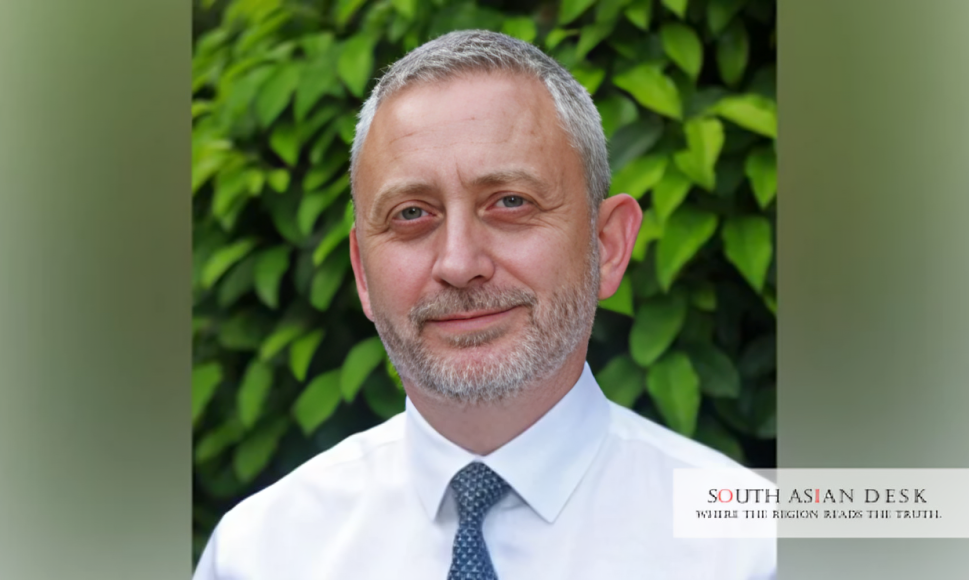
EU Ambassador Michael Miller outlines assistance for fair Bangladesh elections amid Bangladesh’s political transition, emphasising reforms and international standards.
The European Union Ambassador to Bangladesh, Michael Miller, stated on Monday, September 15, 2025, that the EU is aiding preparations for a free and fair election in Bangladesh in 2025 to ensure democratic transition, through capacity-building and €4 million funding, as announced during meetings with officials in Dhaka.
Bangladesh’s upcoming election in 2025 holds significance for South Asia’s stability, as a credible poll could foster regional economic growth and democratic norms, influencing trade ties and migration patterns across the subcontinent. A successful free and fair process would bolster investor confidence and counterbalance geopolitical tensions in the Bay of Bengal area.
Fair Bangladesh Elections 2025: EU’s Strategic Commitment
The European Union has positioned itself as a key partner in Bangladesh’s electoral preparations, with Ambassador Michael Miller highlighting the bloc’s role in supporting a free and fair election in 2025. During a discussion on EU-Bangladesh relations at the Foreign Service Academy in Dhaka on Monday, September 15, 2025, Miller underscored the EU’s focus on human rights and economic opportunities at the core of this partnership.
He noted that the political transition in Bangladesh presents a unique opportunity to strengthen fundamental rights and restore democracy. “Our common goal with you is to build prosperity and act together to promote sustainable growth, mobilise investments, and combat climate change,” Miller said. This assistance is aimed at aligning reforms with citizens’ and businesses’ expectations, ensuring the Bangladesh election free and fair 2025 becomes a benchmark for participatory governance.
Earlier, on Tuesday, August 19, 2025, Miller announced a €4 million support package following a meeting with Chief Election Commissioner AMM Nasir Uddin at the Election Commission’s office in Agargaon, Dhaka. This funding targets capacity-building for the Election Commission, expert advice on planning, and strengthening dispute resolution mechanisms. “We are committed to strengthening our partner Bangladesh and, of course, the Election Commission, so that they can organise fair elections,” Miller remarked to reporters. The initiative includes voter education, support for domestic observer organisations, and efforts to counter misinformation through civil society partnerships.
The EU’s involvement extends to pre-election observation, with a technical team scheduled to arrive in Dhaka next month to assess the environment for a potential full observation mission. Miller emphasised that Bangladesh is a priority for such missions, stating, “We want your elections to be truly acceptable, of international standards, and, of course, free and fair.” This builds on the EU’s long-standing experience in electoral support, adapting to Bangladesh’s context where recent polls have faced credibility challenges.
Bangladesh Election Ambassador Miller Help: Broader Cooperation
Ambassador Miller’s efforts in helping Bangladesh prepare for the polls are part of a wider EU strategy. He has visited communities outside Dhaka to gauge grassroots needs and engage with beneficiaries of EU-funded programmes implemented by local organisations. “For me, it is very important to hear from the grassroots to know what is going on,” he shared during the September event.
The EU is also exploring rapid responses to emerging challenges in the electoral process, including requests for assistance from the interim government. Miller reaffirmed the bloc’s dedication: “You can certainly rely on us to remain committed to peace, partnership, and cooperation.” This help aligns with the EU’s Global Gateway initiative, which boosts sustainable investments in transport, energy, water, digital, and telecom sectors. Additionally, the European Investment Bank plans to double its lending to Bangladesh by the end of 2025, fulfilling a pledge made during a January visit by its vice president.
On trade and economic fronts, Miller described relations as “wonderful, dynamic, and significant,” stressing fair business practices and a smooth graduation from Least Developed Country status. The EU supports legal migration, particularly skilled and semi-skilled labour from Bangladesh, and aids security enhancements, such as Coast Guard capacity-building. These elements collectively support the Bangladesh election Ambassador Miller help by creating a stable environment conducive to free and fair proceedings.
The interim government, led by Nobel Laureate Dr. Muhammad Yunus, is urged to complete its reform agenda swiftly based on political consensus, as per Miller’s remarks. The EU views the Bangladesh election free and fair 2025 as pivotal for long-term development partnership, with discussions ongoing to mobilise private sector investments guaranteed by the EU budget.
Background
Bangladesh’s political landscape shifted dramatically following the ouster of the previous government in August 2024, leading to the formation of an interim administration. This transition has prompted international actors, including the EU, to step up support for electoral reforms. Previous elections, notably in January 2024, drew criticism for irregularities, prompting calls for credible processes. The EU’s engagement, as articulated by Ambassador Miller, focuses on institutional independence, efficiency, and accountability to prevent recurrence.
What’s Next
As preparations intensify, the EU’s technical experts will evaluate conditions in October 2025, potentially leading to a full observation mission. The success of this Bangladesh election free and fair 2025 initiative will depend on collaborative efforts between the Election Commission and international partners like the EU, ensuring a participatory and transparent vote that resonates across South Asia.
Published in SouthAsianDesk, September 16th, 2025
Follow SouthAsianDesk on X, Instagram, and Facebook for insights on business and current affairs from across South Asia.