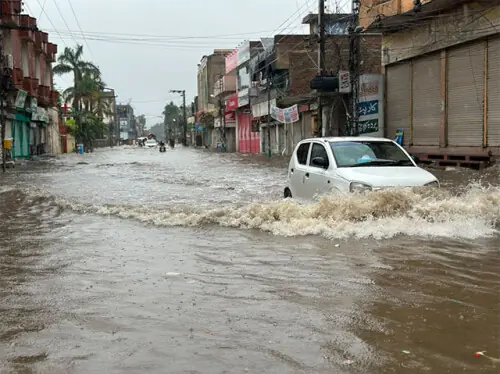
Heavy monsoon rains lash Lahore, triggering widespread urban flooding and severely disrupting routine life across Pakistan’s cultural capital on Thursday. The downpour led to extensive water accumulation on major roads, underpasses, and low-lying areas, slowing traffic to a crawl and creating hardships for daily commuters.
According to the Provincial Disaster Management Authority (PDMA), Lahore received 343 millimetres of rain over the past 48 hours. This intense spell overwhelmed the city’s drainage system, with rainwater accumulating at more than 130 locations despite emergency response claims by local authorities.
Impact of Urban Flooding Lahore on Traffic and Residents
The urban flooding Lahore turned several key routes into virtual rivers. Areas such as DHA Phases 1 to 5 saw up to two feet of standing water, particularly from Defence Mor to A Block Checkpost. Major underpasses including Ghazi Underpass and Masjid Chowk Underpass were forced to close, with traffic diverted to alternate routes like Z Block.
Commuters reported vehicles stalling in deep water, leading to long delays and frustration. Other affected spots included Harbanspura, Mall Road, Cooper Road, Lakshmi Chowk, and Chouburji Chowk. In low-lying neighbourhoods, rainwater entered homes, forcing residents to manually remove water as complaints arose over slow official response.
The rains also exposed infrastructure vulnerabilities, with several sinkholes appearing on roads such as Canal Road, Johar Town Main Boulevard, and Khayaban-i-Firdousi. Lahore traffic police cordoned off these dangerous spots and redirected vehicles to ensure safety.
WASA Drainage Operations and Official Response
The Water and Sanitation Agency (WASA) Lahore activated emergency WASA drainage operations, deploying additional machinery and staff. WASA Managing Director Ghufran Ahmed visited affected sites to monitor progress, stating that all disposal stations were running at full capacity and over 21 monsoon relief camps were operational. A 24/7 control room with live cameras helped track water accumulation at underpasses.
Lahore Deputy Commissioner Ali Ijaz also reviewed operations in areas like Harbanspura, claiming that major roads were being cleared quickly. Authorities urged citizens to avoid unnecessary travel, stay clear of electricity infrastructure, and report issues via the helpline 1334.
Broader Monsoon Toll Across Punjab
While Lahore bore the brunt of the heavy monsoon rains lash Lahore, the wider impact across Punjab has been tragic. The PDMA reported 21 deaths and 154 injuries from rain-related incidents province-wide, including building collapses, electrocution, lightning, and drowning. At least 38 houses sustained damage.
PDMA officials warned of continued risks of urban and flash flooding during the ongoing monsoon season and advised heightened vigilance.
Residents continue to highlight recurring issues with the city’s drainage infrastructure, calling for long-term improvements to better handle future urban flooding Lahore events. As authorities work to restore normalcy, the episode serves as a stark reminder of the challenges posed by intense monsoon weather in densely populated urban centres.
Published in SouthAsianDesk, July 24, 2026
Follow SouthAsianDesk on X, Instagram and Facebook for insights on business and current affairs from across South Asia.