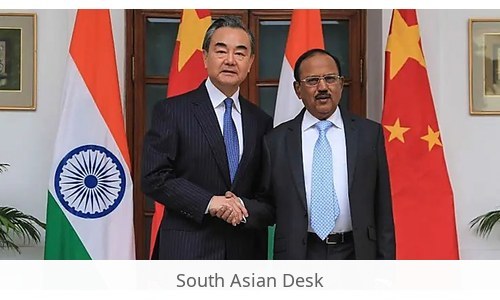
India China boundary talks have taken a significant step forward as India and China announced plans to advance boundary talks focusing on an “early harvest” approach, according to The Indian Express. The initiative includes the establishment of two new hotlines and two additional meeting points to facilitate dialogue on unresolved border disputes.
India China boundary talks: Implications of New Hotlines
The creation of new hotlines aims to improve communication between Indian and Chinese officials, potentially reducing the risk of accidental clashes in sensitive border areas. The Indian Express reported that these channels will prioritize de-escalation mechanisms and rapid response protocols for emerging tensions. The Hindu noted that the hotlines could serve as a critical tool for managing disputes in regions like Ladakh and Arunachal Pradesh, where previous standoffs have raised regional security concerns.
The hotlines are expected to operate on a 24/7 basis, with designated officials from both nations assigned to monitor and address escalatory scenarios. This structure contrasts with previous ad hoc communication methods, which often lagged during crises. For instance, during the 2020 Galwan Valley clash, delayed coordination exacerbated tensions. The new system aims to institutionalize real-time dialogue, ensuring that military and diplomatic personnel can resolve misunderstandings before they escalate into physical confrontations.
Historical Context of Border Disputes
Border disputes between India and China date back to the 1962 Sino-Indian War and have persisted through decades of negotiations. The “early harvest” approach represents a shift from previous frameworks, which often stalled due to competing territorial claims. The Hindu highlighted that this new initiative builds on the 25th round of Special Representatives’ talks, where both sides agreed to “gradual progress” on resolving core issues. The establishment of meeting points may allow for more structured, incremental negotiations compared to past ad hoc discussions.
The unresolved border issues trace their roots to the 1962 conflict, which resulted in a de facto division of disputed territories. Since then, both nations have engaged in multiple rounds of talks, including the 1993 and 1996 agreements on maintaining peace and tranquility along the Line of Actual Control (LAC). However, these frameworks have struggled to address the core territorial disputes, which remain a source of friction. The 2017 Doklam standoff, involving Chinese and Indian troops over a strategic hill in Bhutan, underscored the fragility of India China relations and the need for more robust communication mechanisms.
The “early harvest” strategy seeks to address this by focusing on smaller, manageable issues first—such as clarifying the LAC in specific sectors—before tackling broader territorial claims. This incremental approach aligns with the 2021 agreement to disengage from the eastern Ladakh sector, which marked a rare instance of progress in the otherwise stagnant India China boundary talks.
Future of India-China Relations
The “early harvest” strategy could signal a broader effort to stabilize bilateral relations beyond border disputes. The Indian Express suggested that improved communication channels might pave the way for cooperation in trade, climate change, and regional infrastructure projects. However, The Hindu cautioned that sustained progress will depend on mutual trust-building measures, including third-party mediation and transparency in military movements. Regional powers such as Bhutan and Nepal may also play a role in facilitating dialogue, given their strategic positions along the India-China border.
India and China have significant economic interdependencies, with bilateral trade reaching over $100 billion annually. However, political tensions have often overshadowed commercial ties. The new hotlines and meeting points could help decouple economic cooperation from border disputes, allowing both nations to focus on shared interests such as climate resilience, energy security, and regional connectivity projects like the China-Pakistan Economic Corridor (CPEC) and India’s Act East Policy.
The role of third-party mediation, such as through the Shanghai Cooperation Organisation (SCO) or ASEAN, remains a contentious issue. While India has historically been cautious about external involvement, China has occasionally advocated for multilateral frameworks to resolve disputes. The success of the “early harvest” approach may hinge on whether both nations can agree on the scope of external mediation and the balance of sovereignty in negotiations.
Follow SouthAsianDesk on X, Instagram and Facebook for insights on business and current affairs from across South Asia.
Sources
- India, China to advance boundary talks for ‘early harvest’, set up 2 new hotlines, 2 more meeting points – indianexpress.com
- Drawing lines: On the India-China 25th Special Representatives’ talks – thehindu.com
Image: images.indianexpress.com