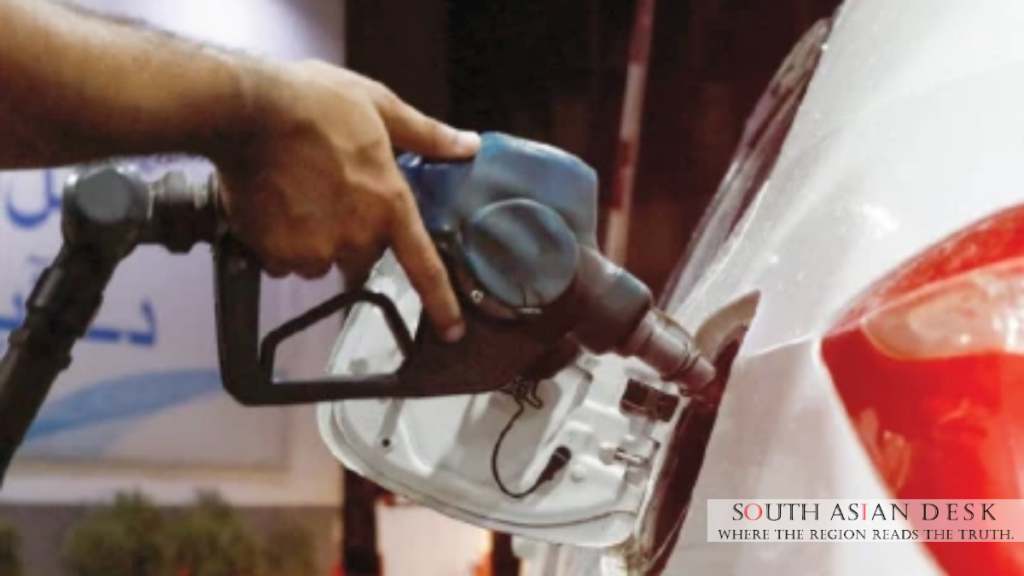
Vehicle owners have reported lower mileage and weaker performance after E20 petrol replaced lower ethanol blends, while the government maintains that the fuel is safe and supports India’s energy security.
India E20 petrol controversy has intensified as vehicle owners report declining fuel efficiency, weaker engine performance and uncertainty over whether older cars were designed to operate continuously on petrol containing 20 per cent ethanol.
E20 petrol has become the standard fuel available across most Indian petrol stations following the government’s decision to bring forward its 20 per cent ethanol blending target from 2030 to 2025. The transition was intended to reduce crude oil imports, support farmers and lower transport emissions, but motorists argue that the programme has left them with limited information and virtually no alternative fuel choice.
The debate has also developed into a political and legal challenge for the government. Opposition leaders, consumer groups and vehicle owners have demanded clearer answers from automobile manufacturers about E20 vehicle compatibility, particularly for cars produced before nationwide E20-compliant standards were introduced.
India E20 petrol controversy centres on mileage losses
Many motorists say the most noticeable effect of ethanol blended petrol has been a reduction in mileage.
One New Delhi car owner told Al Jazeera that his vehicle’s fuel economy had fallen from approximately 18 to 20 kilometres per litre to about 16 to 17 kilometres per litre after E20 became the only fuel available. He also reported slower acceleration while overtaking, travelling uphill or using air conditioning. Another owner of a 2021 Maruti Suzuki Baleno said his mileage had declined from about 18 kilometres per litre to nearly 15 kilometres per litre.
These accounts remain individual claims rather than controlled scientific findings. However, similar complaints have appeared widely across social media, with vehicle owners alleging reduced efficiency and increased wear on components following the nationwide transition.
Ethanol contains less energy per litre than conventional petrol. A vehicle may therefore need to consume more fuel to travel the same distance, although the scale of the reduction depends on the engine, vehicle age, driving conditions and whether the vehicle was calibrated for E20 petrol.
The Indian government says the fuel-efficiency reduction in E20-compatible four-wheelers is generally limited to about 1 to 2 per cent. Independent specialists and motorists have argued that losses may be greater in older vehicles or engines that were originally designed for E10 petrol.
Older vehicles and E20 fuel raise compatibility questions
The impact of E20 petrol in India is particularly contentious because millions of older petrol vehicles remain on the road.
Automobile manufacturers began introducing E20-compatible materials into newer models from 2023, while vehicles designed to meet full E20 standards became more widely available from 2025. Many cars manufactured before this transition carried owner-manual guidance or fuel labels recommending petrol containing no more than 10 per cent ethanol.
Critics argue that motorists who purchased such vehicles were given no meaningful opportunity to continue using E10 or unblended petrol. By the end of 2025, E20 had effectively replaced lower ethanol blends at India’s approximately 90,000 petrol stations.
Some older vehicles may use hoses, seals, gaskets and other fuel-system components that were not manufactured for sustained exposure to higher concentrations of ethanol. Ethanol can absorb moisture and may affect certain materials over time, although the degree of risk varies considerably between vehicle models.
The Ministry of Petroleum and Natural Gas has acknowledged that some older vehicles may require earlier replacement of rubber components and gaskets. It says these replacements are inexpensive and can normally be completed during routine servicing. The ministry has also stated that using E20 petrol does not invalidate vehicle insurance.
The Society of Indian Automobile Manufacturers has defended the transition, saying testing of a wide range of older vehicles showed only a marginal reduction in fuel economy and no general compromise of vehicle safety or durability.
Government defends India ethanol blending policy
The government maintains that the India ethanol blending policy has delivered important economic, agricultural and environmental benefits.
According to official estimates published in 2025, ethanol blending over the preceding 11 years saved more than 1.44 trillion rupees in foreign exchange and replaced approximately 24.5 million tonnes of crude oil. The government also estimated that the programme had reduced carbon dioxide emissions by about 73.6 million tonnes.
At the 20 per cent blending level, the government expected annual payments to farmers to reach approximately 400 billion rupees, while foreign exchange savings were projected at about 430 billion rupees.
India imports most of the crude oil it consumes, leaving its economy vulnerable to international price movements, geopolitical conflict and shipping disruptions. Replacing part of the petrol supply with domestically produced ethanol is therefore presented as an energy-security measure as well as a rural development policy.
Ethanol production has created additional demand for crops including sugarcane and maize. Government-backed procurement, financial support for distilleries and assured purchases by state-owned oil marketing companies have encouraged rapid expansion of production capacity.
The government has also argued that ethanol’s higher octane rating can improve anti-knock performance and acceleration in vehicles designed and tuned for the fuel. It rejects claims that E20 causes widespread engine damage and says studies conducted by industry bodies, research institutions and oil companies found no significant deterioration in power output or engine wear.
Motorists demand a choice at petrol stations
One of the strongest criticisms of the India biofuel programme concerns the absence of alternative petrol blends.
Motorists are not only questioning the ethanol fuel impact on cars, but also asking why E10 or ethanol-free petrol cannot remain available for older vehicles. Critics say consumers should be able to select fuel according to their vehicle manuals rather than being required to use E20.
The government has indicated that returning to unblended petrol would reverse gains made through the ethanol programme. Officials also argue that operating parallel fuel supplies would create logistical and infrastructure difficulties for oil companies and petrol stations.
The transition has nevertheless been compared unfavourably with policies in Brazil and the United States. Brazil has increased ethanol use over several decades and has a large fleet of flex-fuel vehicles capable of operating on different blends. The United States generally supplies E10 as its standard blend while providing higher ethanol fuels for compatible vehicles.
India moved from a maximum nationwide blend of approximately 10 per cent ethanol to mandatory E20 at a considerably faster pace. Critics say the accelerated timetable did not provide enough time to replace older vehicles, modify engines or properly educate consumers.
Consumer groups have therefore called for ethanol percentages to be clearly displayed at petrol stations and printed on receipts. They have also demanded vehicle-specific compatibility information from manufacturers.
Court ruling increases pressure on carmakers
The India E20 petrol controversy escalated further on July 16 when a consumer court in Chhattisgarh ordered Maruti Suzuki to replace a Grand Vitara or pay approximately 2 million rupees to a customer who alleged that fuel-related defects had affected the vehicle.
The ruling was reported as the first Indian consumer decision directly connected with concerns over E20 petrol. The court rejected Maruti Suzuki’s argument that adulterated fuel, rather than E20, had caused the reported problems.
Maruti Suzuki said the vehicle involved was fully E20-compatible and that its owner’s manual disclosed this compatibility. The company has announced that it will challenge the decision.
The ruling does not establish that E20 petrol generally damages vehicles. It concerns the evidence and circumstances of a particular consumer dispute, and an appeal could alter the outcome. However, legal specialists believe it may encourage additional claims from owners who attribute vehicle problems to the mandatory fuel blend.
The decision may also place greater pressure on manufacturers to explain whether older models are compatible, whether specific components require replacement and how complaints should be investigated.
Environmental benefits face sustainability questions
Supporters of E20 petrol say ethanol can reduce lifecycle greenhouse gas emissions when compared with conventional petrol.
The Indian government has cited research estimating that sugarcane-based ethanol produces approximately 65 per cent lower lifecycle greenhouse gas emissions than petrol, while maize-based ethanol produces about 50 per cent lower emissions. These figures depend on farming practices, processing methods, transport and land use.
Environmental specialists have warned that the wider effects of ethanol production must also be considered. Sugarcane requires substantial amounts of water, and increased cultivation could place additional pressure on water-stressed regions.
There are also concerns that generous prices for fuel crops could encourage farmers to shift land away from food production. The consequences would depend on which feedstocks are used, where they are grown and whether agricultural productivity increases sufficiently to meet both food and fuel demand.
The environmental case for E20 must therefore consider the complete supply chain rather than measuring only emissions from vehicle exhausts.
Political questions surrounding ethanol production
The policy debate has also become politically sensitive because Road Transport Minister Nitin Gadkari has been one of the most prominent advocates of ethanol fuel.
Opposition parties have questioned whether commercial interests connected with members of Gadkari’s family create the appearance of a conflict of interest. Companies associated with his relatives have interests in agro-processing and ethanol production.
Gadkari has rejected the allegations, saying ethanol pricing, blending and procurement decisions are made collectively by the federal cabinet and implemented by state-owned oil companies. He has also said businesses linked to his family account for less than 0.5 per cent of national ethanol production.
The allegations do not by themselves establish wrongdoing. However, they have added a political dimension to a debate that was initially centred on fuel efficiency, vehicle compatibility and consumer choice.
Clearer evidence and disclosure needed
The dispute over E20 petrol mileage is unlikely to be resolved through general assurances or individual complaints alone.
A clearer assessment would require independent testing of representative vehicle models from different manufacturing years under consistent conditions. Such testing would need to compare E10 and E20 fuel consumption, performance, emissions and long-term component wear.
Manufacturers could also publish searchable databases identifying which models are fully E20-compatible, which can use the fuel with minor modifications and which may require additional maintenance.
Consumers should be told whether mileage losses are expected, which components may deteriorate more quickly and whether warranties cover fuel-related damage. Clear disclosure would help distinguish genuine technical problems from defects caused by poor maintenance, adulterated petrol or unrelated mechanical failures.
India’s ethanol programme has produced measurable benefits by supporting farmers, substituting imported crude oil and expanding domestic fuel production. However, its long-term credibility will depend on whether the government and automobile industry can demonstrate that these national benefits are not being achieved by imposing undisclosed costs on vehicle owners.
The India E20 petrol controversy is therefore no longer solely a debate about cleaner fuel. It has become a test of consumer protection, industrial transparency and how quickly governments should implement major energy transitions across an ageing vehicle fleet.
Published in SouthAsianDesk, July 17, 2026
Follow SouthAsianDesk on X, Instagram and Facebook for insights on business and current affairs from across South Asia.