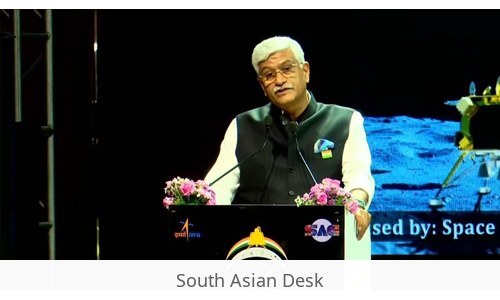
India space technology is at a pivotal juncture, with Union Minister Gajendra Shekhawat emphasizing the importance of integrating space and AI technologies to shape India’s geopolitical landscape during an event organized by the Space Applications Centre, ISRO, and the Department of Science. This initiative aligns with broader efforts to position India as a leader in emerging technologies, leveraging its growing expertise in satellite systems, remote sensing, and data analytics.
India space technology: Impact on Regional Geopolitics
India’s push for privatization in space technology could significantly alter regional power dynamics. By fostering private sector involvement, India aims to enhance its technological capabilities and reduce reliance on state-run initiatives. This shift may influence its relationships with neighboring countries, particularly as India seeks to balance its strategic partnerships with nations like the United States and Russia while maintaining regional autonomy.
The move also positions India as a key player in the global space economy, potentially challenging established powers such as China and the United States in the region. Analysts note that India’s growing space industry could serve as a counterweight to China’s expanding influence in South Asia, particularly in areas like satellite communications and Earth observation. The privatization of space assets may also encourage regional collaboration, as smaller nations could benefit from India’s infrastructure and expertise, fostering a more interconnected South Asian space ecosystem. These developments highlight the geopolitical implications of space, as India’s advancements could redefine alliances and economic dependencies in the region.
AI Integration in Space Technology
The integration of artificial intelligence into space technology promises advancements in operational efficiency and decision-making. AI can optimize satellite operations, improve data analysis from space missions, and enable autonomous systems for deep-space exploration. These developments could elevate India’s global standing in the tech arena, attracting international collaboration and investment. Minister Shekhawat highlighted that AI’s role in space missions would not only enhance India’s scientific achievements but also contribute to national security and economic growth.
For instance, AI-driven satellite imagery analysis could improve disaster response, agricultural planning, and urban development. Additionally, AI’s application in satellite communication systems may bolster India’s capacity to provide reliable connectivity in remote regions, further strengthening its domestic and international partnerships. This AI integration in India is a cornerstone of its strategy to lead in next-generation space technologies.
Government Support for Space Startups
Prime Minister Narendra Modi met with space startup CEOs on the same day, pledging unwavering support to draw from the global talent pool. This initiative underscores the government’s commitment to nurturing a thriving space startup ecosystem. By providing financial incentives, regulatory support, and access to research facilities, the government aims to attract both domestic and international investors.
Such efforts are expected to accelerate innovation and position India as a hub for cutting-edge space technology. Existing space startups, such as those working on small satellite manufacturing and launch services, are likely to benefit from this policy push, potentially creating a competitive edge in the global market. The growth of space startups in India is a testament to the nation’s evolving technological landscape and entrepreneurial spirit.
Broader Strategic Implications
The convergence of space and AI technologies represents a pivotal moment in India’s technological trajectory. By integrating these domains, India seeks to address both immediate challenges, such as enhancing national security through advanced surveillance systems, and long-term goals, including establishing a sustainable presence in deep-space exploration. This strategy also aligns with India’s growing emphasis on self-reliance in critical technologies, a principle enshrined in its “Atmanirbhar Bharat” (Self-Reliant India) initiative.
The government’s support for private sector participation in space exploration could also spur economic growth by creating new industries and employment opportunities, particularly in regions with existing aerospace infrastructure. As India continues to invest in space technology, its role in shaping the geopolitical implications of space will only grow, solidifying its position as a global leader in innovation and strategic influence.
Follow SouthAsianDesk on X, Instagram and Facebook for insights on business and current affairs from across South Asia.
Sources
- Space, AI and other tech integration to shape a nation’s geopolitical future: Minister Shekhawat – thehindu.com
- ‘Draw global talent pool’: PM Modi meets space startup CEOs, promises unwavering support – indianexpress.com
Image: th-i.thgim.com