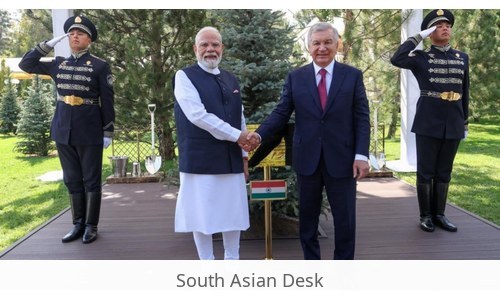
India Uzbekistan uranium supply agreement marks a historic milestone in India’s energy strategy as Prime Minister Narendra Modi and Uzbek President Shavkat Mirziyoyev confirmed a long-term uranium supply arrangement during Modi’s visit to Uzbekistan on August 30, 2026. The agreement, which sets a $5 billion trade target between the two nations, aligns with India nuclear energy strategy and strengthens India Uzbekistan relations, leveraging Uzbekistan’s vast Uzbekistan uranium reserves to secure South Asia’s energy future.
India Uzbekistan uranium supply agreement: Implications for India’s Energy Security
India’s nuclear energy sector relies heavily on uranium imports to fuel its civilian reactors. The new agreement ensures a stable supply of uranium from Uzbekistan, a key player in Central Asia’s energy landscape. This arrangement aligns with India’s broader energy policy, which seeks to diversify its sources of nuclear fuel and reduce dependency on a single supplier. The deal is expected to bolster India’s energy security, supporting its growing demand for clean energy as it expands its nuclear power capacity.
India currently imports approximately 70% of its uranium requirements, primarily from countries such as Kazakhstan, Canada, and Namibia. By securing a reliable supply from Uzbekistan, India can mitigate risks associated with geopolitical tensions or supply chain disruptions in other regions. The agreement also aligns with India’s commitment to achieving 50% of its electricity generation from non-fossil fuels by 2030, a target that includes expanding nuclear power capacity to 25% of total energy production. Uzbekistan’s uranium reserves, estimated at over 1.5 million tons, position it as a critical partner in this endeavor.
Strengthening India-Uzbekistan Relations
The India Uzbekistan uranium supply agreement reflects the deepening strategic partnership between India and Uzbekistan. Historically, the two nations have maintained strong diplomatic and economic ties, with India recognizing Uzbekistan’s role as a regional power in Central Asia. Uzbekistan’s uranium reserves, among the largest in the world, make it a critical partner for India’s energy ambitions. This agreement not only reinforces bilateral cooperation but also positions Uzbekistan as a key player in India’s energy strategy, particularly as India seeks to expand its influence in Central Asia.
The partnership extends beyond energy, with both countries exploring opportunities in infrastructure, technology, and trade. India has been investing in Uzbekistan’s transportation and energy sectors, including the development of the Tashkent International Airport and the expansion of the Central Asia-South Asia (CASA-1000) power transmission project. These initiatives underscore the growing strategic alignment between the two nations, which is further reinforced by their shared interests in regional stability and counterterrorism.
Economic Impact of the Trade Target
The $5 billion Modi Mirziyoyev trade target signals a significant boost in bilateral economic relations. This figure encompasses a wide range of sectors, including energy, infrastructure, and technology, which are expected to benefit from increased collaboration. The agreement is likely to spur investment in Uzbekistan’s uranium mining and processing industries, while India stands to gain from a reliable and cost-effective supply of nuclear fuel. Long-term economic forecasts suggest that this partnership could enhance regional trade dynamics and contribute to the broader economic integration of South Asia with Central Asia.
The trade target also includes provisions for technology transfer and joint research in nuclear energy, which could lead to the development of advanced reactor technologies and waste management solutions. For Uzbekistan, the agreement offers an opportunity to diversify its export markets and reduce reliance on traditional energy exports such as natural gas. India’s growing demand for uranium is expected to create new employment opportunities in Uzbekistan’s mining and processing sectors, contributing to local economic development.
This agreement also plays a pivotal role in South Asia energy security, ensuring a stable uranium supply chain that supports India’s non-fossil fuel goals. By securing access to Uzbekistan’s reserves, India reinforces its position as a regional energy leader while fostering closer ties with Central Asian partners.
Follow SouthAsianDesk on X, Instagram and Facebook for insights on business and current affairs from across South Asia.
Sources
- Modi, Uzbek President talk long-term uranium supply, set $5 billion trade target – indianexpress.com
- India, Uzbekistan Strike Long-Term Uranium Deal As PM Modi Wraps Key Visit – ndtv.com
Image: images.indianexpress.com