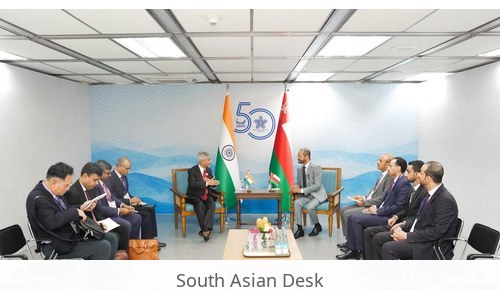
international waterways safety remains a critical concern for global trade and regional stability, as highlighted by Indian External Affairs Minister S. Jaishankar during the East Asia Summit on July 23, 2026. His remarks, reported by The Hindu, emphasized the need to protect seafarers, civilian shipping, and infrastructure from threats, underscoring the importance of secure maritime routes. The discussion came amid rising geopolitical tensions India Pakistan, particularly in the context of maritime security South Asia and unresolved cross-border disputes, including the India Pakistan water disputes over the Indus Water Treaty (IWT).
Jaishankar’s Remarks on Maritime Security
Jaishankar reiterated that international waterways must remain safe and unimpeded for global commerce and regional peace. His comments were a direct response to recent tensions involving maritime security South Asia and cross-border water disputes, including the India Pakistan water disputes over the IWT. Jaishankar’s emphasis on unimpeded maritime routes reflects India’s broader strategy to safeguard its strategic interests in the region, particularly as energy corridors and trade routes become increasingly vital to South Asian economies.
Pakistan’s Response and Ishaq Dar Comments Kashmir
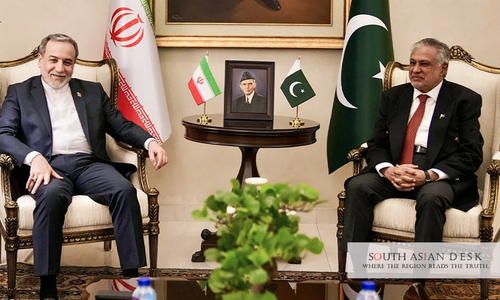
Ishaq Dar, Pakistan’s Deputy Prime Minister, had earlier raised concerns about the Kashmir dispute and India’s alleged threats to Pakistan’s water share during the ASEAN Regional Forum, as reported by Dawn. His remarks, which included Ishaq Dar comments Kashmir, framed the IWT as a critical issue affecting peaceful coexistence between South Asian nations. While Jaishankar did not directly address Dar’s claims, his focus on international waterways safety reinforced India’s stance on maritime security as a priority amid ongoing geopolitical tensions India Pakistan.
Geopolitical Implications and Regional Stability
The exchange highlights the complex interplay between international waterways safety and regional stability. Maritime security South Asia is increasingly intertwined with energy corridors, trade routes, and cross-border relations, making it a focal point for international forums like the East Asia Summit. However, diplomatic solutions remain elusive as both nations continue to leverage these issues to assert their positions. The India Pakistan water disputes, in particular, underscore the need for multilateral dialogue to prevent escalation. As S. Jaishankar East Asia Summit discussions continue, the emphasis on the result serves as a reminder of the delicate balance required to maintain peace in a region marked by historical and territorial complexities.
The Broader Context of International Waterways Safety
The importance of the result extends beyond bilateral disputes. It encompasses the protection of global supply chains, the prevention of maritime incidents, and the promotion of cooperative frameworks among nations. In South Asia, where maritime security South Asia is a shared concern, the stakes are particularly high. The region’s reliance on waterways for trade and energy transit means that disruptions—whether accidental or deliberate—can have cascading effects on economies and political relations. Jaishankar’s call for the result aligns with global efforts to strengthen maritime governance, including initiatives under the United Nations Convention on the Law of the Sea (UNCLOS) and regional agreements aimed at de-escalation.
Conclusion: A Path Forward
As the East Asia Summit and other multilateral platforms continue to address the result, the need for collaborative approaches becomes increasingly evident. The India Pakistan water disputes and geopolitical tensions India Pakistan must be resolved through dialogue rather than confrontation. By prioritizing maritime security South Asia and fostering trust-building measures, nations can mitigate risks and ensure the uninterrupted flow of commerce. The remarks by S. Jaishankar and Ishaq Dar highlight the urgency of these discussions, which are not only critical for regional stability but also for the broader global economy.
Follow SouthAsianDesk on X, Instagram and Facebook for insights on business and current affairs from across South Asia.
Sources
- International waterways must remain safe and unimpeded: S. Jaishankar – thehindu.com
- There must be zero tolerance for terrorism: Jaishankar – indianexpress.com
- Kashmir, IWT among key global challenges threatening ‘peaceful coexistence’, Dar tells Asean moot – dawn.com
Image: th-i.thgim.com