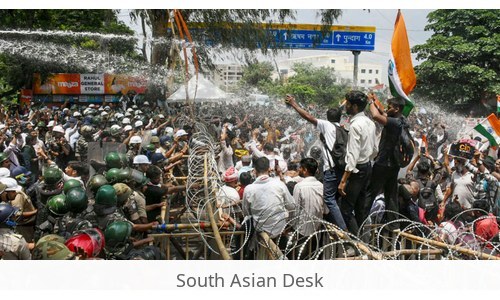
Jharkhand student protest reached a critical juncture on August 19, 2026, as students suspended their 26-day demonstrations following the state government’s decision to cancel 22 recruitment exams and initiate investigations into others. The move, which came amid escalating tensions over transparency in recruitment, marked a temporary resolution to a crisis that had gripped the state’s academic and professional communities. The students’ student ultimatum—a two-month deadline for government action—remains a pivotal factor in determining the next steps of this ongoing saga.
Jharkhand student protest: Government’s Actions and Student Response
The Jharkhand government actions took center stage as officials issued notifications cancelling 22 recruitment exams, including those for state-level posts in education, health, and public administration. These exams, originally scheduled for August 2026, had been a focal point of the Jharkhand student protest, with students accusing the administration of opaque processes and irregularities. In addition, the government ordered a probe into 23 recruitment exams conducted since 2014, raising questions about past hiring practices and their alignment with Jharkhand education issues.
Student representatives emphasized that the student ultimatum includes demands for full transparency in recruitment procedures, independent oversight of future exams, and the reinstatement of cancelled exams with revised timelines. The students have set a two-month deadline for the government to address these concerns, with a potential resumption of protests if demands are not met. This ultimatum reflects the broader frustration with recruitment exams cancellation and the perceived lack of accountability in public sector hiring.
Historical Context of Recruitment Issues in Jharkhand
Recruitment controversies in Jharkhand are not new. Previous protests have highlighted systemic issues such as delayed exams, allegations of irregularities in selection processes, and lack of transparency in job postings. In 2019, students staged a similar protest over the cancellation of exams for assistant professor positions, which was resolved only after an independent commission was established to review the process. This commission reportedly identified procedural gaps and recommended reforms, though implementation remained inconsistent.
The current situation reflects broader concerns about accountability in public sector hiring. Student groups have consistently argued that opaque recruitment mechanisms undermine merit-based selection and create opportunities for corruption. The government’s decision to investigate past exams may signal a shift toward addressing these long-standing grievances, though critics remain skeptical about the effectiveness of such measures without structural reforms. For instance, the 2019 commission’s recommendations included the establishment of a permanent oversight body, which has yet to materialize.
The recurring nature of these protests underscores a deeper mistrust between students and the state administration. Many students argue that recruitment delays and cancellations disproportionately affect young professionals seeking stable careers, exacerbating regional unemployment challenges. The lack of a centralized, transparent system for tracking vacancies and exam schedules has also been a point of contention, with students citing instances of last-minute changes and conflicting information from multiple departments.
Implications for Governance and Public Trust
The resolution of this Jharkhand student protest could have significant implications for Jharkhand’s governance model. By canceling exams and initiating investigations, the government has acknowledged public dissatisfaction, but the long-term success of this approach depends on the credibility of the probe and the implementation of student demands. If the probe reveals systemic issues, it may pressure the government to enact more permanent reforms, such as digitizing recruitment processes or establishing an independent regulatory body.
However, the two-month deadline set by students introduces a new layer of complexity. While it provides a clear timeframe for action, it also risks escalating tensions if the government fails to meet expectations. Past experiences suggest that temporary measures, such as canceling exams or launching investigations, often fail to address root causes without sustained institutional changes. For example, the 2019 commission’s findings were largely ignored in subsequent years, leading to renewed protests in 2024 over delayed implementation of its recommendations.
The students’ demand for independent oversight of future exams is particularly significant. This would require the government to relinquish direct control over recruitment processes, a move that could face resistance from within the bureaucracy. Nonetheless, such oversight could enhance public confidence in the fairness of selections, particularly in sectors like education and healthcare, where merit-based hiring is critical for service quality.
Broader Regional and National Context
The Jharkhand student protest is part of a larger trend across India, where students and civil society groups have increasingly challenged opaque administrative practices. Similar movements have emerged in states like Tamil Nadu and West Bengal, where recruitment irregularities have sparked nationwide debates about transparency in public sector hiring. These protests often intersect with broader demands for accountability in governance, reflecting a growing civic consciousness among younger generations.
At the national level, the issue resonates with ongoing discussions about the need for a centralized framework to regulate recruitment processes across states. While the central government has proposed guidelines for standardized hiring procedures, implementation has been uneven, with states like Jharkhand lagging behind. The current situation in Jharkhand could serve as a case study for other states grappling with similar challenges.
Follow SouthAsianDesk on X, Instagram and Facebook for insights on business and current affairs from across South Asia.
Sources
- 26 days in, Jharkhand protests called off after Soren government buckles – indianexpress.com
- Jharkhand Students Suspend 26-Day Protest, Give Government 2-Month Ultimatum – ndtv.com
Image: images.indianexpress.com