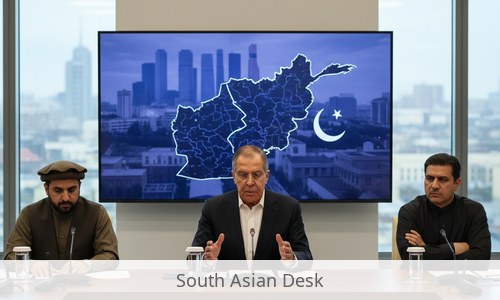
Kabul Islamabad rift: On October 7, 2026, Russian Foreign Minister Sergey Lavrov described the failure of Afghanistan and Pakistan to agree on a joint statement during the eighth Moscow Format consultations as an ‘unpleasant’ but predictable development. The talks, aimed at addressing regional issues concerning Afghanistan, concluded without a formal agreement, underscoring persistent challenges in bilateral relations between Kabul and Islamabad.
Kabul Islamabad rift: Implications for Regional Security
The historical tensions between Afghanistan and Pakistan, rooted in border disputes, cross-border militant activities, and divergent strategic interests, have long complicated regional stability. Lavrov’s remarks highlight the fragility of diplomatic efforts to normalize relations, with both nations expressing interest in improved ties but failing to reconcile differences during the Moscow consultations.
The absence of a joint statement risks exacerbating mistrust between the two nations, potentially destabilizing South Asia’s security architecture. Analysts note that unresolved disputes over the Durand Line, the Afghan Taliban’s alignment with regional powers, and Pakistan’s perceived support for Afghan militant groups remain critical flashpoints. These issues underscore the broader regional security dynamics that the Kabul Islamabad rift threatens to disrupt.
The Durand Line, established in 1893, continues to be a contentious issue, with Afghanistan rejecting its legitimacy as a border while Pakistan enforces it. Cross-border militant activities, including attacks attributed to groups like the Tehrik-i-Taliban Pakistan (TTP), have further strained relations. Pakistan has repeatedly accused Afghanistan of harboring militants, while Kabul has countered that Islamabad supports anti-government elements within Afghanistan. These unresolved grievances complicate efforts to build trust and cooperation.
Lavrov’s Role in Diplomacy
Lavrov emphasized that while the disagreement between Kabul and Islamabad should not be exaggerated, Russia’s role as a mediator in the Moscow Format consultations remains pivotal. The talks, which include representatives from Afghanistan, Pakistan, and other regional stakeholders, aim to foster dialogue on security, economic cooperation, and counterterrorism.
Afghanistan’s delegation reportedly stressed the need for Pakistan to address cross-border militant threats, while Pakistan reiterated its concerns over Afghan soil being used for attacks against its territory. Lavrov urged both sides to prioritize pragmatic cooperation over historical grievances, though no concrete mechanisms for resolving outstanding issues were proposed. His Sergey Lavrov comments during the session emphasized the need for patience and sustained engagement.
Russia’s involvement in the Moscow Format consultations reflects its strategic interest in maintaining influence in South Asia. As a key player in regional security, Moscow has historically mediated between Kabul and Islamabad, particularly during periods of heightened tension. However, the lack of a joint statement this time signals the enduring complexity of the bilateral relationship.
Conclusion
The failure to produce a joint statement during the Moscow consultations underscores the complexity of Afghanistan Pakistan relations. Lavrov’s characterization of the Kabul Islamabad rift as ‘unpleasant’ reflects Russia’s continued engagement in South Asia diplomacy, even as the region grapples with evolving geopolitical dynamics. The unresolved tensions highlight the delicate balance required in regional diplomacy, where historical grievances and strategic interests often collide.
The path forward for Afghanistan and Pakistan will depend on their willingness to address core disputes through sustained dialogue. While the Moscow Format provides a platform for discussion, tangible progress will require compromise and a commitment to long-term cooperation. Lavrov’s remarks serve as a reminder that regional stability hinges on resolving these longstanding issues, which have significant implications not only for Afghanistan and Pakistan but for the broader South Asian region as well.
Published in SouthAsianDesk, October 7, 2026.
Follow SouthAsianDesk on X, Instagram and Facebook for insights on business and current affairs from across South Asia.