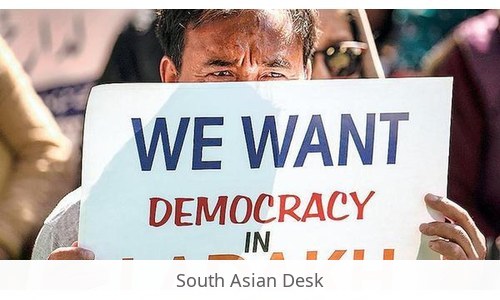
Ladakh civil society demands: On August 20, 2026, civil society groups in Ladakh submitted a list of non-negotiable points to the Ministry of Home Affairs (MHA) and the Chief Secretary in Leh. The submission coincides with the observance of ‘Martyrs’ Month’ in Ladakh, a period dedicated to remembering those who died during the agitation for statehood and Sixth Schedule demands. This development underscores the region’s ongoing struggle for administrative recognition and autonomy, which has been a central theme in Ladakh’s political discourse for decades.
Ladakh civil society demands: Historical Context of the Demands
The current demands reflect a long-standing agitation for statehood in Ladakh, which has been a focal point of regional political discourse. The Sixth Schedule of the Indian Constitution, which provides for autonomous governance in certain tribal areas, has been a central issue in the region’s governance debates. Civil society groups argue that Ladakh’s unique cultural and geographical identity warrants greater autonomy under this framework.
The agitation for statehood gained momentum in the early 2000s, with periodic protests and dialogues between local leaders and the central government. The submission of non-negotiable points this month underscores the persistence of these demands, even as the region navigates its administrative structure under the Union Territory framework. The Sixth Schedule, originally designed to address the needs of tribal regions, has been a point of contention for Ladakh, which lacks the formal tribal classification required for its application. This has led to calls for re-evaluating constitutional provisions to align with the region’s socio-cultural realities.
The historical context of these demands is deeply intertwined with Ladakh’s political evolution. Since its reorganization as a Union Territory in 2019, the region has been governed under a dual administrative structure, with the Lieutenant Governor overseeing both the civil and military aspects. This arrangement has been criticized by local advocates as inadequate for addressing the region’s unique needs, particularly in areas such as infrastructure development, resource allocation, and cultural preservation. The submission of these non-negotiable points is seen as a continuation of efforts to push for a more inclusive governance model.
Role of Key Figures
Sonam Wangchuk, a prominent advocate for Ladakh’s development and autonomy, was present during the meeting with MHA officials. His involvement has amplified public discourse on the region’s governance, with his advocacy often highlighting the need for policies that align with Ladakh’s socio-economic realities.
Wangchuk’s presence in the dialogue signals the continued influence of civil society leaders in shaping regional political narratives. His emphasis on inclusive governance and sustainable development has resonated with both local populations and policymakers, though the MHA’s response remains pending. Wangchuk, a former civil servant and founder of the Ladakh Academy of Governance, has long been a vocal proponent of administrative reforms tailored to Ladakh’s unique challenges. His work has included advocating for the integration of local knowledge into policy-making, particularly in environmental conservation and education.
The role of civil society in Ladakh’s political landscape cannot be overstated. Organizations such as the Ladakh Autonomous Hill Development Council (LAHDC) and the Ladakh Development Association (LDA) have historically played a pivotal role in mobilizing public opinion and engaging with the central government. These groups have often acted as intermediaries between local communities and policymakers, ensuring that the voices of Ladakh’s residents are heard in national debates.
Future Implications
The MHA and Chief Secretary are expected to evaluate the submitted demands, which include calls for administrative reforms, greater local representation, and the application of the Sixth Schedule to Ladakh. The government’s response could influence the region’s political trajectory, potentially leading to further negotiations or legislative action.
The submission also highlights the broader implications for regional governance in Ladakh, where tensions between central authority and local aspirations for autonomy persist. How these demands are addressed may set a precedent for similar movements in other Union Territories. The potential application of the Sixth Schedule to Ladakh would mark a significant constitutional shift, as it would grant the region a degree of self-governance akin to that of tribal areas in other parts of the country.
The administrative reforms proposed by civil society groups could also have far-reaching effects on the region’s development. For instance, greater local representation in decision-making processes could lead to more equitable resource distribution and improved infrastructure planning. Additionally, the recognition of Ladakh’s unique identity through constitutional provisions may foster a stronger sense of regional pride and cohesion among its diverse communities.
The government’s response to these demands will be closely watched not only by Ladakh’s residents but also by other Union Territories seeking greater autonomy. The outcome of this dialogue could shape the future of regional governance in India, particularly in areas where the balance between central authority and local aspirations remains a contentious issue.
Follow SouthAsianDesk on X, Instagram and Facebook for insights on business and current affairs from across South Asia.
Sources
- Ladakh civil society groups submit list of non-negotiable points to MHA officials, Chief Secretary in Leh – thehindu.com
- Sonam Wangchuk in attendance as Ladakh groups meet Home Ministry with list of ‘non-negotiables’ – indianexpress.com
Image: th-i.thgim.com