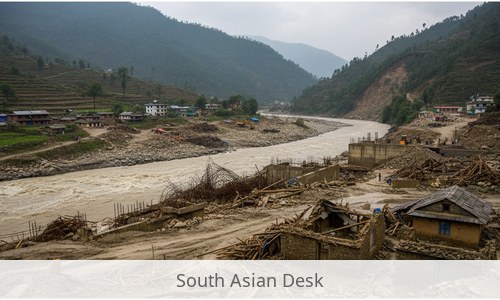
Nepal floods damage have triggered a crisis in the Himalayan region, with flash floods washing away villages and inflicting severe infrastructure damage Nepal. On August 26, 2026, the Hindu reports that villages and infrastructure project sites have been washed away due to the floods, which originated from Tibet and entered Nepal through Rasuwa. District Administrator Narendra Pariyar confirmed the extensive damage caused, while OnlineKhabar states that private helicopter operators are now allowed to conduct rescue missions without prior government approval. The floods, which have rendered at least 15 villages in Rasuwa district uninhabitable, underscore the vulnerability of Nepal’s mountainous regions to extreme weather events, particularly in areas near the Tibetan border where topographical features amplify the impact of sudden water surges.
Nepal floods damage: Impact on Local Communities
The floods have displaced residents and left entire villages submerged, with emergency response efforts underway to assist affected communities. The Hindu highlights that roads and power projects have been severely damaged, disrupting connectivity and essential services in the region. Local officials report that at least 15 villages in Rasuwa district have been rendered uninhabitable, with families seeking temporary shelter in community centers. The destruction of infrastructure, including roads and power lines, has compounded the challenges faced by residents, many of whom rely on these systems for daily survival. In Rasuwa, where agriculture and small-scale industries form the backbone of the economy, the loss of farmland and irrigation systems threatens long-term food security and livelihoods. The floods have also disrupted access to healthcare and education, with schools and clinics in affected areas forced to close or operate at reduced capacity.
Government Response
The Nepalese government has activated its disaster management protocols, coordinating with local authorities to distribute relief supplies and deploy rescue teams. However, challenges remain in reaching remote areas due to damaged infrastructure. Officials have announced plans to review existing disaster preparedness frameworks, with a focus on improving early warning systems and infrastructure resilience in flood-prone regions near the Tibetan border. The review comes amid growing recognition of the need for more robust disaster mitigation strategies, particularly in light of climate change projections that suggest an increase in extreme weather events across South Asia. Nepal’s current disaster management framework, which relies heavily on centralized coordination and limited local capacity, has been criticized for its inability to respond swiftly to rapidly evolving crises. The government’s decision to temporarily waive prior approval requirements for private helicopter operators reflects an acknowledgment of the limitations of existing response mechanisms and a willingness to adapt to urgent needs.
Private Sector Involvement
Private helicopter operators have played a critical role in rescue operations, transporting stranded residents and delivering medical supplies to affected areas. OnlineKhabar notes that the government has temporarily waived prior approval requirements for these missions, allowing for faster response times. While this has improved immediate relief efforts, experts caution that private sector involvement must be carefully regulated to ensure safety and coordination with official rescue teams. The use of private helicopters in disaster response is not unprecedented in South Asia, where similar measures have been employed during floods in India and Bangladesh. However, the scale of this intervention in Nepal highlights the growing reliance on non-state actors in emergency situations, raising questions about the sustainability of such arrangements and the potential for conflicts of interest. The government’s decision also underscores the need for clearer regulatory frameworks to govern private sector participation in disaster management, ensuring that operational efficiency does not come at the expense of accountability or safety.
Context and Regional Implications
The flooding in Nepal highlights the vulnerability of the region to natural disasters, particularly in areas near the border with Tibet, and raises questions about emergency preparedness and infrastructure damage Nepal. Nepal’s geography, characterized by steep mountain slopes and narrow valleys, makes it highly susceptible to flash floods and landslides, especially during the monsoon season. The current crisis has exposed gaps in the country’s infrastructure, including the lack of flood-resistant construction in rural areas and the limited capacity of existing drainage systems. These vulnerabilities are exacerbated by climate change, which is expected to increase the frequency and intensity of extreme weather events in the Himalayan region. The floods also serve as a reminder of the interconnectedness of South Asian ecosystems, where transboundary water flows and shared environmental challenges necessitate regional cooperation in disaster risk reduction. Nepal’s experience with this crisis may influence future policy discussions on cross-border collaboration, particularly with China, which shares a border with Tibet and has its own infrastructure projects in the region.
Follow SouthAsianDesk on X, Instagram and Facebook for insights on business and current affairs from across South Asia.
Sources
- Nepal flash flood washes away villages, damages roads, power projects – thehindu.com
- Private helicopters allowed to fly rescue missions without prior approval – english.onlinekhabar.com