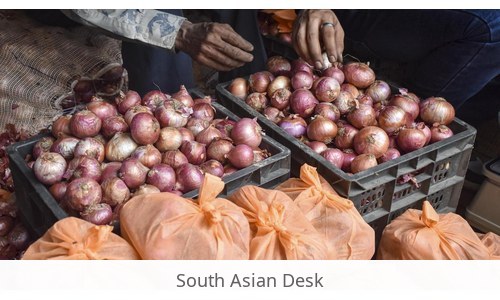
Onion prices in India have surged to ₹62 per kilogram, prompting the government to attribute the rise to middlemen’s practices. The Hindu reports that retail prices have reached this level, while farmers are reportedly receiving as little as ₹1 per kilogram, according to farmers’ leader Rakesh Tikait. The situation has intensified scrutiny over the agricultural supply chain, with calls for systemic reforms to address the growing disparity between production costs and consumer prices.
Government Response to Rising Onion Prices in India
The Indian government has initiated retail sales of onions at ₹35 per kilogram, as reported by The Indian Express. This move aims to stabilize prices and provide relief to consumers by directly distributing onions through government channels, bypassing intermediaries. The intervention follows a direct communication from Rakesh Tikait with Prime Minister Narendra Modi, who has acknowledged the plight of farmers and pledged to review the supply chain mechanisms. However, analysts note that such measures may face logistical challenges, including storage capacity and distribution networks, which could limit their effectiveness in the short term.
The government’s strategy aligns with previous efforts to curb price volatility in essential commodities. In 2023, similar retail sales were implemented for potatoes and tomatoes during a nationwide shortage. Critics argue that while such interventions offer temporary relief, they do not address the root causes of price inflation, such as the dominance of middlemen in agriculture and the lack of infrastructure for efficient agricultural logistics. The current policy also raises questions about long-term sustainability, as it requires significant fiscal resources and coordination across multiple ministries.
Impact on Farmers and the Agricultural Supply Chain
Farmers are struggling with the disparity between retail prices and their earnings. Rakesh Tikait stated that farmers are receiving as low as ₹1 per kilogram for onions, highlighting the challenges within the agricultural supply chain. This situation has raised concerns about the efficiency and fairness of the distribution system. Small-scale farmers, who constitute the majority of India’s agricultural workforce, are particularly vulnerable, as they often lack bargaining power against large middlemen who control pricing and transportation.
The low prices paid to farmers are attributed to a combination of factors, including post-harvest losses, inadequate cold storage facilities, and the absence of a robust price support mechanism. According to agricultural economists, the current crisis underscores the need for a comprehensive review of India’s agricultural policies, including the implementation of a minimum support price (MSP) for onions and other perishable crops, especially in light of the onion price surge. Additionally, the government is under pressure to strengthen rural infrastructure, such as roads and cold storage, to reduce spoilage and improve market access for farmers.
Historical Context and Repeated Challenges
Historically, onion prices in India have experienced fluctuations influenced by various factors, including supply chain inefficiencies and middlemen practices. The current surge underscores the need for a comprehensive review of the agricultural supply chain to ensure fair pricing for both farmers and consumers. Notably, India has faced similar crises in 2013 and 2020, where onion prices spiked due to erratic monsoons, hoarding by traders, and inadequate government oversight. These past episodes revealed systemic weaknesses, such as the lack of a centralized monitoring system for agricultural markets and the limited role of the government in regulating middlemen.
The recurring nature of these crises has prompted calls for structural reforms, including the digitization of agricultural markets and the establishment of a national food security buffer. However, progress on these fronts has been slow, with political and bureaucratic hurdles delaying implementation. The current situation has reignited debates about the role of the government in ensuring food security and the need for a more transparent and equitable distribution system.
Follow SouthAsianDesk on X, Instagram and Facebook for insights on business and current affairs from across South Asia.
Sources
- As onion touches ₹62 per kg, government blames middlemen for price rise – thehindu.com
- Government starts retail sale of onions at Rs 35 per kg – indianexpress.com
Image: th-i.thgim.com