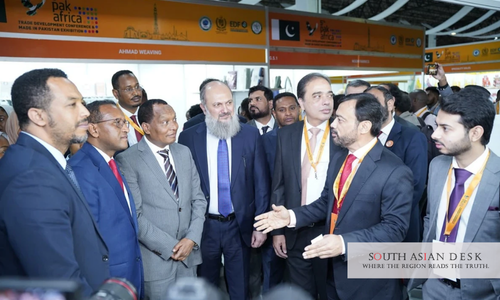
Pakistan and a group of African nations have formally launched the Pakistan-Africa Economic Council (PAEC), setting an ambitious target of raising bilateral trade to $15 billion by 2030. The council was inaugurated at a ceremony in Islamabad, where officials from both sides reaffirmed their commitment to diversifying economic and trade relations and unlocking previously untapped commercial potential.
According to Pakistani state media, the launch marks a significant step in Islamabad’s efforts to deepen Pakistan Africa trade, which has remained largely stagnant despite considerable room for growth. Pakistan’s annual trade with African countries has hovered around $4 billion in recent years, a figure officials on both sides now hope to more than triple within the next four years.
Pakistan-Africa Economic Council: Purpose and Objectives
The state-run Radio Pakistan broadcaster reported that the two sides reiterated their commitment to promoting mutual investment and fully exploiting untapped resources to take bilateral economic and trade relations to new heights. The council is intended to serve as an institutional platform through which Pakistan and African nations can coordinate policy, identify investment opportunities and remove barriers that have historically limited commercial engagement between the two regions.
The ceremony was attended by ambassadors, high commissioners and consuls-general from several African countries, including Rwanda, Mauritius, Morocco, Zimbabwe, Sudan, Kenya and Ethiopia. Speakers at the event highlighted key Pakistani sectors that offer significant trade and investment potential, though specific sector breakdowns were not detailed in the official readout.
Pakistan’s Minister for Defense Production, Muhammad Raza Hayat Harraj, said the PAEC forum would play a substantial role in enhancing economic and trade ties between African countries and Pakistan. His remarks underscored the government’s view that formal institutional mechanisms, rather than ad hoc diplomatic engagement, are needed to sustain long-term commercial cooperation with Africa.
Bilateral Trade $15 Billion Target Reflects Wider Economic Push
The bilateral trade $15 billion target set for 2030 is emblematic of a broader strategy by Islamabad to widen its export base and reduce reliance on traditional markets. Pakistan is currently operating under a $7 billion International Monetary Fund program, and officials have described the drive to expand trade, connectivity and foreign investment as central to the country’s sustainable economic recovery following a prolonged economic downturn.
Reaching a fivefold increase in trade volume within four years will require sustained diplomatic and commercial coordination, as well as investment in logistics, banking channels and market access arrangements between Pakistan and the African countries involved. Analysts tracking South-South trade corridors have long noted that Pakistan’s commercial presence in Africa remains modest relative to the size of both economies, leaving considerable scope for expansion in sectors such as textiles, pharmaceuticals, agriculture and light engineering.
Government Direction Behind Pakistan African Nations Engagement
The push to formalize ties with Pakistan African nations follows earlier direction from Prime Minister Shehbaz Sharif, who last year instructed relevant ministries to pursue enhanced engagement with Africa, particularly in trade, investment and commercial domains. The launch of the PAEC appears to be a direct outcome of that directive, translating high-level political intent into a standing bilateral mechanism.
Officials have not yet detailed the council’s operational structure, including how frequently it will convene or which government departments will be responsible for implementation on the Pakistani side. However, the presence of senior diplomatic representatives from multiple African states at the launch ceremony suggests a shared intent to institutionalize the relationship rather than treat it as a one-off initiative.
Outlook for Pakistan-Africa Trade Relations
The success of the Pakistan-Africa Economic Council will likely depend on how quickly both sides can move from stated intentions to concrete trade facilitation measures. Given that current trade volumes stand at roughly a quarter of the 2030 target, meeting the $15 billion goal will require not only political will but also practical steps such as preferential trade arrangements, streamlined customs procedures and targeted investment promotion.
For now, the council’s establishment signals a clear shift in Islamabad’s foreign economic policy, one that positions Africa as a priority market rather than a peripheral one. Whether this translates into measurable trade growth over the coming years will depend on the follow-through from both Pakistan and its African partners in the months ahead.
Published in SouthAsianDesk, September 13th, 2026
Follow SouthAsianDesk on X, Instagram and Facebook for insights on business and current affairs from across South Asia.