Pakistan Iran Mediation Raises Hopes of Economic Gains
Pakistan Iran mediation has given Islamabad a rare diplomatic opening, raising hopes that its role in helping ease the Iran war could bring economic benefits to a country still struggling with debt, inflation, weak exports and repeated dependence on the International Monetary Fund.
The question now facing policymakers is whether Pakistan can convert diplomatic goodwill into something more durable: investment, trade access, easier financing, stronger regional partnerships and relief from the external pressures that have repeatedly pushed its economy into crisis.
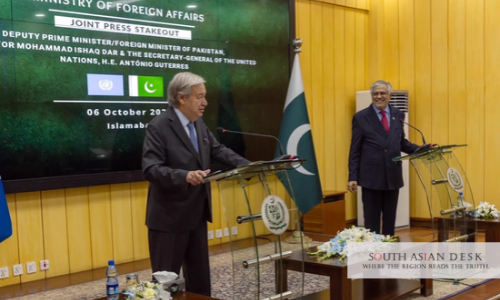
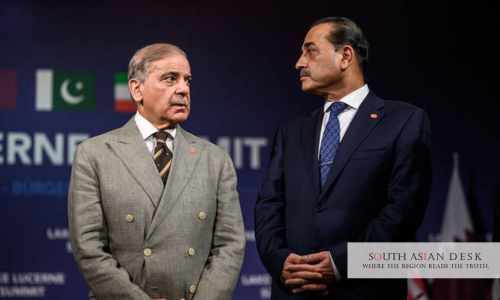
Prime Minister Shehbaz Sharif and army chief Field Marshal Asim Munir have been closely associated with Pakistan’s role in facilitating talks between the United States and Iran. The diplomacy culminated in high-level discussions in Switzerland, where both sides moved towards a roadmap for a wider settlement after months of conflict that threatened the Strait of Hormuz and unsettled global energy markets.
For Pakistan, the stakes were immediate. The Iran war had the potential to worsen oil prices, disrupt Gulf trade routes, weaken investor confidence and place further pressure on a fragile balance of payments position. A prolonged conflict in the neighbourhood would have hit Pakistan through several channels at once: higher energy imports, pressure on inflation, risks to remittances, uncertainty around Gulf financing and instability along its border with Iran.
That is why Islamabad’s peacekeeping role was not simply a foreign-policy exercise. It was also an effort to protect its own economic stability.
Why Pakistan’s Peacekeeping Role Matters
Pakistan has long tried to maintain workable relations with Iran, the Gulf states, China, Turkey and the United States. The Iran war tested that balancing act. By positioning itself as a mediator, Islamabad presented itself as a state capable of speaking to multiple sides at once.
That has raised its diplomatic profile at an important moment. Pakistan’s economy is still under an IMF programme, the government is trying to increase tax revenues, and formal businesses and salaried workers are already carrying much of the burden of fiscal adjustment. Any improvement in Pakistan’s external standing could help it in discussions with lenders, investors and friendly governments.
Officials in Islamabad see an opportunity. A country that helps reduce regional tensions can argue that it is not merely a security risk or bailout candidate, but a useful diplomatic actor in a volatile region. That perception may help Pakistan seek investment in infrastructure, technology, energy, mining and exports.
There may also be a more direct benefit if sanctions relief for Iran gradually opens space for trade. Pakistan and Iran share a long border, and cross-border commerce through Balochistan could expand if restrictions ease and payment channels become less difficult. Energy cooperation, border markets, transport links and informal trade could all gain from a calmer regional environment.
Former finance minister Miftah Ismail has pointed to the possibility of increased Iran-Pakistan trade if sanctions relief creates room for normal commercial activity. That would be particularly important for border communities, where legal trade and better connectivity could reduce dependence on informal flows.
The Gulf and Western Investment Angle
A second possible dividend lies in Pakistan’s relations with Gulf capitals. The Gulf remains central to Pakistan’s economy through oil supplies, remittances, deposits, commercial lending and potential investment. If Islamabad is seen as contributing to regional stability, it may have a stronger case when seeking Gulf investment in large projects.
This could matter in sectors such as energy, ports, logistics, agriculture, mining and technology. Pakistan has repeatedly announced investment ambitions with Gulf partners, but implementation has often been slower than the headlines. The diplomatic moment created by the Iran war mediation could help revive some of those conversations, provided Pakistan offers credible project structures and policy certainty.
There is also a Western dimension. Improved standing with Washington and European capitals could support Pakistan’s access to commercial borrowing, development finance and trade discussions. Reuters reported that British officials saw scope for deepening trade links with Pakistan after its peace efforts, while diplomats from other Western countries were also exploring stronger economic ties.
But these possibilities remain just that: possibilities. No major windfall has been announced. Analysts have warned that diplomatic praise should not be confused with economic transformation.
Pakistan Has Seen This Pattern Before
Pakistan has previously benefited from moments of strategic relevance. After the September 11 attacks, its alignment with Washington brought debt rescheduling, renewed support from multilateral lenders and US assistance. Yet that period did not produce lasting economic strength.
The country remained dependent on external inflows, struggled to expand exports, failed to broaden the tax base and repeatedly returned to the IMF. The lesson is uncomfortable but clear: foreign-policy relevance can create breathing space, but it cannot substitute for reform.
This time, the context is different. Pakistan is not being rewarded for joining a war. It is being recognised for helping reduce one. That distinction may give Islamabad a cleaner diplomatic narrative. Still, the economic test remains the same.
If Pakistan uses the moment only to seek deposits, rollovers or temporary financing relief, the dividend will be limited. Such support can ease pressure on reserves but will not fix low productivity, weak taxation, energy-sector losses or investor distrust.
The real value would come from using Pakistan Iran mediation to secure productive economic gains: preferential market access, technology transfer, education partnerships, renewable energy investment, IT-sector opportunities and regional trade corridors. These would strengthen the economy rather than simply delay the next crisis.
Reform Will Decide the Economic Dividend
Pakistan’s biggest challenge is domestic. Investors do not respond only to diplomatic goodwill. They look at policy consistency, political stability, taxation, contract enforcement, energy costs, currency risk and the ability of governments to follow through.
Pakistan continues to face structural weaknesses that diplomacy alone cannot solve. Its tax base remains narrow. Exports are too limited. Debt servicing consumes fiscal space. The formal sector is heavily taxed while large parts of the economy remain outside the net. Energy costs remain high, and businesses frequently complain about uncertainty.
These issues explain why analysts are cautious. Pakistan may receive goodwill after the Iran war diplomacy, but goodwill is not the same as capital formation. Without reform, the country risks repeating an old cycle: external support arrives, pressure eases temporarily, reforms slow, and another crisis emerges.
For the Shehbaz Sharif government, the opportunity is therefore political as much as economic. It can present Pakistan as a stabilising regional actor, but it must also show that the country is prepared to become a more reliable destination for investment.
That requires difficult choices: widening the tax net, improving governance, reducing circular debt, supporting export industries, protecting policy continuity and making investment approvals less unpredictable.
Can Islamabad Convert Diplomacy Into Growth?
Pakistan’s role in easing the Iran war has created a diplomatic opening at a time when the country badly needs one. It may improve Islamabad’s standing with Washington, Tehran, Gulf states and Western partners. It may also help revive Iran-Pakistan trade and reduce pressure from energy-market volatility.
But the economic dividend will not arrive automatically. Pakistan’s peacekeeping role can open doors, but it cannot walk through them for Islamabad.
The country’s best chance is to turn diplomatic capital into long-term economic partnerships rather than short-term financial relief. If Pakistan can use this moment to attract investment, expand trade and strengthen productivity, its mediation role may become more than a foreign-policy success.
If not, the praise may fade, and Pakistan will be left with the same economic weaknesses that have repeatedly turned opportunity into another missed chance.
Published in SouthAsianDesk, June 24, 2026
Follow SouthAsianDesk on X, Instagram and Facebook for insights on business and current affairs from across South Asia.