Pakistan power transmission network is set for a major upgrade after the World Bank approved $375.9 million in financing for a project aimed at improving grid reliability, reducing power outages and supporting clean energy growth.
The financing has been approved for Pakistan’s Grid Stability Enhancement Project, which will strengthen the national transmission system under the Boosting Energy Security through Transmission in Pakistan programme, known as BEST-PAK. The project is the first phase of a 10-year programme designed to modernise the country’s electricity transmission network.
The World Bank said the investment will help address grid instability and transmission bottlenecks that have limited the movement of electricity across the country and left clean energy generation underused. The project is also expected to support Pakistan’s wider power-sector reform agenda by improving governance, accountability and operational performance in the transmission system.
Pakistan power transmission network to receive major grid upgrades
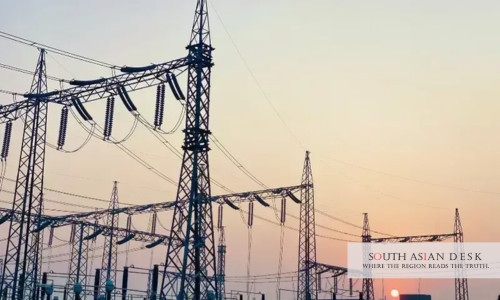
Pakistan power transmission network has long faced constraints that affect power delivery to homes, businesses and industries. Transmission bottlenecks can prevent electricity from reaching demand centres even when generation capacity is available, leading to outages, higher costs and lost economic activity.
The new project will install advanced equipment to stabilise the grid and improve the flow of electricity at key substations. Planned upgrades include Static Synchronous Compensators, known as STATCOMs, at three major 500 kV substations.
The project will also add fixed reactors and capacitor banks across 26 grid substations. These technologies are used to improve voltage control, strengthen system stability and support the reliable transfer of power across long distances.
For Pakistan, such upgrades are important because the country’s electricity problems are not limited to generation. Even where power is available, weak transmission capacity and grid instability can stop it from being delivered efficiently.
Project aims to unlock curtailed wind energy
A major objective of the Grid Stability Enhancement Project is to bring more renewable electricity onto the grid.
The World Bank said the upgrades will help bring 640 megawatts of currently curtailed wind energy into the system. This will support the full use of 1,840 MW of wind capacity in southern Pakistan by allowing electricity to move more effectively to major demand centres.
Curtailed wind energy refers to power that could be produced but is not used because the grid cannot absorb or transmit it. This is a major problem for countries trying to expand renewable energy. Without adequate transmission capacity, renewable projects may remain underutilised even after they are built.
The project is also expected to support the integration of about 491 MW of planned private sector-led renewable energy projects. That could help attract further investment if the grid becomes more reliable and commercially viable.
World Bank financing Pakistan’s clean energy transition
World Bank financing Pakistan’s grid upgrade comes at a time when the country is trying to reduce energy costs, improve reliability and expand cleaner sources of electricity.
The World Bank said Pakistan’s energy challenges are linked to broader economic stability. Reliable and affordable electricity is essential for industrial output, household welfare, exports and private investment.
The project is expected to help Pakistan move towards its national commitment of achieving 60 percent renewable energy in its electricity mix by 2030, in line with its climate commitments under the Paris Agreement.
The emissions impact is also significant. Over its lifetime, the project is expected to avoid about 832,500 tonnes of carbon dioxide emissions each year, or more than 20.8 million tonnes over 25 years.
These figures show that the transmission upgrade is not only an infrastructure project. It is also part of Pakistan’s clean energy strategy, because renewable power cannot be scaled effectively without a grid capable of carrying it.
BEST-PAK programme supports long-term power reform
The financing forms part of the BEST-PAK Multiphase Programmatic Approach, a long-term World Bank-supported programme focused on strengthening Pakistan’s power transmission system.
The project’s importance lies in its combination of infrastructure investment and institutional reform. Alongside physical upgrades, it will support the government’s ongoing transmission-sector reform agenda, including the restructuring of the National Transmission and Dispatch Company into specialised successor entities.
That reform agenda is intended to improve governance, accountability, operational performance and the long-term sustainability of the power sector. The World Bank said the project draws on international experience adapted to Pakistan’s needs.
For Pakistan, institutional reform is crucial because technical upgrades alone cannot resolve structural problems in the power sector. Grid reliability also depends on better management, transparent planning, financial discipline and stronger coordination between generation, transmission and distribution entities.
If implemented well, the project could create conditions for future private capital participation in the transmission sector and renewable energy development.
Climate-resilient infrastructure included in project design
The World Bank said the project has been designed to account for Pakistan’s exposure to climate risks, including floods, urban flooding and extreme heat.
New installations will be required to meet climate-resilient specifications. These include elevated platforms to reduce flood exposure and equipment designed to operate in temperatures of up to 55 degrees Celsius.
This is particularly important for Pakistan, where power infrastructure has increasingly been exposed to extreme weather events. Flooding can damage substations and transmission assets, while heatwaves can place additional pressure on electricity demand and grid equipment.
Climate-resilient infrastructure can help reduce the risk of service disruptions during monsoon seasons and periods of extreme heat. It can also reduce repair costs and improve long-term reliability.
Grid reliability central to economic stability
Pakistan’s electricity system has faced repeated pressure from outages, high costs and inefficiencies. Businesses often cite unreliable power as a constraint on productivity and competitiveness, while households face financial and practical hardship when electricity supply is unstable.
Transmission investment is therefore an economic priority. A stronger grid can reduce bottlenecks, improve the use of existing generation capacity and help deliver cheaper renewable electricity to consumers.
However, the benefits will depend on execution. Large infrastructure projects require effective procurement, timely implementation, coordination with provincial and federal bodies, and sustained policy support.
The project will also need to work alongside wider reforms in distribution, billing, governance and loss reduction. Transmission upgrades can improve system capacity, but Pakistan’s power sector will still require broader reforms to reduce inefficiencies and improve financial sustainability.
Renewable energy growth depends on transmission capacity
Pakistan’s clean energy growth will depend heavily on whether the transmission network can carry renewable electricity from generation sites to consumption centres.
Wind and solar resources are often located far from major demand areas. Southern Pakistan has strong wind potential, but renewable projects in that region require adequate transmission capacity to move power to industrial and urban centres.
Without modern transmission infrastructure, renewable energy expansion can slow down because investors may fear that their projects will not be fully dispatched or paid for. A more stable grid can reduce that risk and support private-sector confidence.
The World Bank-backed project therefore addresses a key barrier to renewable energy integration. It is designed to ensure that clean power already available in the system is not wasted because of grid limitations.
Implementation will determine project impact
The approval of $375.9 million in financing is an important step, but the project’s impact will depend on implementation.
Pakistan will need to ensure that equipment is installed on time, substations are upgraded effectively, transmission reforms move forward and grid operators are able to manage more renewable energy without compromising reliability.
The restructuring of NTDC will also require careful handling. Institutional changes in the power sector can be complex, especially when they involve governance, staffing, assets, regulation and operational responsibilities.
If the reforms are delayed or poorly coordinated, the infrastructure benefits may be limited. If they are implemented properly, the project could improve system reliability and provide a stronger platform for future renewable energy investment.
Pakistan power transmission network upgrade marks key energy step
Pakistan power transmission network upgrade marks an important step in the country’s effort to modernise its electricity system and support clean energy growth.
The World Bank financing is expected to strengthen grid stability, reduce transmission bottlenecks, unlock curtailed wind energy and support the integration of new private renewable projects. It also links infrastructure investment with institutional reform, making it part of a wider attempt to improve the performance of Pakistan’s power sector.
The project will not solve all of Pakistan’s electricity problems on its own. Distribution losses, circular debt, tariff pressures and governance issues remain major challenges. However, a reliable transmission network is essential for any durable improvement in power supply.
For households, businesses and industries, the promise of the project is simple: fewer outages, better use of clean energy and a more reliable electricity system. For Pakistan’s economy, the larger goal is to build a grid that can support growth, investment and energy security over the long term.
Published in SouthAsianDesk, July 11, 2026
Follow SouthAsianDesk on X, Instagram and Facebook for insights on business and current affairs from across South Asia.