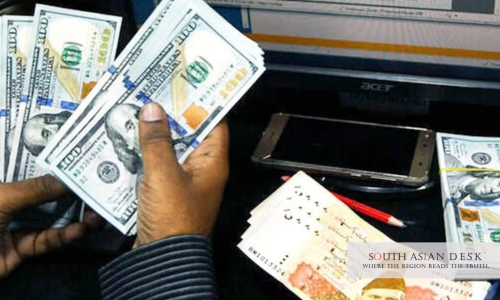
Pakistan savings rate has fallen to its lowest level in three decades, with people saving only Rs6 out of every Rs100 earned, according to a new report by the Pakistan Institute of Development Economics.
The report said the country’s savings rate currently stands at 6.4 percent, far below regional economies and insufficient to support sustainable domestic investment. It warned that weak savings could deepen Pakistan’s investment crisis, increase reliance on foreign borrowing and keep the economy exposed to repeated external financing pressures.
The report comes as Pakistan continues to operate under a fragile stabilisation phase, with policymakers trying to lift investment, reduce dependence on external loans and sustain growth after years of inflation, high interest rates and pressure on household incomes.
Pakistan savings rate falls behind regional economies
According to the report, Pakistan’s savings rate is significantly lower than Bangladesh, India and Vietnam. Bangladesh’s savings rate was cited at 21 percent, India’s at 28 percent, and Vietnam’s at nearly 30 percent.
The comparison highlights one of Pakistan’s long-running structural weaknesses. Low national savings mean the country has fewer domestic resources available for investment in industry, infrastructure, technology and job creation.
The State Bank of Pakistan has also warned that low and falling savings have weakened the prospects for sustainable economic growth. In a recent review, the central bank said Pakistan’s gross domestic savings had declined over the last two decades and remained among the lowest compared with peer economies.
Pakistan savings rate needs policy support, PIDE says
The PIDE report recommended a national savings drive, including restoring tax incentives for long-term savings schemes, protecting small savers and expanding digital access to national savings products.
It also proposed an annual savings mobilisation dashboard to monitor progress and guide policy. Such measures, the report said, could help bring more households into formal saving channels and reduce dependence on informal or unproductive assets.
Experts have repeatedly linked Pakistan’s low savings culture to inflation, weak financial literacy, limited trust in formal financial products, low real returns, high consumption pressures and the informal economy.
Low savings add pressure on investment and borrowing
The report warned that excessive government borrowing is crowding out private-sector investment, further weakening the country’s ability to generate long-term growth.
When the government borrows heavily from domestic banks, fewer resources are available for businesses seeking credit. This can reduce private investment, limit job creation and keep the economy dependent on consumption rather than productive expansion.
Pakistan’s official Economic Survey for 2024-25 said raising domestic and national saving rates remains necessary for sustainable growth. It also showed that total investment remained below the level needed for broad-based supply-side gains.
For households, low savings also mean weaker protection against shocks such as job losses, medical expenses, inflation and emergencies. For the state, it means a narrower domestic pool of funds to finance development without turning to external borrowing.
The latest PIDE report suggests that Pakistan’s savings problem is no longer only a household finance issue. It has become a macroeconomic challenge that affects investment, growth, debt sustainability and the country’s ability to reduce dependence on IMF-backed support.
Published in SouthAsianDesk, June 8, 2026
Follow SouthAsianDesk on X, Instagram and Facebook for insights on business and current affairs from across South Asia.