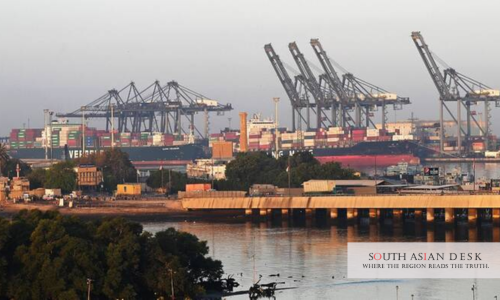
Pakistani port handles record cargo in FY26 as the Karachi Port Trust reported more than 54.685 million tons of cargo, marking the highest annual volume in the port’s 138-year history.
The record comes as Pakistan’s maritime sector sees increased activity following disruption in regional shipping routes during the Iran war. Several vessels were reportedly diverted from Gulf transshipment hubs toward Pakistani ports, including Karachi Port, Port Qasim and Gwadar, creating an opening for Pakistan’s port network to handle greater volumes.
Federal Minister for Maritime Affairs Muhammad Junaid Anwar Chaudhry said Karachi Port Trust had surpassed its previous all-time cargo handling record, set in FY2017-18. He credited the achievement to improved operational efficiency, effective management and expanded port capacity.
Pakistani Port Handles Record Cargo as KPT Crosses Historic Mark
The latest KPT cargo handling figure is significant because Karachi Port remains Pakistan’s largest and most important seaport. It handles a major share of the country’s seaborne trade, including imports, exports, industrial inputs and containerised goods.
The 54.7 million-ton milestone suggests Karachi Port has been able to absorb increased maritime pressure at a time of regional uncertainty. While the Iran war and related shipping shifts contributed to higher activity, officials have also linked the performance to ongoing improvements in port operations and infrastructure.
Karachi Port Trust Sees Container Growth
The cargo record follows another major milestone for Karachi Port Trust. Earlier this month, KPT said it had handled more than 2.651 million twenty-foot equivalent units, or TEUs, during the current fiscal year, setting a new container throughput record.
Container handling is a key measure of port performance because it reflects the movement of manufactured goods, consumer products, export cargo and industrial supplies. Higher container throughput can point to stronger trade activity, but it also places pressure on port clearance systems, storage yards and inland transport links.
Iran War Shipping Routes Boost Pakistan Ports
The Iran war has affected commercial shipping patterns across the region, especially around Gulf routes and transshipment hubs. As vessels looked for alternative ports, Pakistan’s maritime network benefited from additional traffic.
Karachi Port was well placed to receive much of this activity because of its established role as the country’s main trade gateway. However, analysts and policymakers will be watching whether Pakistan can retain some of this business once regional routes stabilise.
Temporary diversions can raise cargo numbers in the short term, but long-term gains depend on faster clearance, lower logistics costs, reliable berth availability and better road and rail connectivity from ports to industrial centres.
Pakistan Maritime Trade Gets Timely Boost
The record gives Pakistan’s maritime trade sector a timely boost as the country seeks to position itself as a regional logistics and transshipment hub. Pakistan’s location near the Arabian Sea, Gulf routes, Central Asia and China gives it a natural advantage, but geography alone is not enough.
To convert this year’s port activity into lasting competitiveness, Pakistan will need continued investment in port modernisation, customs digitisation, cargo handling systems and inland freight infrastructure.
Efficient ports can reduce trade costs, ease pressure on importers and exporters, and improve supply chain reliability. For a country trying to raise exports and attract investment, stronger port performance can support broader economic goals.
A Record Year, But a Bigger Test Ahead
Karachi Port’s record cargo handling is a positive sign for Pakistan’s maritime sector, but the bigger test will come after regional conditions normalise. If shipping lines continue to see Pakistan as a reliable alternative, the country could strengthen its role in regional trade.
For now, the 54.7 million-ton record shows that Karachi Port Trust has had a historic year. The challenge is to turn a moment of increased activity into a durable improvement in Pakistan’s port competitiveness.
SEO Keywords: Pakistani port handles record cargo, Karachi Port Trust, KPT cargo handling, 54.7 million tons, FY26 cargo, Iran war shipping routes, Pakistan maritime trade, regional transshipment hub, Karachi Port record, Pakistan ports
Published in SouthAsianDesk, June 29, 2026
Follow SouthAsianDesk on X, Instagram and Facebook for insights on business and current affairs from across South Asia.