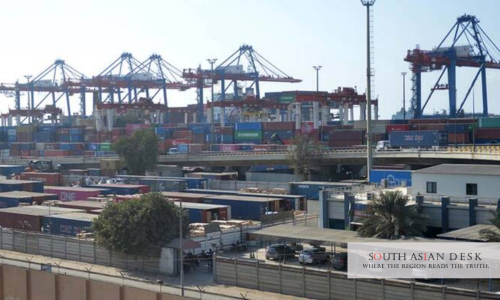
Pakistan’s trade deficit narrowed in May 2026, with the goods trade gap falling to about USD 2.58 billion as exports improved and imports declined, according to official trade data released in Islamabad on Wednesday, June 3, 2026.
Pakistan’s trade deficit falls sharply from April
Pakistan’s merchandise trade position improved in May as exports rose to about USD 2.70 billion, while imports fell to about USD 5.28 billion. The resulting trade deficit stood near USD 2.58 billion, compared with a deficit above USD 4 billion in April.
The month-on-month fall marked a significant easing in pressure on the country’s external account after April’s elevated import bill had widened the goods trade gap. However, the year-on-year comparison was less dramatic. The deficit was about USD 2.99 billion in May 2025, meaning the annual reduction was roughly 14%, not 39%.
Finance adviser Khurram Schehzad said in a post on X on Wednesday, June 3, 2026, that May showed a 10% increase in exports and a 22% decrease in imports, describing the development as a sign of improving economic stability. Those figures appear to refer to the month-on-month movement from April to May rather than the year-on-year change.
The distinction matters because Pakistan’s external sector remains under close watch by policymakers, lenders and investors. A smaller monthly deficit can support foreign exchange reserves and ease pressure on the rupee, but sustained improvement depends on whether exports continue to grow and imports remain manageable without slowing productive activity.
Exports improve but annual trend remains mixed
Pakistan’s exports increased from April’s level, supported by shipments from key sectors including textiles, rice and other agricultural and manufactured goods. The country’s main export categories typically include knitwear, readymade garments, bedwear, cotton cloth, rice, towels, made-up textile articles, fruits, cotton yarn and basmati rice.
On a year-on-year basis, however, the increase in May exports was limited. Exports rose from about USD 2.67 billion in May 2025 to around USD 2.70 billion in May 2026, reflecting only a modest annual gain.
The broader export picture has also remained uneven during FY26. Earlier official and market data showed pressure on cumulative merchandise exports during the first 10 months of the fiscal year, while imports had risen over the same period. This made May’s monthly improvement notable, but not enough on its own to confirm a durable turnaround.
Export growth is central to Pakistan’s external account strategy because the country has long relied on a narrow set of goods exports while importing fuel, machinery, edible oil, raw materials and industrial inputs. Without a stronger and more diversified export base, reductions in the trade deficit can depend heavily on import compression.
Imports ease after April surge
Imports fell sharply in May from April, helping narrow the monthly trade gap. Pakistan’s import basket remains dominated by petroleum products, crude oil, liquefied natural gas, palm oil, electrical machinery, plastics, iron and steel, mobile phones, raw cotton and other industrial or consumer goods.
A fall in imports can improve the trade balance in the short term, but the economic meaning depends on what is declining. Lower imports of luxury or non-essential items may support external stability, while lower imports of machinery, raw materials or energy can also signal weaker industrial demand.
April had seen a much larger goods deficit, driven by higher imports. The May data therefore suggests partial relief after a difficult month, rather than a complete reversal of Pakistan’s external trade challenges.
Background
Pakistan has been working to stabilise its external account after years of pressure from high import payments, debt servicing needs and limited foreign exchange inflows. The country’s foreign exchange reserves have improved from previous lows, helped by official financing, remittances and efforts to control the current account.
According to State Bank of Pakistan data, total liquid foreign exchange reserves stood at USD 22.636 billion as of Friday, May 29, 2026. Of this, USD 17.190 billion was held by the central bank and USD 5.446 billion by commercial banks.
The current account position has also remained sensitive to trade movements. The State Bank’s latest balance of payments figures showed a current account deficit of USD 324 million in April 2026, following a surplus in March. For July to April FY26, the current account recorded a deficit of USD 252 million, compared with a surplus of USD 1.662 billion in the same period of the previous fiscal year.
This means the improvement in May’s goods trade balance will be watched closely when the next balance of payments data is released. A smaller goods deficit can support the current account, particularly if remittances and services exports remain steady.
What’s next
Pakistan’s trade deficit will remain a key indicator for the economy in the final month of FY26, with policymakers likely to focus on whether May’s export growth can continue without relying mainly on lower imports to narrow the gap.
Sustained improvement will depend on stronger export receipts, stable remittance inflows, careful management of fuel and machinery imports, and continued availability of external financing. If exports keep rising while import growth remains targeted, Pakistan’s trade deficit could ease further, strengthening the country’s external account outlook.
Published in SouthAsianDesk, June 4, 2026
Follow SouthAsianDesk on X, Instagram and Facebook for insights on business and current affairs from across South Asia.