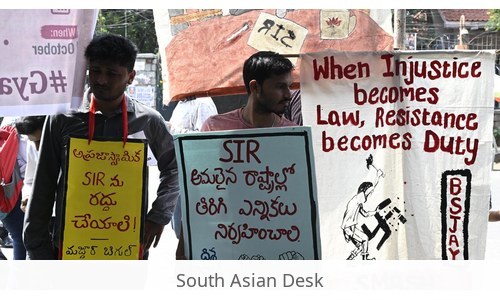
The Satyagraha digital platform has emerged as a central focus in India’s political landscape, coinciding with mass protests against the Chief Election Commissioner (CEC) Gyanesh Kumar. On October 4, 2026, over 700 individuals were arrested during demonstrations at Jantar Mantar in Delhi, demanding the CEC’s resignation, according to OnlineKhabar. These protests, which have drawn significant attention from opposition leaders, align with the launch of Rahul Gandhi’s Satyagraha digital platform, a tool aimed at mobilizing political support against the ruling government.
Satyagraha digital platform: Implications for Electoral Integrity
The protests against the CEC have sparked debates about India’s electoral integrity, with critics alleging irregularities in recent elections. Rahul Gandhi’s Satyagraha digital platform seeks to challenge the legitimacy of current electoral authorities by highlighting these concerns. As reported by The Hindu, the platform is described as a strategic move to galvanize opposition efforts against the ruling party’s governance.
If the opposition succeeds in undermining the CEC’s authority, it could trigger a re-evaluation of electoral procedures and the credibility of upcoming elections. This development may also reshape political mobilization in India, particularly in the context of the Lok Sabha and state assembly elections. The Satyagraha digital platform aims to amplify these challenges by leveraging digital activism to counter the ruling party’s narrative.
The Role of Digital Platforms in Political Movements
Digital platforms like the one introduced have become pivotal in modern political movements. They enable organizations to coordinate, disseminate information, and mobilize support on a large scale. In this case, the platform is being used to amplify the opposition’s message and challenge the ruling party’s claims of electoral legitimacy.
Historically, digital tools have played a crucial role in political mobilization. Social media campaigns, for instance, have been instrumental in rallying support for causes ranging from environmental issues to social justice. The success of such platforms often hinges on their ability to engage a broad audience and maintain a consistent message. The platform exemplifies this by targeting political mobilization in India through a centralized digital strategy.
Government and Ruling Party Responses
The government and ruling party have responded to the protests and the platform with a firm stance. Government officials have dismissed the demonstrations as politically motivated, emphasizing the need to uphold India’s electoral integrity. The ruling party has also accused the opposition of attempting to destabilize the electoral process, as noted by The Hindu.
Congress President Mallikarjun Kharge has further escalated tensions by demanding the dissolution of the Lok Sabha and state assemblies, labeling PM Modi and state chief ministers as ‘illegal’ occupants of their posts. This demand has been met with resistance from the ruling party, which has defended the current electoral framework and the authority of the CEC. The government’s response to protests has thus become a focal point in the broader political conflict.
Expanding the Impact of Digital Activism
The platform represents a new phase in political mobilization in India, where digital tools are increasingly used to challenge established power structures. Unlike traditional protest methods, this platform allows for real-time coordination, viral outreach, and data-driven strategies to influence public opinion. By leveraging social media algorithms and targeted messaging, the opposition aims to create sustained pressure on the ruling government.
Critics argue that such initiatives, including the platform, risk polarizing the political discourse and undermining the credibility of electoral institutions. However, supporters view it as a necessary response to perceived injustices in the electoral process. The platform’s effectiveness will depend on its ability to maintain public trust and avoid being co-opted by partisan agendas.
Rahul Gandhi’s political platform has also drawn attention for its focus on electoral reforms and transparency. By framing the platform as a tool for India’s electoral integrity, the opposition seeks to align its agenda with broader democratic principles. This approach may influence upcoming elections, particularly if the platform successfully mobilizes a significant portion of the electorate.
Conclusion
The platform has become a symbol of the ongoing struggle over India’s electoral integrity and the future of political mobilization in India. As the government continues to respond to the government response to protests, the role of digital tools in shaping political outcomes remains a critical factor. The coming months will determine whether this platform can achieve its goals or face the challenges of political polarization and institutional resistance.
Follow SouthAsianDesk on X, Instagram and Facebook for insights on business and current affairs from across South Asia.
Sources
- As protests against CEC continue, Rahul launches ‘Satyagraha’ digital platform – thehindu.com
- More than 700 arrested at Jantar Mantar during protest in India – english.onlinekhabar.com
Image: th-i.thgim.com