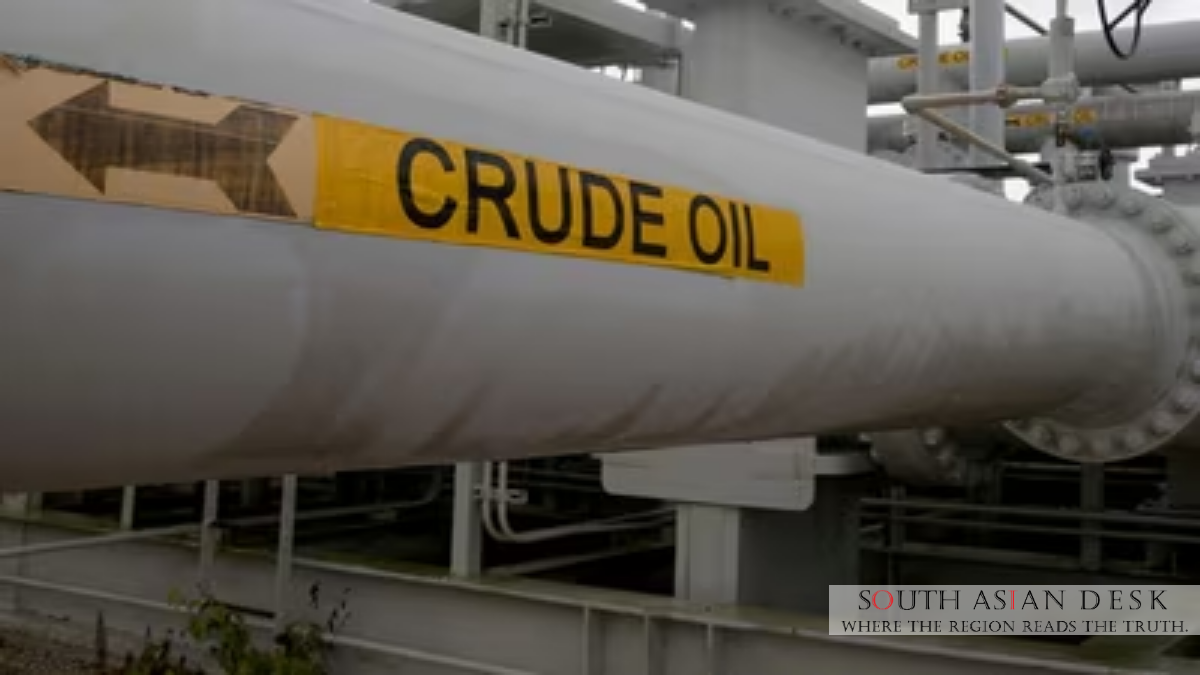
Saudi crude shipments to Pakistan have resumed through the Red Sea after drone attacks halted a key pipeline, easing shortage fears as regional conflict disrupts the country’s main Middle Eastern supply routes, officials said on Tuesday. The restart offers Islamabad some respite at a time when Pakistan’s fuel security has come under sustained pressure from the wider conflict in the Gulf.
East-West Pipeline Restarts After Drone Attacks
Saudi Arabia restarted its East-West Pipeline, which carries crude from oilfields in the Kingdom’s east to the Red Sea port of Yanbu, after attacks forced its closure on 13 September and halted loadings at the export terminal. The pipeline was reported to have restarted at a reduced rate, with work underway to restore flows to their previous level of about 4 million barrels per day, equivalent to roughly four percent of global oil supply.
The route is strategically significant because it allows Saudi crude to bypass the Strait of Hormuz, where shipping has been severely disrupted since war involving the United States, Israel and Iran erupted in February. From Yanbu, tankers bound for Pakistan sail south through the Red Sea and the Bab Al-Mandab Strait before entering the Arabian Sea.
Why Saudi Crude Shipments to Pakistan Matter
Pakistan, which relies heavily on imported energy, had increased its use of the Yanbu route as reduced traffic through Hormuz complicated supplies from Gulf producers. Industry officials estimate that crude shipped through the Red Sea corridor now meets about a quarter of the country’s requirements.
Asad Hasan, chief executive of Karachi-based National Refinery Limited, confirmed that refineries had been notified of the resumption of supply from Yanbu, adding that a cargo for a Pakistani refinery was already loading and was due to be completed that evening. He did not identify the receiving refinery or disclose the shipment’s volume, vessel or expected arrival date.
According to Hasan, Pakistan requires between 14 and 16 crude cargoes a month, with approximately four now arriving through the Yanbu and Bab Al-Mandab route. He said keeping the corridor operational had become important as the country sought to reduce its dependence on routes affected by the conflict. Pakistani refineries are also exploring supplies from Africa and the United States, although those efforts have not yet produced firm arrangements.
Oil Prices Ease on Pipeline News
Markets responded swiftly. News of the restart helped push benchmark Brent crude down by more than $2 to around $98 a barrel on Tuesday, its lowest level in two weeks, although prices remain elevated amid continuing disruption across the Middle East.
An industry official noted that restored supplies would not directly reduce international oil prices, but would give refineries greater flexibility and reduce the risk of severe domestic shortages. Another senior refinery official, speaking on condition of anonymity, described the Red Sea corridor as a lifeline following disruption to the country’s principal supply route through Hormuz.
Government Moves to Calm Shortage Concerns
The development follows weeks of concern as fighting disrupted oil and gas shipments, raised freight and insurance costs and pushed domestic petrol and diesel prices sharply higher.
Petroleum Minister Ali Pervaiz Malik said at the weekend that petrol could reach Rs1,000 ($3.56) per litre if an acute shortage developed, though he presented that figure as a possible consequence rather than a forecast. Hasan said the remarks had since been misread as a warning of an imminent shortage, and maintained that fuel shortage concerns were not significant at present.
Additional Petroleum Secretary Zafar Abbas separately said Pakistan had adequate supplies arranged for October and would finalise its requirements for November in the coming weeks. “We have enough fuel for October,” Abbas said, adding that supplies via Bab Al-Mandab were continuing.
Structural Vulnerability Remains
Despite the reassurances, Pakistan’s exposure to supply shocks persists. The government has previously said the country operates with commercial inventories rather than large strategic petroleum reserves, leaving it particularly exposed to prolonged interruptions in crude shipments.
For now, the resumption of Saudi crude shipments to Pakistan eases pressure on Pakistani refineries, which had faced supply constraints linked to disruptions around the Strait of Hormuz. Whether that relief holds will depend on the security of the Red Sea corridor and on how quickly the East-West Pipeline returns to full capacity.
Published in SouthAsianDesk, September 23rd, 2026
Follow SouthAsianDesk on X, Instagram and Facebook for insights on business and current affairs from across South Asia.