Section 301 : The United States Trade Representative (USTR) formally concluded on Tuesday, June 2, 2026, that India has failed to impose or effectively enforce a ban on the importation of goods produced with forced labour, a finding that renders New Delhi’s trade practices actionable under Section 301 of the US Trade Act of 1974. The determination, which covers 60 of the United States’ largest trading partners, comes as Indian and American negotiators are simultaneously engaged in talks to finalise a bilateral trade agreement.
What the USTR found on forced labour imports
The USTR’s findings, set out in a comprehensive report released on Tuesday, June 2, 2026, examined the acts, policies, and practices of 60 economies that collectively account for more than 99 percent of all US imports. The central question was whether each economy’s failure to prohibit the import of goods produced wholly or partly with forced labour constituted an unreasonable or discriminatory practice that burdens or restricts US commerce.
India was listed among 54 economies determined to have no legal prohibition in place whatsoever. The USTR concluded that this absence was unreasonable on four distinct grounds: it undermines the global objective of eliminating forced labour; it allows producers that exploit forced labour to manufacture goods at an artificially reduced cost, thereby distorting international markets; it damages the profitability of firms that comply with labour standards; and it facilitates the circumvention of forced labour import restrictions that already exist in other jurisdictions.
The USTR separately identified six economies, Canada, Ecuador, the European Union, Indonesia, Mexico, and Pakistan, as jurisdictions that have enacted such prohibitions in law but have failed to enforce them effectively. The report accordingly concluded that all 60 investigated economies had failed, whether through legislative absence or enforcement deficiency, to meet the standard required.
Section 301 Tariffs proposed; public hearings scheduled
Following the determination, US Trade Representative Ambassador Jamieson Greer announced proposed responsive action in the form of differentiated additional duties. The 54 economies lacking any forced labour import prohibition, a group that includes both India and China, face a proposed additional tariff of 12.5% on all goods exported to the United States. The six economies where prohibitions exist but enforcement is inadequate, including Pakistan, face a lower proposed rate of 10%.
Ambassador Greer stated that the inability of the United States’ most significant trading partners to address goods manufactured with forced labour was unacceptable, and that American workers were being compelled to compete on an uneven playing field. He acknowledged that certain partners had taken initial steps through frameworks such as the United States-Mexico-Canada Agreement (USMCA) and bilateral reciprocal trade commitments, but stressed that further action was necessary across all economies under review.
The proposed duties are not yet in effect and remain subject to a public comment and hearing process. Interested parties may request to appear at the public hearings until Monday, June 22, 2026, and submit written comments until Monday, July 6, 2026. The USTR will convene the public hearings on Tuesday, July 7, 2026, before arriving at a final determination.
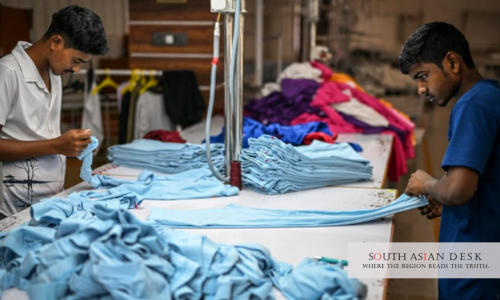
A textile mechanism has also been proposed, under which a prescribed volume of apparel and textile imports from qualifying economies could enter the United States at a reduced Section 301 tariff rate. Given the significance of textiles and garments within India’s US-bound export basket, this provision could carry particular relevance for New Delhi’s trade planners.
India engages diplomatically as talks continue
India’s Commerce Ministry confirmed on Wednesday, June 3, 2026, that New Delhi remains actively engaged with Washington within the framework of the Section 301 proceedings. In a statement, the Ministry said that India was simultaneously pursuing the finalisation of an interim trade agreement, a framework for which was set out in a joint statement issued by both governments on February 7, 2026.
The Ministry did not formally contest the USTR’s findings but framed India’s approach as one oriented towards negotiated resolution rather than confrontation. Both India’s chief negotiator, Darpan Jain, an Additional Secretary in the Department of Commerce, and the US chief negotiator, Brendan Lynch, were reported to be in New Delhi during the week of June 1, 2026, for a three-day round of consultations on the terms of the proposed interim agreement. India has also indicated a preference for the Section 301 issue to be resolved through the bilateral trade negotiations channel rather than through unilateral punitive measures.
Background
Section 301 of the US Trade Act of 1974 grants the USTR authority to investigate foreign government policies or practices deemed unfair, unreasonable, or discriminatory towards US commerce. Where the USTR makes an affirmative determination, available remedies include additional tariffs, suspension of existing trade concessions, or binding agreements requiring the foreign government to remedy the practice in question.
The USTR opened the 60 forced labour investigations on Thursday, March 12, 2026, under Section 301(b) of the Trade Act. The investigations are one of two concurrent Section 301 proceedings initiated in March 2026; a separate inquiry into structural excess manufacturing capacity covers 16 economies, all of which also appear in the forced labour investigation. Both probes were initiated following a US Supreme Court ruling that found tariffs imposed under the International Emergency Economic Powers Act (IEEPA) to be unlawful, prompting the Trump administration to pursue the Section 301 mechanism as the appropriate legal basis for trade action. The USTR received testimony from nearly 60 witnesses and approximately 500 written comments and rebuttal submissions before issuing its June 2 determination.
The United States has maintained a domestic prohibition on the importation of goods mined, produced, or manufactured wholly or in part with forced labour for nearly a century.
What’s next
The final outcome of the Section 301 India forced labour proceedings will turn on the public hearing process concluding in July 2026 and on whether the ongoing India-US bilateral trade negotiations, now at an advanced stage following the February 7, 2026, joint statement, will yield enforceable commitments on forced labour import controls that satisfy Washington’s standard before a formal tariff order is issued. Until then, the proposed 12.5% additional duty remains in the public comment phase, and New Delhi’s diplomatic and negotiating posture will be closely watched across South Asia and in global trade capitals.
Published in SouthAsianDesk, June 5, 2026
Follow SouthAsianDesk on X, Instagram and Facebook for insights on business and current affairs from across South Asia.