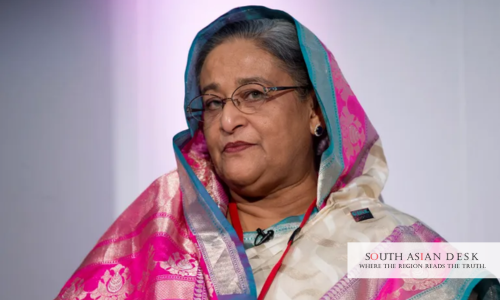
A Sheikh Hasina prison return to Bangladesh now looks all but certain, according to a senior government official, days after the ousted prime minister told Reuters she intends to travel back from exile in India and surrender to a court. Shama Obaed Islam, Bangladesh’s state minister for foreign affairs, said on Monday that Hasina would face immediate custody if she follows through on her stated plan.
“Sheikh Hasina is a convicted criminal. If she surrenders, action will be taken against her as per the laws of Bangladesh,” Obaed told reporters, adding that she would first be jailed before further legal proceedings continue under Bangladeshi law.
The Background Behind the Sheikh Hasina Prison Return
Hasina, 78, has been living in New Delhi since fleeing Bangladesh in August 2024, when a student-led uprising against her increasingly authoritarian rule turned into a mass popular revolt. The United Nations has said the crackdown that followed the protests killed around 1,400 people, one of the deadliest episodes of political violence in the country’s recent history. Bangladesh’s war crimes court sentenced her in November to death in absentia for ordering the crackdown, a charge she has consistently denied from exile.
Her Awami League, which governed Bangladesh for most of the past two decades, has since been banned, and cases have been filed against a large number of its leaders and workers, many of whom remain in hiding. The Awami League ban Bangladesh imposed after the uprising has left the party unable to contest elections or operate openly inside the country, deepening the political rupture that followed Hasina’s departure.
Hasina’s Own Account of Her Planned Return
In her first interview since going into exile, published by Reuters last week, Hasina said she and senior colleagues from her party intend to return to Bangladesh around December and present themselves before a court voluntarily. She said the move was partly intended to encourage other exiled party figures to do the same. “Cases have been filed against almost all of our leaders and workers, and many of them are in hiding,” she said, adding that she hoped others would eventually follow her back to surrender.
Obaed characterised that statement differently, describing it as an attempt to mobilise fugitive party leaders and activists rather than a genuine gesture of accountability. Hasina has previously said she is not afraid of the prospect of prison, noting that she has been arrested several times earlier in her political career, and that she wants legal proceedings against her to begin so that the public can judge the fairness of the process for themselves.
Bangladesh Hasina Extradition India Talks Remain Unresolved
Hasina’s presence in India has become one of the most sensitive issues in relations between the two neighbours since her ouster. Dhaka has repeatedly pressed New Delhi for her formal extradition, and the matter remains a persistent point of friction even as both governments have sought to manage the broader relationship. India’s foreign ministry has said it is examining the extradition request and wants to engage constructively with Bangladesh’s new administration, though it has not indicated when, or whether, a decision will be reached.
Should the Hasina December return Bangladesh authorities anticipate actually take place, it would mark her first appearance on Bangladeshi soil since fleeing in 2024 and would test how the country’s institutions handle the prosecution of its longest-serving former leader. Analysts following the case note that her return could either provide a measure of closure for a nation still reckoning with the events of the uprising, or reignite political tensions ahead of a period the government has already described as fragile.
For now, Bangladeshi officials have made clear there will be no leniency. With a death sentence already handed down and her party formally outlawed, the path Hasina has described for herself, a voluntary return followed by surrender, would lead directly to custody the moment she arrives, leaving the ultimate outcome of her case to play out inside a Bangladeshi courtroom rather than in exile.
Published in SouthAsianDesk, July 14, 2026
Follow SouthAsianDesk on X, Instagram and Facebook for insights on business and current affairs from across South Asia.