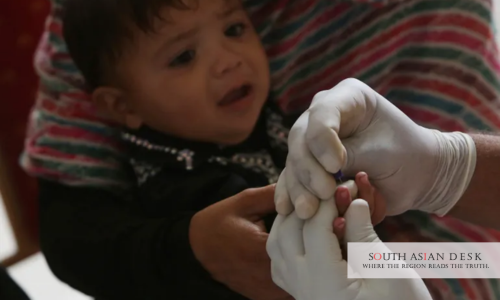
The Sindh child HIV outbreak centred on a government-run hospital in Karachi has now left at least 130 people, most of them children, testing positive for HIV, with officials confirming that the number has climbed sharply in recent weeks. The cluster is linked to Kulsum Bai Valika Hospital, a facility run by the Sindh Employees’ Social Security Institution, where more than 10,500 people have been screened since the crisis came to light.
Sindh’s Labour Minister said 120 of those screened around the hospital tested positive, while a separate screening drive at another institution-run facility in Karachi’s Landhi area identified ten additional cases. The institution operates as an autonomous provincial body providing healthcare and financial support to industrial and commercial workers and their dependants across Sindh.
How the Sindh Child HIV Outbreak Unfolded
Officials trace the outbreak’s origins to October 2025, when the first six HIV-positive cases were reported to the provincial health department. The wider public only became aware of the cluster the following month, after residents of a nearby neighbourhood noticed a pattern of infections among children treated at the hospital.
Two internal inquiries have since examined what went wrong. The first, submitted in November, identified 16 HIV-positive children linked to the hospital’s paediatrics department. A second, more detailed inquiry submitted to the provincial ombudsman in June confirmed 78 infections and six deaths, and held named hospital staff responsible for administrative and supervisory failures. Both inquiries pointed to poor adherence to infection prevention protocols, inadequate use of protective equipment, and improper handling of single-use syringes. Thirty-seven doctors and hospital staff have since been issued show-cause notices, with the labour minister indicating that criminal cases and dismissals could follow for those found responsible.
There has also been disagreement over the exact cause. Following a petition to the Sindh High Court alleging that reused syringes were behind the outbreak, the labour minister told reporters that the hospital used auto-disable syringes that cannot be reused and that syringe reuse was not the cause. The official inquiries, however, describe a broader breakdown in infection control rather than a single identifiable cause, and the court petition claims the true number of infections is considerably higher than officially acknowledged.
A Pattern Beyond One Hospital
This is not the first time Sindh has faced an outbreak of this kind. In a joint statement issued on World AIDS Day in December, the World Health Organization and UNAIDS identified Pakistan’s HIV epidemic as one of the fastest-growing in the wider Eastern Mediterranean region, with annual infections rising from 16,000 in 2010 to 48,000 in 2024. The same statement estimated that roughly 350,000 people in Pakistan are living with HIV, with close to 80 percent unaware of their status, and noted that infections among children aged up to 14 rose from 530 in 2010 to 1,800 in 2023. Only around a third of children living with HIV are currently receiving treatment.
Writing in a medical journal in June, physicians argued that Pakistan’s epidemic is now driven in large part by the healthcare system itself, pointing to a pattern of outbreaks tied to unsafe medical practices. That conclusion remains contested, since researchers say Pakistan lacks the surveillance needed to determine how many infections nationally originate in healthcare settings compared with sexual transmission, mother-to-child transmission, or intravenous drug use.
Syed Faisal Mahmood, a professor of infectious diseases at a university hospital in Karachi, urged caution on that point, noting that surveillance for transmission routes such as sexual contact and drug use is far more established than for healthcare-related infections. He described unsafe injection practices as a nationwide problem rather than one confined to a single hospital, warning that “poor injection safety protocols are pervasive throughout the entire country.” Three other hospitals in Karachi have reported rising numbers of paediatric HIV admissions, including one where cases climbed from 10 in 2024 to 70 in 2025, and the Pakistan Medical Association has said the true scale of infections is likely far higher than current figures suggest.
The Response So Far
The Sindh High Court has given the provincial government until July 20 to respond to the petition alleging violations of the laws governing syringe regulation and disposal. At the federal level, the prime minister ordered a nationwide ban on substandard syringes, and the country’s drug regulatory authority has said retail sales of reusable syringes will be banned from January 2027 in favour of auto-disable versions. The federal health minister has said HIV screening will become mandatory before surgery nationwide, while cautioning against describing the situation as a broader epidemic.
The Sindh government has separately approved a 2 billion rupee endowment fund for the long-term care of affected children, along with a new isolation ward and an independent audit of the hospital’s procurement and infection control systems. Mahmood has cautioned that measures such as banning certain syringes only address part of the problem, given that roughly 60 percent of healthcare in Pakistan is delivered through a private sector that remains difficult to regulate, encompassing clinics and dispensaries that oversight bodies lack the staff to inspect properly.
He also pointed to patient expectations as a contributing factor, noting that many patients associate receiving an injection with faster recovery, which in turn encourages healthcare workers to administer them more often than necessary. Combined with weak regulation, limited training in safe injection practice, and little accountability for lapses, he said the conditions have created what amounts to a perfect storm for outbreaks like the one now unfolding in Sindh.
Published in SouthAsianDesk, July 18, 2026
Follow SouthAsianDesk on X, Instagram and Facebook for insights on business and current affairs from across South Asia.