US-Iran ceasefire efforts came under renewed strain this week as Pakistan urged Washington and Tehran to abide by their agreement after both sides exchanged fresh attacks in the Middle East, raising concerns that a fragile diplomatic opening could quickly unravel.
Pakistan’s Deputy Prime Minister and Foreign Minister Ishaq Dar held separate conversations with Bahrain’s Foreign Minister Dr Abdullatif bin Rashid Al Zayani and European Union foreign policy chief Kaja Kallas on Sunday to discuss the deteriorating regional situation. According to Pakistan’s Foreign Office, Dar emphasised the need for all parties to respect the ceasefire agreement and keep diplomatic channels open.
The call for restraint came after Iran’s Islamic Revolutionary Guard Corps said it had launched missile and drone attacks targeting US military sites in Bahrain and Kuwait. The strikes followed US attacks on Iranian military targets a day earlier, which Washington said were carried out in response to alleged attacks on commercial shipping in the Strait of Hormuz, one of the world’s most important energy routes.
US-Iran Ceasefire: Pakistan’s Diplomacy Faces a New Test
Pakistan has positioned itself as a key diplomatic actor in the US-Iran crisis, working alongside Qatar to keep negotiations alive and prevent a wider conflict. Islamabad’s latest intervention suggests it is trying to preserve the credibility of the ceasefire framework at a moment when military escalation is again threatening to overtake diplomacy.
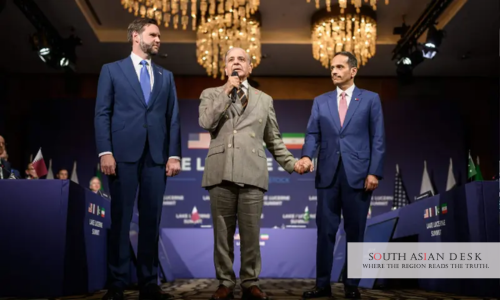
The ceasefire rests on the Islamabad Memorandum of Understanding, an initial framework signed electronically by the US and Iran earlier this month. The agreement was followed by technical-level talks in Switzerland on unresolved issues, including Iran’s nuclear enrichment programme, sanctions relief and regional security arrangements.
Pakistan’s Foreign Office has described the process as part of its broader commitment to dialogue and peace in the region. Prime Minister Shehbaz Sharif also travelled to Switzerland last week for high-level talks on the implementation of the Islamabad Memorandum, with delegations from Iran, Qatar and the United States involved in the process.
Why the Strait of Hormuz Matters
The latest escalation is especially serious because it involves the Strait of Hormuz, a narrow but strategically vital waterway through which a major share of global oil and gas shipments pass. Any disruption there can affect energy markets far beyond the Middle East, including South Asia, Europe and East Asia.
For Pakistan, the stakes are both diplomatic and economic. A wider US-Iran confrontation could destabilise the Gulf region, where millions of Pakistani workers live and work. It could also push up fuel prices, increase shipping risks and complicate Islamabad’s efforts to expand trade and energy cooperation with Iran.
This is why Pakistan’s response has focused less on assigning blame and more on urging all sides to return to the ceasefire framework. Islamabad’s message is clear: the military exchange may be recent, but the diplomatic consequences could be far-reaching.
EU and Bahrain Consulted as Crisis Deepens
Dar’s call with Kaja Kallas reflected concern in Europe that the ceasefire violations could derail a process that had only recently begun to show progress. The EU’s top diplomat reportedly stressed the importance of keeping communication channels open between the parties.
His separate call with Bahrain’s foreign minister was also significant. Bahrain hosts US military facilities and is directly exposed to any escalation involving American positions in the Gulf. Iran’s claim that it targeted US sites in Bahrain and Kuwait adds urgency to diplomatic efforts by regional states seeking to avoid becoming direct battlegrounds in the conflict.
A Fragile Agreement, Not a Final Peace
The Islamabad Memorandum was never a final peace settlement. It was designed as a framework to halt fighting, create space for negotiations and address the wider disputes that have kept Washington and Tehran locked in hostility for decades.
That distinction matters. A ceasefire can stop immediate attacks, but it cannot by itself resolve the deeper issues: sanctions, nuclear oversight, maritime security, regional alliances and the presence of US forces in the Gulf. The latest exchange of attacks shows how quickly unresolved disputes can test even a freshly signed agreement.
Pakistan’s challenge is therefore not only to keep both sides talking, but to help prevent tactical military action from destroying the diplomatic track altogether.
Islamabad’s Balancing Act
Pakistan’s mediation role is delicate. It maintains relations with Iran as a neighbour, has deep economic and security ties with Gulf states, and continues to engage with the United States on regional and strategic issues. That position gives Islamabad access to multiple sides, but it also requires careful neutrality.
By urging all parties to abide by the ceasefire rather than publicly blaming one side, Pakistan appears to be preserving its role as a facilitator. This approach allows Islamabad to continue working with Tehran, Washington, Doha, Brussels and Gulf capitals without being drawn directly into the confrontation.
The coming days will show whether the ceasefire can survive this latest round of violence. If both sides return to negotiations, Pakistan’s mediation may gain further weight. If attacks continue, the Islamabad Memorandum risks becoming another short-lived diplomatic pause in a much longer conflict.
For now, Pakistan is urging restraint, dialogue and adherence to the ceasefire. But the renewed strikes make one thing clear: the US-Iran ceasefire remains fragile, and its survival will depend on whether both sides are willing to treat diplomacy as more than a temporary break between attacks.
Published in SouthAsianDesk, June 29, 2026
Follow SouthAsianDesk on X, Instagram and Facebook for insights on business and current affairs from across South Asia.