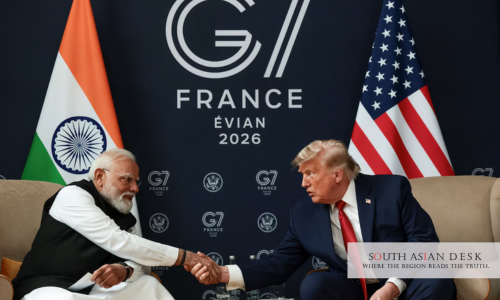
India US trade talks have failed to produce a quick agreement, with New Delhi choosing to hold out for more favourable terms rather than settle for a hurried arrangement with Washington. According to officials and analysts familiar with the negotiations, Prime Minister Narendra Modi’s government is drawing confidence from a stronger domestic economy, a widening circle of alternative trading partners, and recent political wins at home, all of which have reduced the pressure to compromise.
The latest round of discussions, held during a visit to New Delhi last month by United States Trade Representative Jamieson Greer, ended without the interim trade agreement that both sides had once expected to be within reach. After months of negotiation, the two countries could not bridge their differences on several core issues.
Why the India US Trade Talks Broke Down
An Indian government official aware of the discussions said Washington failed to offer clear assurances on New Delhi’s central demands: a tariff advantage over rival exporters such as China, and a guarantee that no fresh American levies would follow once a deal was signed. Without those commitments, Indian negotiators were unwilling to move forward.
“Our position is clear. We do not intend to rush into a deal that is not on favourable terms, or compromise on red lines like ceding ground on agriculture,” the official said, underlining the political sensitivity attached to India’s farm sector in any trade negotiation.
That firmness was echoed publicly the day after the talks concluded, when Indian Trade Minister Piyush Goyal said any agreement with the United States would not be implemented unless it secured a genuine advantage for India. The remark signalled a hardened stance in New Delhi and a notable lack of urgency, even as the risk of higher American tariffs looms.
Most Indian exports currently face a 10 percent baseline tariff on entry into the United States, a rate applied broadly across trading partners. However, the Trump administration is expected to introduce steeper duties later this month, following probes into what Washington describes as excess industrial capacity in India. New Delhi has firmly denied these allegations. Separately, Washington has already proposed additional tariffs of up to 12.5 percent on dozens of countries, including India, over claims that they failed to curb the trade of goods produced through forced labour.
A source in Washington familiar with the discussions said the American position remains that India must earn any preferential trade treatment it is seeking by offering concessions of its own. Both the Indian official and the American source spoke on condition of anonymity, citing the confidential nature of the negotiations.
India’s Growing Leverage in the Negotiations
Analysts say India’s willingness to walk away from a quick settlement reflects a genuine shift in its bargaining position. “Indian negotiators have gained some leverage in the talks, given its strong economy, diversification initiatives with other partners, and its strategic standing in the world,” said Wendy Cutler, senior vice president at the Washington-based Asia Society Policy Institute and a former US trade official.
Several economic developments have strengthened New Delhi’s hand. The interim peace arrangement between the United States and Iran has helped ease global oil prices, improving India’s overall economic outlook, according to Goldman Sachs economist Santanu Sengupta. The bank has since raised its 2026 growth forecast for India to 6.8 percent while lowering its projections for inflation and the current-account deficit, suggesting the country has more room to wait out a tougher negotiating stance. A weaker rupee has also made Indian exporters more competitive on price, further reducing the urgency to accept unfavourable terms.
Waiting Out Washington
Indian officials are also weighing the possibility that some of the proposed American trade measures could be slowed or overturned through legal or political challenges. A group of 22 Democratic state attorneys general has already filed objections to the Trump administration’s proposed tariffs stemming from the forced labour probes, adding a further layer of uncertainty to Washington’s timeline.
Trade analysts note that this legal ambiguity, combined with the ruling Bharatiya Janata Party’s recent state election victories, has given New Delhi additional room to resist a hurried settlement. Senior BJP leaders have also argued publicly that any trade agreement must protect Indian farmers and small businesses, two constituencies that have historically been shielded in the country’s trade policy.
Ajay Srivastava, founder of the Global Trade Research Initiative and a former trade negotiator, said India’s calculation extends beyond the immediate tariff risk. He noted that delaying, or even abandoning, a rushed deal may ultimately prove more prudent than accepting obligations whose long-term costs could outweigh any short-term relief from tariffs.
What Comes Next
For Washington, the stalled India US trade talks represent a setback in its broader push for quick wins with strategic partners as new tariffs prepare to take effect later this month. For India, the standoff carries its own risks, including the possibility of higher levies on its exports and continued uncertainty for businesses that trade with the United States. Even so, New Delhi appears prepared to accept that uncertainty in exchange for terms it considers durable and fair, betting that patience, rather than speed, will yield the stronger outcome in the end.
Published in SouthAsianDesk, July 14, 2026
Follow SouthAsianDesk on X, Instagram and Facebook for insights on business and current affairs from across South Asia.