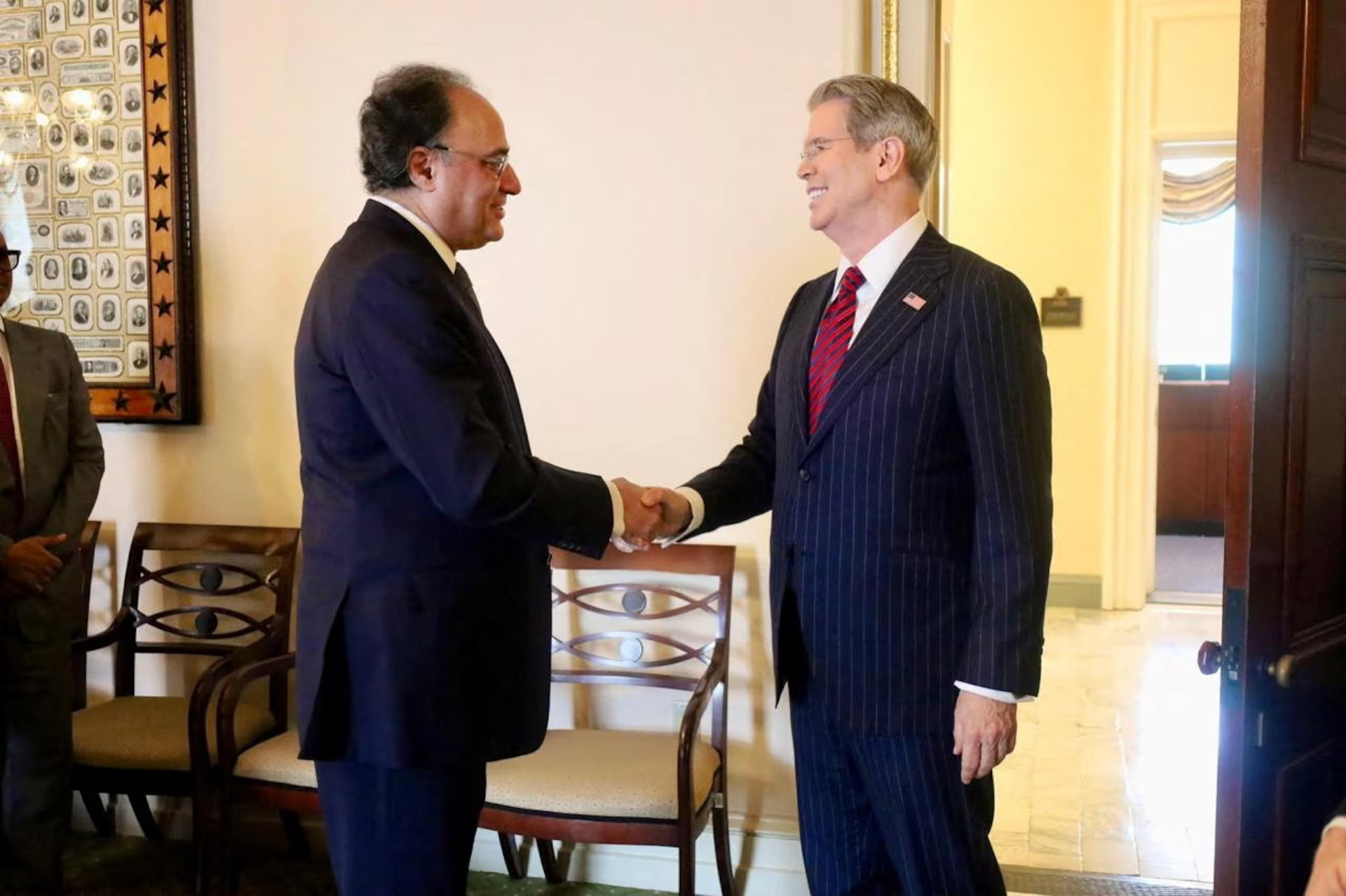
Pakistan economic reforms received a public endorsement from US Treasury Secretary Scott Bessent after he met Finance Minister Muhammad Aurangzeb in Washington, as Islamabad seeks to strengthen economic stability and regain access to international capital markets.
The US Treasury said on Wednesday, July 22, that Bessent welcomed Pakistan’s progress in restoring macroeconomic stability and advancing fiscal consolidation. He also recognised the government’s efforts to implement significant economic reforms.
Bessent expressed support for Pakistan’s efforts to become more economically self-reliant and praised its commitment to creating the conditions for a successful return to international capital markets. The meeting took place on Tuesday during Aurangzeb’s visit to Washington.
Pakistan economic reforms receive US support
The comments represent a positive assessment from Washington as Pakistan continues an economic adjustment programme supported by the International Monetary Fund.
Pakistan narrowly avoided default in 2023 after securing a $3 billion IMF standby arrangement. It later obtained a $7 billion Extended Fund Facility and a separate $1.3 billion programme intended to strengthen resilience against climate change and natural disasters.
The country has pursued fiscal consolidation and structural measures under the IMF programmes. However, its foreign exchange position continues to depend partly on official financing, debt rollovers and deposits from China and Saudi Arabia.
Pakistan has also faced additional pressure from the Iran war because of its reliance on Gulf energy imports, remittances and financing support from the region. Bessent stressed the importance of continuing reforms, supporting growth and improving the economy’s ability to withstand external shocks.
Capital market return remains a priority
Pakistan’s return to international capital markets was a central part of the Treasury’s account of the meeting.
The government has been working to rebuild investor confidence and diversify its financing sources after being effectively shut out of international bond markets during the economic crisis. The Treasury statement did not identify a proposed bond, an issue size or an expected date for Pakistan’s market return.
The meeting coincided with S&P Global raising Pakistan’s long-term sovereign credit rating from B-minus to B while maintaining a stable outlook. The agency cited stronger institutional stability and the implementation of reforms under the IMF programme.
S&P said IMF-backed reforms had helped restore macroeconomic stability, rebuild foreign exchange reserves and ease pressure on Pakistan’s fiscal and external positions.
$10 billion facility not addressed publicly
The Treasury statement did not mention Pakistan’s reported request for a $10 billion exchange stabilisation facility from the United States.
Reuters reported, citing sources familiar with the discussions, that Aurangzeb presented the request during his meeting with Bessent. No agreement on the proposed facility was announced, and the US government has not publicly committed to establishing it.
The proposed five-year arrangement would be intended to support Pakistan’s foreign exchange reserves and provide an additional financial buffer. Pakistan submitted the request after its role in diplomatic efforts related to the Iran conflict raised Islamabad’s profile in Washington.
Pakistan and US EXIM explore financing framework
Aurangzeb also met US Export-Import Bank President John Jovanovic during his Washington visit.
Pakistan’s finance ministry said the two sides discussed deeper cooperation, a multi-year pipeline of transactions and access to US financing. They agreed to identify near-term projects, appoint focal persons and work towards finalising a strategic framework.
The ministry said the framework could be signed on the sidelines of the United Nations General Assembly in September 2026.
US EXIM confirmed that the meeting had taken place and said it was intended to advance economic cooperation and create opportunities for American businesses. It did not provide details of possible financing arrangements or identify any projects.
The discussions indicate that Pakistan is pursuing both international market access and project-based financing as it seeks to consolidate recent economic gains. Sustained progress will depend on the continued implementation of Pakistan economic reforms, stronger external buffers and lasting investor confidence.
Published in SouthAsianDesk, July 23, 2026
Follow SouthAsianDesk on X, Instagram and Facebook for insights on business and current affairs from across South Asia.