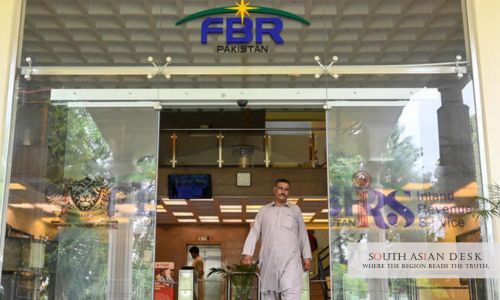
The FBR anti-corruption drive has resulted in the suspension of 211 senior officers and the sidelining of another 32 deemed to be of questionable repute over the past two years, according to official data reviewed by Arab News. The figures point to one of the most extensive internal disciplinary campaigns ever undertaken by Pakistan’s national tax authority, the Federal Board of Revenue, as it works to curb long-standing allegations of corruption and abuse of power.
Scale of the Disciplinary Action
The data, covering the period from August 2024 through mid-2026, shows that 211 senior officers of grade 16 to grade 21 within the Inland Revenue Service, the FBR’s domestic tax collection arm, have been suspended. This marks a sharp departure from the previous annual baseline of 33 suspensions, underscoring the intensity of the current push. Major disciplinary penalties have also climbed steadily, rising from 38 cases in the 2023-24 fiscal year to 49 in 2024-25, before reaching 75 cases in 2025-26.
By April 2026, the FBR had additionally identified 32 officers, including 14 from the Inland Revenue Service and 18 from Pakistan Customs, as being of questionable repute. Most of those flagged held senior positions at grade 20 or above and have since been removed from operational postings.
Federal Board of Revenue Corruption Figures Show Sharp Decline
Officials say the disciplinary measures reflect a broader institutional effort rather than a series of isolated actions. According to the data, instances of Federal Board of Revenue corruption among officers in sensitive Inland Revenue positions declined sharply, with the proportion of officers classified as low integrity falling from 74 percent in July 2023 to 11 percent by June 2026. Within Pakistan Customs, a similar trend was recorded, with the equivalent figure dropping from 71 percent to 9 percent over the same period.
The campaign has coincided with parallel criminal investigations carried out by Pakistan’s Federal Investigation Agency, which has arrested several senior officials in corruption-related cases, including a Customs Enforcement Collector in Quetta and an Additional Collector.
Institutional Reforms Behind the Numbers
The FBR anti-corruption drive has accelerated under the leadership of Chairman Rashid Mahmood Langrial, who officials say replaced an informal complaints culture with documented enforcement mechanisms. The agency has also expanded scrutiny of officers seeking promotion, with those placed on a performance watch list rising from roughly 2 percent in 2023 to about 40 percent by 2025, reflecting tighter vetting focused on financial integrity and professional conduct.
Mandatory peer review cycles have recorded near universal completion rates, reaching 97.4 percent, 99.5 percent and 100 percent in successive evaluation rounds, according to the figures. An FBR official, speaking on condition of anonymity, said the board had also introduced a faceless income tax assessment system intended to reduce opportunities for corruption by removing direct contact between tax officials and taxpayers.
A New Integrity Rating System
As part of the reforms, the FBR introduced an integrity based rating system, under which officers are graded from A, denoting the highest level of integrity, to D, denoting the lowest. By June 2026, officials rated A or B occupied 89 percent of critical Inland Revenue positions and 91 percent of key Customs posts, largely displacing lower rated officers from sensitive assignments.
Wider Implications for Fiscal Reform
The disciplinary overhaul comes as Pakistan seeks to strengthen tax administration and improve governance while pursuing broader fiscal reforms aimed at increasing revenue collection and restoring investor confidence. Analysts note that sustained progress on the Federal Board of Revenue corruption front will likely remain central to the government’s efforts to demonstrate institutional credibility to international lenders and domestic taxpayers alike. Whether the current pace of suspensions and integrity based vetting continues is expected to serve as an important indicator of the FBR’s long-term commitment to internal reform.
Published in SouthAsianDesk, July 24, 2026
Follow SouthAsianDesk on X, Instagram and Facebook for insights on business and current affairs from across South Asia.