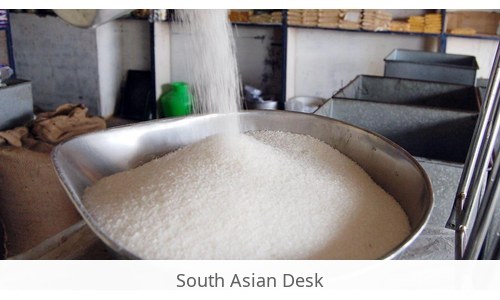
The Indian government announced the allowance of duty-free imports for 10 lakh tonnes of raw sugar until October 31, 2026, as reported by The Hindu and The Indian Express.
This decision aims to stabilize domestic sugar prices amid rising costs, accompanied by stockholding limits on bulk consumers to prevent price surges. The duty-free sugar import India policy reflects a strategic move to address challenges in the raw sugar market and align with Indian government sugar policy.
duty-free sugar import India: Impact on Local Sugar Producers
The policy introduces potential challenges for domestic producers, who may face increased competition from imported sugar. Industry stakeholders have expressed concerns about the impact on local production levels and market dynamics. The government’s move could also influence pricing strategies for domestic manufacturers, requiring them to adapt to a more competitive landscape. Domestic sugar mills, which rely heavily on sugarcane cultivation in states like Uttar Pradesh, Maharashtra, and Tamil Nadu, may see reduced profit margins if imported sugar floods the market.
These mills, which account for over 70% of India’s sugar production, have historically operated under a complex web of subsidies, price controls, and seasonal production cycles. The influx of cheaper imports could force some smaller mills to scale back operations or seek government support to remain viable. The Sugar Mills Association of India has called for a balanced approach, emphasizing the need to protect domestic producers while managing price volatility. Analysts note that the policy may also encourage mills to diversify into value-added products like ethanol or refined sugar to offset potential losses from raw sugar price competition.
Historical Context of Sugar Price Fluctuations
Sugar price fluctuations in India have historically been influenced by factors such as monsoon conditions, production levels, and import policies. Previous interventions, including temporary import bans and price controls, have aimed to stabilize the market. The current policy reflects a continuation of efforts to manage volatility through strategic import adjustments. For instance, during the 2016-2017 sugar crisis, India imposed a 10% export duty to curb outflows and stabilize domestic prices. Similarly, in 2017-2018, the government allowed duty-free imports of 10 lakh tonnes of sugar to address a surplus and prevent price crashes.
These interventions highlight the cyclical nature of India’s sugar market, where production often outpaces demand, leading to stockpiling and price collapses. Monsoon variability, a critical determinant of sugarcane yields, has further complicated the situation.
A weak monsoon can reduce production by up to 30%, while a strong monsoon may lead to oversupply. The Food Corporation of India (FCI), which manages sugar procurement and distribution, has played a pivotal role in mitigating these fluctuations through buffer stocks and price stabilization mechanisms. However, the current policy marks a shift toward import-based stabilization, signaling a recalibration of India’s approach to sugar market management.
Stockholding Limits on Bulk Consumers
The imposition of stockholding limits on bulk consumers, defined as those using more than 10 tonnes of sugar per month, seeks to prevent hoarding and ensure equitable distribution. This measure is intended to maintain market stability by regulating supply chain dynamics and mitigating potential price surges. Bulk consumers, including large manufacturers, food processors, and retailers, have historically been accused of stockpiling sugar to manipulate prices during shortages.
By capping their holdings, the government aims to prevent artificial scarcity and ensure that supply meets demand. This policy aligns with similar measures taken in other sectors, such as the stockholding limits on edible oil and wheat, which have been used to curb price manipulation. However, critics argue that such limits may inadvertently reduce the ability of businesses to plan for seasonal demand fluctuations, potentially leading to supply chain disruptions.
The government has emphasized that the stockholding cap will be strictly enforced through monitoring by the Directorate General of Foreign Trade (DGFT) and the Central Board of Excise and Customs (CBEC), with penalties for non-compliance. This regulatory framework is expected to complement the duty-free sugar import India policy, creating a dual mechanism to stabilize prices while protecting domestic producers from excessive market volatility.
Follow SouthAsianDesk on X, Instagram and Facebook for insights on business and current affairs from across South Asia.
Sources
- Government allows duty-free import of 10 lakh tonnes of raw sugar until October 31 – thehindu.com
- Centre imposes stockholding limit of sugar to rein in price surge – indianexpress.com
Image: th-i.thgim.com