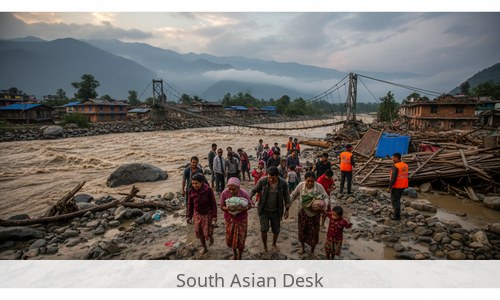
Nepal landslide flood: On October 11, 2026, Nepali authorities urged villagers to evacuate to safer locations after a flood swept away several houses and infrastructure in central Nepal. The disaster was triggered by a dry landslide that blocked the Budhigandaki River in upper Gorkha, which later burst, leading to a flash flood. No casualties have been reported as of the latest updates, but the situation remains critical as the risk of further flooding persists. Evacuation orders in Nepal were issued to ensure the safety of residents in the affected areas, with local officials coordinating efforts to prevent further loss of life and property. The incident highlights the urgent need for improved natural disaster management frameworks to address the growing frequency of such events in the region.
Government Response to the Nepal Landslide Flood
The Nepali Army confirmed the blockage of the Budhigandaki River at Chumnubri Rural Municipality-3 in Gorkha, a development that prompted immediate evacuation efforts. Disaster management authorities are coordinating with local officials to monitor the situation and ensure the safety of affected communities. The army has deployed personnel to assist in the evacuation process and assess the extent of damage to infrastructure. This marks a critical phase in the Nepali Army response, as the focus remains on stabilizing the region and preventing further complications from the Budhigandaki River flooding. Military engineers are working to clear debris and reinforce riverbanks to mitigate the risk of additional breaches, while medical teams are on standby to provide emergency care to displaced residents.
Community Impact and Resilience
The flood has caused significant damage to homes and critical infrastructure in the affected areas. Several houses have been swept away, and roads have been rendered impassable, complicating relief efforts. Local residents remain on high alert, with authorities warning of potential further flooding due to the unstable river conditions. The lack of casualties so far is a relief, but the long-term recovery of the affected communities remains uncertain. Community resilience in Nepal is being tested as residents work to rebuild and adapt to the challenges posed by this natural disaster. Local leaders have organized volunteer groups to distribute supplies and assist in cleanup efforts, demonstrating the strength of grassroots initiatives in times of crisis. However, the psychological toll on families who lost their homes remains a concern for mental health professionals.
Long-term Effects and Natural Disaster Management
This incident underscores the ongoing vulnerability of Nepal to natural disasters, particularly in the context of climate change and geological instability in the region. Experts highlight the need for improved disaster management strategies and infrastructure resilience to mitigate the impact of such events. The government has yet to announce specific measures for long-term recovery, but the focus remains on immediate relief and preventing further loss of life and property. Natural disaster management frameworks must evolve to address the increasing frequency of such events, ensuring that communities like those affected by the Nepal landslide flood are better prepared for future crises. International aid organizations have pledged support for reconstruction efforts, emphasizing the importance of sustainable rebuilding practices to reduce future risks.
Call for Preparedness and Collaboration
As the situation stabilizes, officials are urging residents to remain vigilant and follow evacuation orders in Nepal in case of further developments. The Budhigandaki River flooding has served as a stark reminder of the need for proactive measures, including early warning systems, community education, and investment in flood-resistant infrastructure. The Nepali Army response has been swift, but long-term solutions require collaboration between government agencies, local communities, and international partners. By strengthening natural disaster management protocols and fostering community resilience in Nepal, Nepal can better protect its citizens from the escalating threats posed by climate-related disasters.
Follow SouthAsianDesk on X, Instagram and Facebook for insights on business and current affairs from across South Asia.
Sources
- Nepal urges villagers to evacuate after flood triggered by landslide – dailymirror.lk
- Army says dry landslide blocked Budhigandaki’s flow before flood – english.onlinekhabar.com
- Flash flood sweeps away buildings in Nepal – aljazeera.com
- Nepal To Declare Flood Victims Dead If They Remain Missing For 1.5 Months – ndtv.com