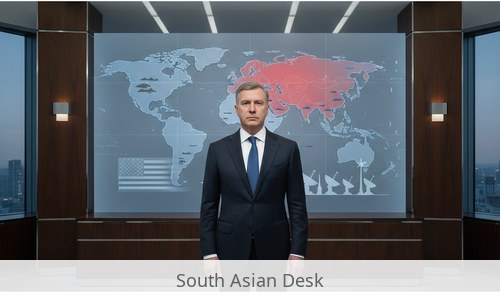
US military return to Afghanistan: On October 13, 2026, Alexander Venediktov, deputy secretary of Russia’s Security Council, stated that the return of US military infrastructure to Afghanistan would pose a direct threat to regional security. This warning comes amid Russia’s efforts to strengthen ties with Kabul and counter perceived Western influence in the region.
US military return to Afghanistan: Russia’s Security Concerns
Venediktov emphasized that the United States has made no secret of its plans to restore a military presence in Afghanistan. Russia has accused the US of failing to respect Afghanistan’s sovereignty while pursuing strategic interests in the area. The US military’s return to Afghanistan could also exacerbate regional security threats, as Moscow views any Western military reengagement as a destabilizing force. Russia’s concerns are rooted in its own geopolitical interests, including its desire to expand influence in Central Asia and counter NATO’s footprint in the region. The statement by Venediktov underscores a broader Russian narrative that Western military interventions in Afghanistan have historically disrupted regional stability, from the 2001 invasion to the 2021 withdrawal.
Implications for Regional Stability
A renewed interest in the region could reshape South Asia’s stability and Afghanistan’s geopolitics. Neighboring countries, including Pakistan and India, have historically viewed US involvement in Afghanistan as a factor influencing regional power dynamics. Analysts note that the US withdrawal in 2021 marked a shift in the region’s security architecture, and any reversal could reignite tensions over territorial disputes and counterterrorism strategies. For instance, Pakistan has long expressed concerns about US drone strikes in its border regions, while India has sought to leverage Afghanistan’s strategic location to counter Chinese influence in the region. This development would also test Russia-Afghanistan relations, as Moscow seeks to maintain its growing influence in the region. Russia’s recent infrastructure investments, including roads and energy projects, aim to solidify its role as a key player in Afghanistan’s post-Taliban governance.
Russia’s Strengthening Ties with Kabul
Moscow has sought to deepen economic and security partnerships with Afghanistan in recent years. This includes infrastructure projects, energy cooperation, and military training programs. Venediktov’s remarks suggest Russia views restoration as a direct challenge to its growing influence in the region, potentially complicating efforts to stabilize Afghanistan’s fragile government. The Russian warning against such a move underscores the delicate balance of Afghanistan’s geopolitics and the broader implications for South Asia’s stability. For example, Russia has been involved in training Afghan security forces and has supported the Afghan government in countering insurgent groups. These efforts align with Moscow’s broader strategy to position itself as a stabilizing force in the region, countering both Western and Chinese ambitions.
Historical Context of US Military Involvement
The US military presence in Afghanistan has been a defining feature of the region’s geopolitics since the 2001 invasion following the 9/11 attacks. The initial mission focused on dismantling al-Qaeda and removing the Taliban from power. Over two decades, the US military presence evolved into a complex web of counterinsurgency operations, nation-building efforts, and regional security partnerships. However, the 2021 withdrawal, which saw the Taliban’s rapid takeover, left a power vacuum and raised questions about the long-term viability of Western military interventions in the region. Russia’s current warning reflects a belief that any return of US military infrastructure could destabilize the fragile political and security environment in Afghanistan, potentially leading to renewed conflict and regional spillover effects.
Regional Responses and Diplomatic Dynamics
While Russia has been vocal in its opposition to a US military return, other regional actors have not yet publicly commented on the potential scenario. Pakistan, which has historically maintained a complex relationship with both the US and Russia, may seek to balance its interests by engaging with both powers. India, which has invested in Afghanistan’s infrastructure and security, could view a US return as an opportunity to reinforce its own strategic partnerships. Meanwhile, China, which has deepened its economic ties with Afghanistan through the Belt and Road Initiative, may also weigh in on the potential implications for regional stability. The interplay of these diplomatic dynamics will be critical in shaping the future of Afghanistan’s geopolitical landscape.
Follow SouthAsianDesk on X, Instagram and Facebook for insights on business and current affairs from across South Asia.